







ERC inks deal with BOI for investment facilitation


At A Glance
- The ERC's proclivity on deferment of cost recoveries – including those of fuel costs for power generation and the reserve market – has also been wobbling investment climate of the power sector because those actions are not reflective of the true nature of a competitive market and could cripple supplier-firms if the non-recovery would be stretched for too long.
While the Energy Regulatory Commission (ERC) is partly blamed for the power supply mess in the country due to its slow action on issuance of warranted rules and approvals of power supply agreements (PSAs), it has opted to sign a memorandum of agreement (MOA) with the Board of Investments (BOI) for targeted facilitation of investments in the energy sector.
In a statement to the media, the ERC indicated that the objective of the deal with BOI “is to address issues and concerns of investors related to energy, power consumption, and connectivity.”
The synergy between the two agencies, it said, is in recognition of “the importance of ensuring energy security for economic sustainability.”
The ERC added that “the collaboration aims to effectively and efficiently address issues in the electric power industry, and concerns from BOI clients.”
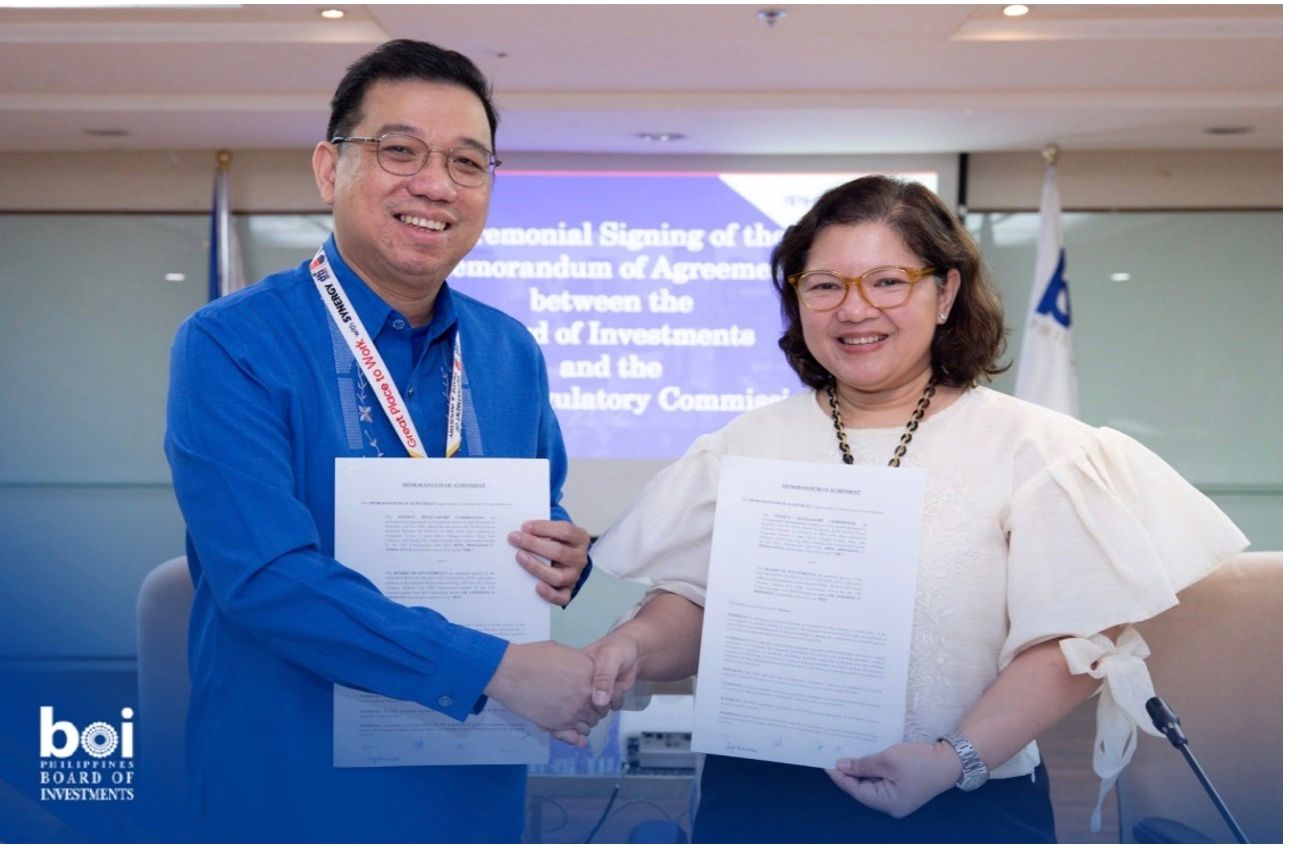
Signing of investment facilitation collaboration between ERC Chairperson Monalisa C. Dimalanta and Trade Undersecretary/BOI Head Ceferino S. Rodolfo.
According to Trade Undersecretary and BOI Managing Head Ceferino Rodolfo “the investment facilitation is a crucial pillar for generating investments in the Philippines.”
On his view, the partnership with the ERC will be “crucial for the BOI, especially as the world transitions to green energy.”
While the collaboration is greatly appreciated by the industry players, they are reminding the regulatory body that most of the issues and concerns of investors are matters that have to be resolved with utmost priority within the enclaves of the ERC first.
In this year’s El Niño-stricken summer months, the ERC has been in the receiving end of investors’ and industry players’ angst for delayed approval of the PSAs – because that unduly exposed the consumers of many power utilities to volatile prices at the Wholesale Electricity Spot Market.
The ERC’s proclivity on deferment of cost recoveries – including those of fuel costs for power generation and the reserve market – has also been wobbling investment climate of the power sector because those actions are not reflective of the true nature of a competitive market and could cripple supplier-firms if the non-recovery would be stretched for too long.
On the investment facilitation collaboration with the BOI, ERC Chairperson Monalisa C. Dimalanta acknowledged that the regulatory agency “plays a significant role in the business environment of the country by performing regulatory and quasi-judicial functions in the electric power industry,” adding that “the ERC is an active regulator taking a proactive approach to address energy concerns in the country.”
In the newly signed covenant with the BOI, she emphasized that “this is how we can contribute to fostering a positive business climate in the Philippines.”
The energy sector, in particular, is badly in need of new power investments – but sponsor-firms are crying out for tangible regulatory and policy solutions that they can strongly lean on for viable capital formation – and part of the equation is having remedies to their ERC-induced headaches.