ADVERTISEMENT

PAGASA: El Niño 'decaying'; odds of La Niña emergence increasing

Published May 22, 2024 06:50 am
IMG_3779.jpeg
PAGASA

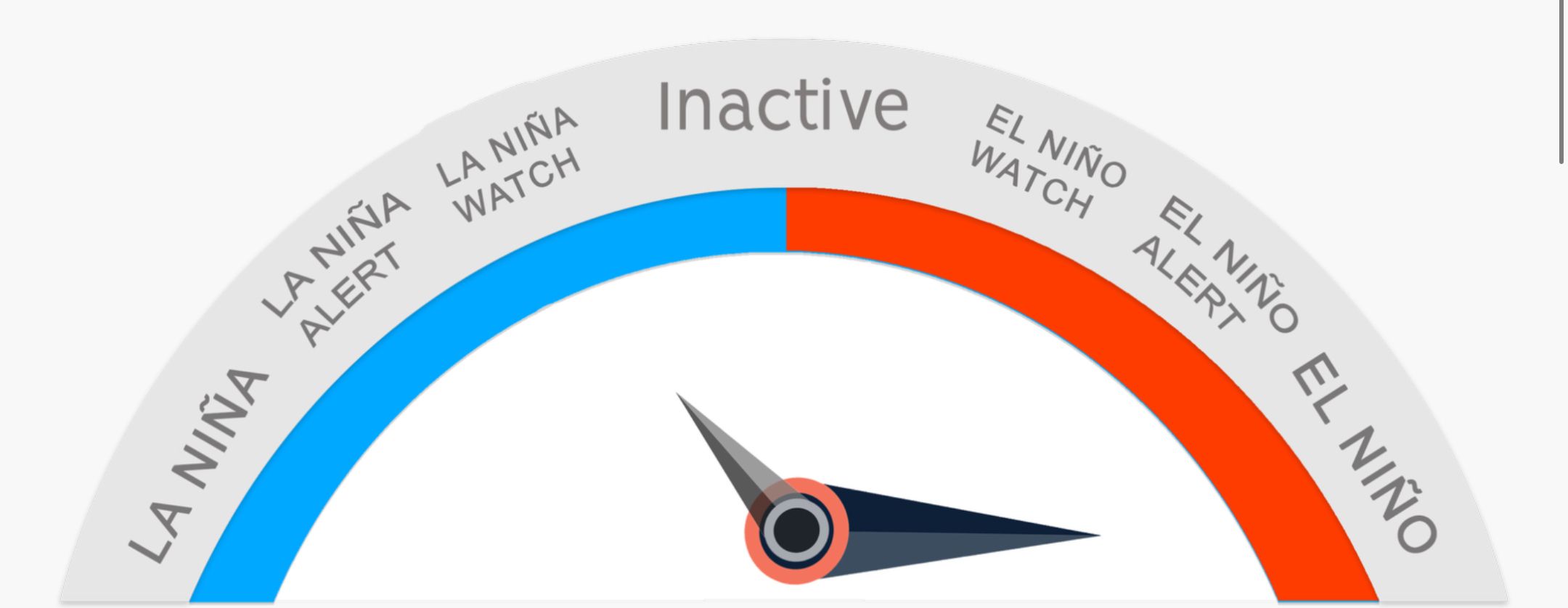
The El Niño phenomenon, which has been dominant in the past few months, is now in its “decaying stage,” the Philippine Atmospheric, Geophysical and Astronomical Services Administration (PAGASA) said on Wednesday, May 22.

However, the probability of a La Niña occurring later this year is now increasing.

During the climate outlook forum on Wednesday, PAGASA Weather Specialist Rusy Abastillas said that although El Niño in the tropical Pacific is waning, its impacts may persist.

She said the El Niño is projected to dissipate and will transition to an El Niño-Southern Oscillation-Neutral (ENSO-Neutral) condition, where neither El Niño nor La Niña prevails in June.

After the ENSO-Neutral phase, there is a 69 percent chance that a “weak to moderate” La Niña will develop in the July-August-September 2024 season, she pointed out.

“La Niña generally tends to follow strong El Niño events, which also provides added confidence in the model guidance favoring La Niña,” Abastillas pointed out.

‘Weak’ southwest monsoon activity

PAGASA-Climate and Agrometeorology Division Assistant Weather Services Chief Ana Liza Solis said the decaying El Niño and developing La Niña have direct effects on the country’s weather conditions.

PAGASA confirmed the presence of El Niño in July 2023.

“Historically, what happens is sometimes the start of the southwest monsoon (habagat) season is weak or we have less rain during its peak during the months of July, August, September,” Solis explained in Filipino.

“By September, rainfall conditions will normalize as the full remnants of El Niño’s impact will fade away,” she added.

Rainfall forecast

Based on PAGASA’s rainfall forecast for July to August, below-normal rainfall with patches of way below-normal rainfall may prevail in Luzon and some parts of Visayas, while the rest of the country will have near-normal rainfall.

By August, most parts of the country will have near-normal rainfall with patches of below-normal rainfall in Luzon.

By September, most parts of the country will still have near-normal rainfall with patches of below-normal rainfall in Luzon and Bicol Region.

From October to November, near- to above-normal rainfall may prevail over most of the country.

“The critical stage here is transitioning our strategies and interventions from El Niño to the onset of the rainy season, arrival of tropical cyclones, and eventually to La Niña if it persists by the last quarter of this year,” Solis said.

‘Strong’ La Niña?

She noted that the La Niña is likely to persist until the first quarter of 2025.

Solis is also not discounting the possibility of a “strong” La Niña condition occurring after a “strong” El Niño event.

“Nature has its own way of balancing itself, so if we had a drought, there was a significant lack of rainwater, which could be followed by a lot of rainfall. Typically, strong El Niños are followed by strong La Niñas. There were two instances where a strong El Niño was followed by a strong La Niña,” she said.

“But currently, there is no indication of a strong La Niña following a strong El Niño event,” she added.

Related Tags

La Niña PAGASA El Niño phenomenon
ADVERTISEMENT
.most-popular .layout-ratio{ padding-bottom: 79.13%; } @media (min-width: 768px) and (max-width: 1024px) { .widget-title { font-size: 15px !important; } }

{{ articles_filter_1561_widget.title }}

.most-popular .layout-ratio{ padding-bottom: 79.13%; } @media (min-width: 768px) and (max-width: 1024px) { .widget-title { font-size: 15px !important; } }

{{ articles_filter_1562_widget.title }}

.most-popular .layout-ratio{ padding-bottom: 79.13%; } @media (min-width: 768px) and (max-width: 1024px) { .widget-title { font-size: 15px !important; } }

{{ articles_filter_1563_widget.title }}

{{ articles_filter_1564_widget.title }}

.mb-article-details { position: relative; } .mb-article-details .article-body-preview, .mb-article-details .article-body-summary{ font-size: 17px; line-height: 30px; font-family: "Libre Caslon Text", serif; color: #000; } .mb-article-details .article-body-preview iframe , .mb-article-details .article-body-summary iframe{ width: 100%; margin: auto; } .read-more-background { background: linear-gradient(180deg, color(display-p3 1.000 1.000 1.000 / 0) 13.75%, color(display-p3 1.000 1.000 1.000 / 0.8) 30.79%, color(display-p3 1.000 1.000 1.000) 72.5%); position: absolute; height: 200px; width: 100%; bottom: 0; display: flex; justify-content: center; align-items: center; padding: 0; } .read-more-background a{ color: #000; } .read-more-btn { padding: 17px 45px; font-family: Inter; font-weight: 700; font-size: 18px; line-height: 16px; text-align: center; vertical-align: middle; border: 1px solid black; background-color: white; } .hidden { display: none; }
function initializeAllSwipers() { // Get all hidden inputs with cms_article_id document.querySelectorAll('[id^="cms_article_id_"]').forEach(function (input) { const cmsArticleId = input.value; const articleSelector = '#article-' + cmsArticleId + ' .body_images'; const swiperElement = document.querySelector(articleSelector); if (swiperElement && !swiperElement.classList.contains('swiper-initialized')) { new Swiper(articleSelector, { loop: true, pagination: false, navigation: { nextEl: '#article-' + cmsArticleId + ' .swiper-button-next', prevEl: '#article-' + cmsArticleId + ' .swiper-button-prev', }, }); } }); } setTimeout(initializeAllSwipers, 3000); const intersectionObserver = new IntersectionObserver( (entries) => { entries.forEach((entry) => { if (entry.isIntersecting) { const newUrl = entry.target.getAttribute("data-url"); if (newUrl) { history.pushState(null, null, newUrl); let article = entry.target; // Extract metadata const author = article.querySelector('.author-section').textContent.replace('By', '').trim(); const section = article.querySelector('.section-info ').textContent.replace(' ', ' '); const title = article.querySelector('.article-title h1').textContent; // Parse URL for Chartbeat path format const parsedUrl = new URL(newUrl, window.location.origin); const cleanUrl = parsedUrl.host + parsedUrl.pathname; // Update Chartbeat configuration if (typeof window._sf_async_config !== 'undefined') { window._sf_async_config.path = cleanUrl; window._sf_async_config.sections = section; window._sf_async_config.authors = author; } // Track virtual page view with Chartbeat if (typeof pSUPERFLY !== 'undefined' && typeof pSUPERFLY.virtualPage === 'function') { try { pSUPERFLY.virtualPage({ path: cleanUrl, title: title, sections: section, authors: author }); } catch (error) { console.error('ping error', error); } } // Optional: Update document title if (title && title !== document.title) { document.title = title; } } } }); }, { threshold: 0.1 } ); function showArticleBody(button) { const article = button.closest("article"); const summary = article.querySelector(".article-body-summary"); const body = article.querySelector(".article-body-preview"); const readMoreSection = article.querySelector(".read-more-background"); // Hide summary and read-more section summary.style.display = "none"; readMoreSection.style.display = "none"; // Show the full article body body.classList.remove("hidden"); } document.addEventListener("DOMContentLoaded", () => { let loadCount = 0; // Track how many times articles are loaded const offset = [1, 2, 3, 4, 5, 6, 7, 8, 9, 10]; // Offset values const currentUrl = window.location.pathname.substring(1); let isLoading = false; // Prevent multiple calls if (!currentUrl) { console.log("Current URL is invalid."); return; } const sentinel = document.getElementById("load-more-sentinel"); if (!sentinel) { console.log("Sentinel element not found."); return; } function isSentinelVisible() { const rect = sentinel.getBoundingClientRect(); return ( rect.top < window.innerHeight && rect.bottom >= 0 ); } function onScroll() { if (isLoading) return; if (isSentinelVisible()) { if (loadCount >= offset.length) { console.log("Maximum load attempts reached."); window.removeEventListener("scroll", onScroll); return; } isLoading = true; const currentOffset = offset[loadCount]; window.loadMoreItems().then(() => { let article = document.querySelector('#widget_1690 > div:nth-last-of-type(2) article'); intersectionObserver.observe(article) loadCount++; }).catch(error => { console.error("Error loading more items:", error); }).finally(() => { isLoading = false; }); } } window.addEventListener("scroll", onScroll); });

Sign up by email to receive news.