






 Philippines
National
1 or 2 tropical cyclones may form or enter the country's area of responsibility in June — PAGASA
Philippines
National
1 or 2 tropical cyclones may form or enter the country's area of responsibility in June — PAGASA
1 or 2 tropical cyclones may form or enter the country's area of responsibility in June — PAGASA
By Sonny Daanoy


The Philippine Atmospheric, Geophysical and Astronomical Services Administration (PAGASA) on Wednesday, May 22, said there may be one or two tropical cyclones in the country next month.
PAGASA Senior Weather Specialist Rusy Abastillas disclosed this forecast during a climate forum on Wednesday.
“For June, we expect one or two tropical cyclones,” she said.
Historical data from PAGASA indicates that cyclones in June usually veer northeastward or bypass land areas without making landfall.
“Meanwhile, from July to October, we are expecting two or three tropical cyclones each month. In November, one or two, and then in December, if there are any, we might expect one or two," Abastillas said.
"Overall, from June to November, we are expecting a total of 10 to 13 tropical cyclones," she said.
During July, August, and September, cyclones tend to track towards Luzon, particularly in the northern regions.
Meanwhile, September sees tropical cyclones either hitting extreme northern Luzon, crossing the region, or heading towards southern Luzon.
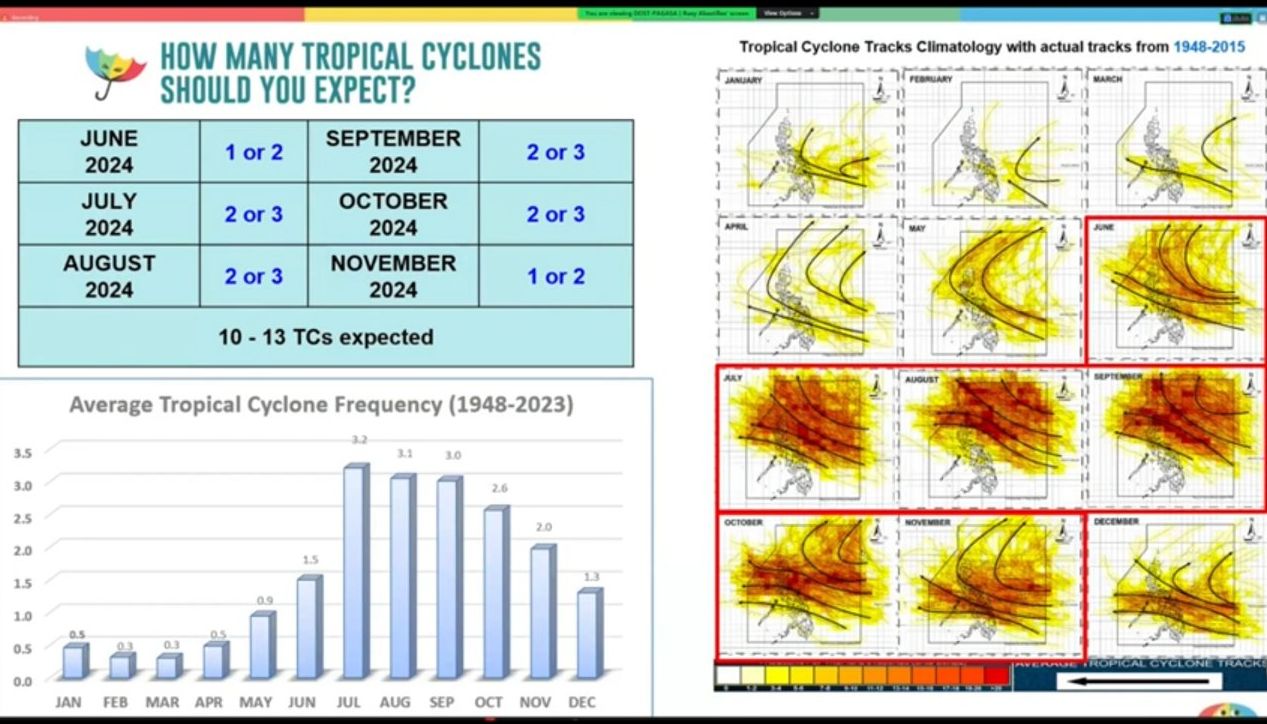
She added that by October, cyclone trajectories often target Luzon, southern Luzon, or the Visayas.
In November, the track shifts to northern Mindanao, central Philippines, and the Visayas, with some cyclones possibly affecting Southern Luzon.
Meanwhile, December, typically sees cyclone paths concentrated in the central Philippines, with cyclones crossing this region.
Weather systems to affect the country
Abastillas further explained that the weather systems that will affect the country in the next six months are easterlies, ridge of high-pressure area (HPA), localized thunderstorms, shear line, frontal system, southwest monsoon, intertropical convergence zone (ITCZ), low-pressure area (LPA), tropical cyclones, and northeast monsoon.
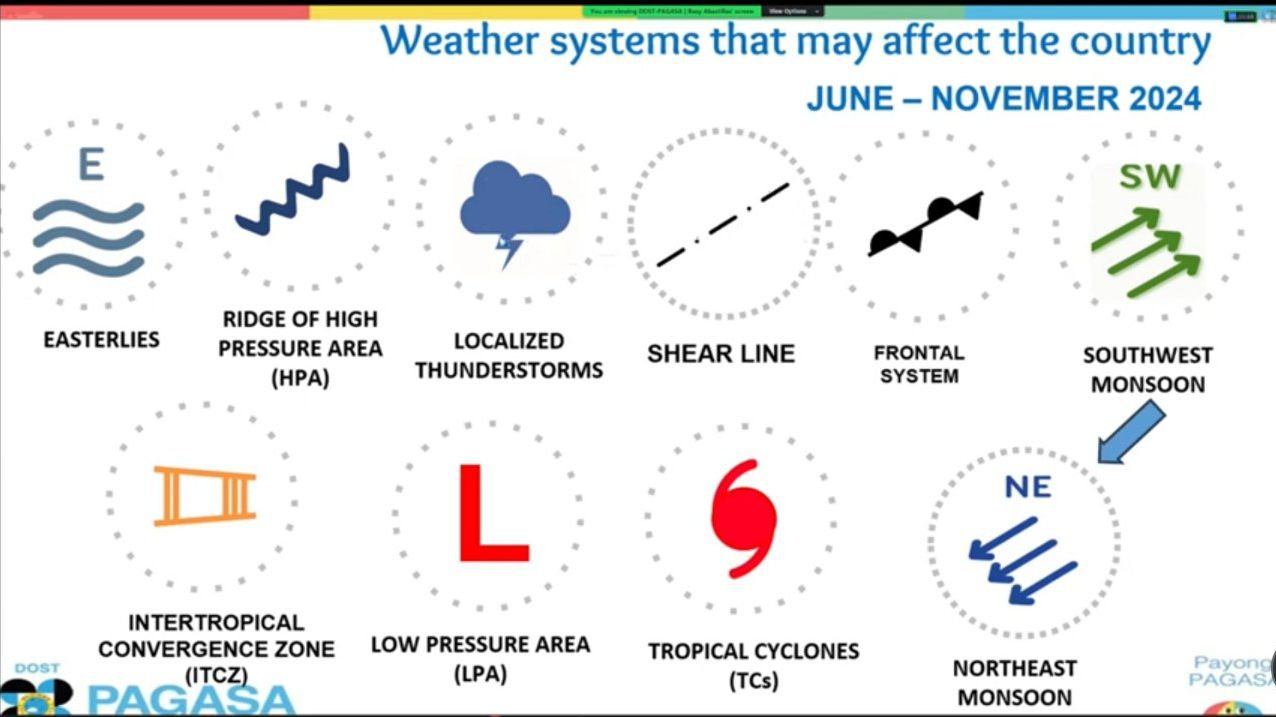
These weather systems will affect the region from June to November, covering two transition periods—the transition into the southwest monsoon or in local term "habagat" season, followed by the transition towards the northeast monsoon.