






 Philippines
National
PAGASA continues to call for water conservation amid Angat Dam's declining levels
Philippines
National
PAGASA continues to call for water conservation amid Angat Dam's declining levels
PAGASA continues to call for water conservation amid Angat Dam's declining levels


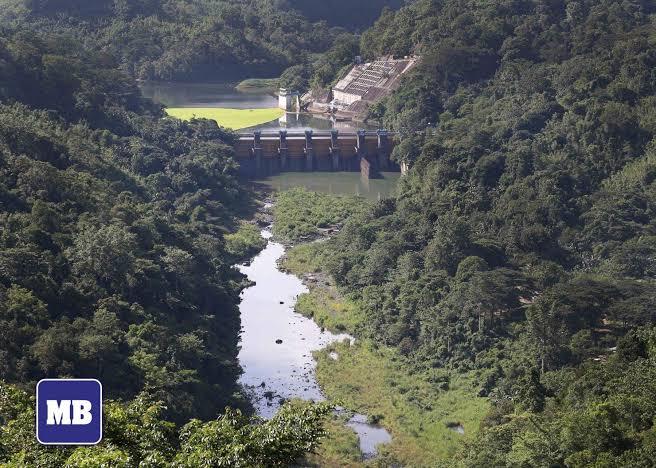
The Philippine Atmospheric, Geophysical and Astronomical Services Administration’s (PAGASA) data on Friday, May 17 showed a continuous decline in the water level of Angat Dam.
As of 6 a.m., the water level at Angat Dam was 181.59 meters, 0.26 meters lower than the previous day’s level of 181.85 meters.
Angat Dam is currently 30.41 meters below its normal high water level of 212 meters and is approaching its “minimum operating level” of 180 meters.
PAGASA-Hydrometeorological Division senior weather specialist Oyie Pagulayan said the decrease is attributed to several factors including low rainfall, high water usage, and evaporation during the “summer” months.
She noted that the ongoing El Niño has exacerbated the dam's declining water level.
“May kakulangan na tayo ng 3 meters sa rule curve. So far, nakaka-cope up pa tayo dahil marami na ring initiatives to augment the water supply for Metro Manila (We are 3 meters short of the rule curve. So far, we are still coping because many initiatives help augment the water supply for Metro Manila),” Pagulayan said.
PAGASA defines rule curve elevation as the minimum reservoir elevation that dam operators must maintain to ensure the availability of water for irrigation, power generation, and domestic supply.
However, Pagulayan recommended continued water conservation because the dam's water supply may still be declining and may not fully recover until the last quarter of the year.
“Not because meron tayong sobra ay hindi na natin gagampanan ang ating pagtitipid (Just because there is still water does not mean that we will no longer play a role in saving water). We should also do our share of conserving water,” she said.
She pointed out the importance of wise water usage among the public, suggesting practical measures such as turning off the tap while brushing teeth, repurposing water from laundry for other tasks, and harvesting rainwater for various purposes.
Decreasing trend
Pagulayan said Angat Dam had its lowest levels, reaching the critical levels, of 157.98 meters and in June 2019 and 157.57 meters on July 2010, which are both El Niño years.
Both 2010 and 2019 saw historical lows of the reservoir water level in Angat, resulting in water service interruptions affecting millions of customers in Metro Manila and nearby provinces.
Also in 2010, Mindanao was placed under a state of calamity due to serious power outages since a significant amount of their power supply comes from hydroelectrical power plants.
“Sa ngayon, kung titignan natin ang level ng Angat Dam ngayon, starting April talagang continuous na yung reduction niya ranging from 0.2 to 0.4 meters a day (At the moment, if we look at the level of Angat Dam now, starting April its reduction is continuous ranging from 0.2 to 0.4 meters a day), Pagulayan said.
Comparing the current situation, she observed that each El Niño event is “very unique,” which means each occurrence has different impacts.
“The good thing is that when PAGASA announced that we will have El Niño, the El Niño task force was immediately activated to map out the government interventions to reduce its impact,” she said.
“Since these [2010 and 2019] events, marami na tayong learnings from that, water sector has learned from this experience kaya from that time on marami na ring nag-tap ng alternative or additional water resources for Metro Manila (Since these events, we have learned a lot from that, the water sector has learned from this experience so from that time on many have tapped alternative or additional water resources for Metro Manila),” she added.
Pagulayan said based on history, Angat Dam fully recovers during the northeast monsoon or “amihan” season, which occurs in the last quarter of the year.
She reiterated the importance of water conservation, as there is little replenishment for the Angat Dam while the country is still in the warm and dry season.
“A significant contributor to the elevated water level in Angat Dam stems from tropical cyclones. These weather phenomena are responsible for nearly 50 percent of the typical rainfall recorded in an area, exerting a substantial influence on watersheds,” she added.
She explained that while PAGASA acknowledges the possibility of rainfall contributing to its filling even without the monsoon, historical data shows a significant increase in water levels during the amihan season.
This is because rainfall is concentrated in the eastern portion of Luzon, where Angat Dam is located.