

ADVERTISEMENT

Navigating the digital age

A mom's perspective on AI and our children's future

Published May 10, 2024 09:18 am

At A Glance

  • At the Lenovo event, Microsoft's AI Copilot stood out as an innovative tool that assists developers with code suggestions and streamlining the coding process. This advancement not only showcases the incredible progress in AI technology but also prompts discussions about its implications in children's lives.
  • AI-driven educational platforms have the potential to revolutionize learning by personalizing content based on each child's unique strengths, weaknesses, and pace of learning. Real-time feedback and adaptive learning pathways foster a growth mindset, making education more engaging and effective.
  • While AI offers numerous benefits, it also raises concerns about privacy and data security, particularly concerning children's interactions with AI-powered devices and platforms. Parents must understand how data is collected, stored, and utilized to ensure their children's safety and privacy.
  • As children increasingly engage with AI-driven technologies, there's a risk of reduced face-to-face interactions and reliance on digital interactions. Parents must balance screen time with real-world experiences and nurture social-emotional skills to ensure healthy development amidst a technology-driven environment.

Last month, I had the opportunity to attend the Lenovo event in Thailand, wherein they showcased their latest innovations and cutting-edge laptops and desktops. READ: Beyond Boundaries

One thing I'm sure of is that technology evolves quickly, and parents often navigate unfamiliar territory regarding their children's interaction with AI (Artificial Intelligence). As a fellow parent and a tech-savvy mom who recently met fellow parents at the event, I've gained valuable insights that I believe can be beneficial for parents in this digital era.

Microsoft's AI Copilot caught my attention. This innovative tool assists developers by providing code suggestions and helping streamline the coding process. While AI CoPilot showcases the incredible advancements in AI technology, it also sparks discussions about the implications of AI in our children's lives.
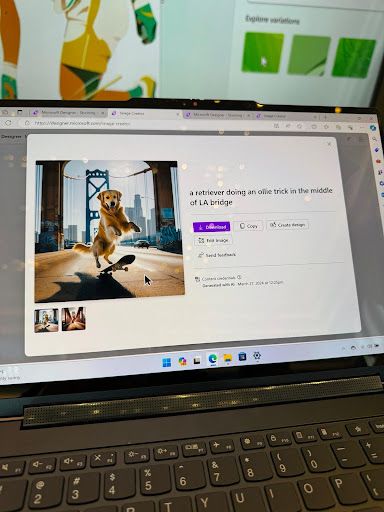
 

MillieAIapp.jpeg
Indeed a creative AI, this app can produce a visual representation of what you have in mind, literally and figuratively! 


One of the most promising aspects of AI for our children is its potential to revolutionize learning experiences. AI-driven educational platforms can personalize learning content based on each child's strengths, weaknesses, and learning pace, making education more engaging and effective. Additionally, AI-powered tools can provide real-time feedback and adaptive learning pathways, fostering a growth mindset and encouraging continuous learning.

 

MillieAI.jpeg
Belinda Widgery, Consumer Channel & PartnerMarketing Lead for Microsoft Asia), with Manila Bulletin TechNews Correspondent Millie Manahan


However, along with its benefits, AI presents specific challenges and considerations for parents. One concern is the potential loss of privacy and data security, especially when children interact with AI-powered devices and platforms. 


We, parents, must understand how data is collected, stored, and utilized by AI systems to ensure their children's safety and privacy are protected.

Another aspect to consider is the impact of AI on social interactions and emotional intelligence. As children engage more with AI-driven technologies, there's a risk of reduced face-to-face interactions and reliance on digital interactions. In a technology-driven environment, balancing screen time with real-world experiences and nurturing social-emotional skills becomes paramount.

Despite the challenges, AI holds immense potential to empower our children and prepare them for the future. As parents, we play a crucial role in this journey. By fostering a healthy relationship with technology, encouraging critical thinking and digital literacy, and maintaining open communication about AI's capabilities and limitations, we can help our children navigate the digital age with confidence and resilience.

Mom’s Intelligence

As we embrace AI's possibilities in shaping our children's future, it's essential for parents to stay informed, engaged, and proactive in guiding their children's digital journey. By leveraging AI's advantages while addressing its challenges responsibly, we can create a balanced and enriching environment for our children to thrive in the ever-evolving digital landscape.

Related Tags

Lenovo Artificial Intelligence (AI)
ADVERTISEMENT
.most-popular .layout-ratio{ padding-bottom: 79.13%; } @media (min-width: 768px) and (max-width: 1024px) { .widget-title { font-size: 15px !important; } }

{{ articles_filter_1561_widget.title }}

.most-popular .layout-ratio{ padding-bottom: 79.13%; } @media (min-width: 768px) and (max-width: 1024px) { .widget-title { font-size: 15px !important; } }

{{ articles_filter_1562_widget.title }}

.most-popular .layout-ratio{ padding-bottom: 79.13%; } @media (min-width: 768px) and (max-width: 1024px) { .widget-title { font-size: 15px !important; } }

{{ articles_filter_1563_widget.title }}

{{ articles_filter_1564_widget.title }}

.mb-article-details { position: relative; } .mb-article-details .article-body-preview, .mb-article-details .article-body-summary{ font-size: 17px; line-height: 30px; font-family: "Libre Caslon Text", serif; color: #000; } .mb-article-details .article-body-preview iframe , .mb-article-details .article-body-summary iframe{ width: 100%; margin: auto; } .read-more-background { background: linear-gradient(180deg, color(display-p3 1.000 1.000 1.000 / 0) 13.75%, color(display-p3 1.000 1.000 1.000 / 0.8) 30.79%, color(display-p3 1.000 1.000 1.000) 72.5%); position: absolute; height: 200px; width: 100%; bottom: 0; display: flex; justify-content: center; align-items: center; padding: 0; } .read-more-background a{ color: #000; } .read-more-btn { padding: 17px 45px; font-family: Inter; font-weight: 700; font-size: 18px; line-height: 16px; text-align: center; vertical-align: middle; border: 1px solid black; background-color: white; } .hidden { display: none; }
function initializeAllSwipers() { // Get all hidden inputs with cms_article_id document.querySelectorAll('[id^="cms_article_id_"]').forEach(function (input) { const cmsArticleId = input.value; const articleSelector = '#article-' + cmsArticleId + ' .body_images'; const swiperElement = document.querySelector(articleSelector); if (swiperElement && !swiperElement.classList.contains('swiper-initialized')) { new Swiper(articleSelector, { loop: true, pagination: false, navigation: { nextEl: '#article-' + cmsArticleId + ' .swiper-button-next', prevEl: '#article-' + cmsArticleId + ' .swiper-button-prev', }, }); } }); } setTimeout(initializeAllSwipers, 3000); const intersectionObserver = new IntersectionObserver( (entries) => { entries.forEach((entry) => { if (entry.isIntersecting) { const newUrl = entry.target.getAttribute("data-url"); if (newUrl) { history.pushState(null, null, newUrl); let article = entry.target; // Extract metadata const author = article.querySelector('.author-section').textContent.replace('By', '').trim(); const section = article.querySelector('.section-info ').textContent.replace(' ', ' '); const title = article.querySelector('.article-title h1').textContent; // Parse URL for Chartbeat path format const parsedUrl = new URL(newUrl, window.location.origin); const cleanUrl = parsedUrl.host + parsedUrl.pathname; // Update Chartbeat configuration if (typeof window._sf_async_config !== 'undefined') { window._sf_async_config.path = cleanUrl; window._sf_async_config.sections = section; window._sf_async_config.authors = author; } // Track virtual page view with Chartbeat if (typeof pSUPERFLY !== 'undefined' && typeof pSUPERFLY.virtualPage === 'function') { try { pSUPERFLY.virtualPage({ path: cleanUrl, title: title, sections: section, authors: author }); } catch (error) { console.error('ping error', error); } } // Optional: Update document title if (title && title !== document.title) { document.title = title; } } } }); }, { threshold: 0.1 } ); function showArticleBody(button) { const article = button.closest("article"); const summary = article.querySelector(".article-body-summary"); const body = article.querySelector(".article-body-preview"); const readMoreSection = article.querySelector(".read-more-background"); // Hide summary and read-more section summary.style.display = "none"; readMoreSection.style.display = "none"; // Show the full article body body.classList.remove("hidden"); } document.addEventListener("DOMContentLoaded", () => { let loadCount = 0; // Track how many times articles are loaded const offset = [1, 2, 3, 4, 5, 6, 7, 8, 9, 10]; // Offset values const currentUrl = window.location.pathname.substring(1); let isLoading = false; // Prevent multiple calls if (!currentUrl) { console.log("Current URL is invalid."); return; } const sentinel = document.getElementById("load-more-sentinel"); if (!sentinel) { console.log("Sentinel element not found."); return; } function isSentinelVisible() { const rect = sentinel.getBoundingClientRect(); return ( rect.top < window.innerHeight && rect.bottom >= 0 ); } function onScroll() { if (isLoading) return; if (isSentinelVisible()) { if (loadCount >= offset.length) { console.log("Maximum load attempts reached."); window.removeEventListener("scroll", onScroll); return; } isLoading = true; const currentOffset = offset[loadCount]; window.loadMoreItems().then(() => { let article = document.querySelector('#widget_1690 > div:nth-last-of-type(2) article'); intersectionObserver.observe(article) loadCount++; }).catch(error => { console.error("Error loading more items:", error); }).finally(() => { isLoading = false; }); } } window.addEventListener("scroll", onScroll); });

Sign up by email to receive news.