

ADVERTISEMENT

2 skiers killed after being caught in Utah avalanche following late spring snowstorms, sheriff says

Published May 10, 2024 12:21 am

SANDY, Utah (AP) — Two backcountry skiers were killed and one was rescued after they were swept up and buried in an avalanche Thursday in the mountains outside of Salt Lake City that occurred after several days of spring snowstorms, authorities said.
AP24130774247524.jpg
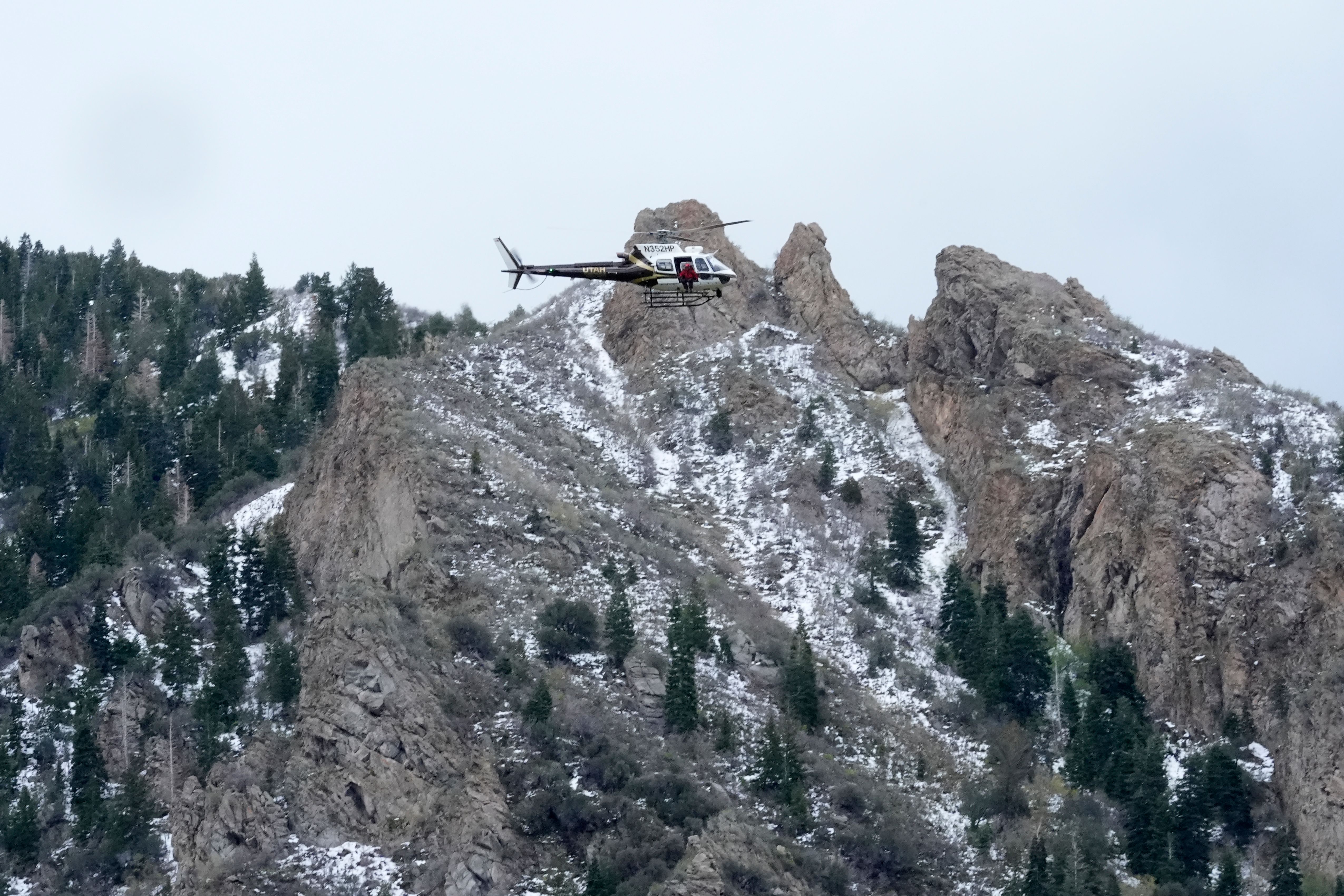
A Utah Department of Public Safety helicopter carries rescuers from Hidden Valley Park on Thursday, May 9, 2024, Thursday, May 9, 2024, in Sandy, Utah. One skier was rescued and two remained missing following an avalanche in the mountains outside of Salt Lake City. The slide happened after several days of spring snowstorms. (AP Photo/Rick Bowmer)

A rescue team went to the area mid-morning after the avalanche was reported near Lone Peak in the Wasatch Range southeast of Salt Lake City, Salt Lake County Sheriff Rosie Rivera said. One of the skiers, who was able to dig himself out of the snow, was rescued and taken to a hospital, Rivera said. She said she believed he was the one who called for help. Officers were speaking with him at the hospital to get more information about what happened, the sheriff said.

Rescuers in a helicopter flew over the area Thursday afternoon and confirmed the other two skiers were deceased, Rivera said. They are two men, ages 23 and 32. Their names have not been released, but their families have been notified, the sheriff said.

Conditions were not safe enough to allow for a recovery on Thursday, and crews planned to go out Friday morning, weather permitting, Rivera said.

The deaths bring this winter’s tally of avalanche deaths in the U.S. to at least 15, which is less than the average of about 30 people who are killed by avalanches each year. The Colorado Avalanche Information Center, which keeps track of the figure nationally, tallied 13 deaths before authorities announced Thursday’s fatalities.

The site of the avalanche, Lone Peak, is one of the highest peaks in the Wasatch Range towering over Utah’s capital city. Its steep, rugged terrain makes it a popular destination for advanced backcountry skiers, and experienced climbers can be found scaling its sheer granite walls in the warmer months.

The slide happened in the Big Willow Cirque, said Craig Gordon with the Utah Avalanche Center.

“This is very serious terrain. It's steep. It's north-facing. The crew that was up there would have to be experienced," Gordon said.

Rivera said they were experienced skiers who were prepared for the skiing.

About 2.5 feet (76 centimeters) of heavy, wet snow fell in the area in the past three days during storms that also brought very strong winds, he said.

“With spring, avalanche conditions can change in an instant,” Gordon said.

Related Tags

WORLDNEWS
ADVERTISEMENT
.most-popular .layout-ratio{ padding-bottom: 79.13%; } @media (min-width: 768px) and (max-width: 1024px) { .widget-title { font-size: 15px !important; } }

{{ articles_filter_1561_widget.title }}

.most-popular .layout-ratio{ padding-bottom: 79.13%; } @media (min-width: 768px) and (max-width: 1024px) { .widget-title { font-size: 15px !important; } }

{{ articles_filter_1562_widget.title }}

.most-popular .layout-ratio{ padding-bottom: 79.13%; } @media (min-width: 768px) and (max-width: 1024px) { .widget-title { font-size: 15px !important; } }

{{ articles_filter_1563_widget.title }}

{{ articles_filter_1564_widget.title }}

.mb-article-details { position: relative; } .mb-article-details .article-body-preview, .mb-article-details .article-body-summary{ font-size: 17px; line-height: 30px; font-family: "Libre Caslon Text", serif; color: #000; } .mb-article-details .article-body-preview iframe , .mb-article-details .article-body-summary iframe{ width: 100%; margin: auto; } .read-more-background { background: linear-gradient(180deg, color(display-p3 1.000 1.000 1.000 / 0) 13.75%, color(display-p3 1.000 1.000 1.000 / 0.8) 30.79%, color(display-p3 1.000 1.000 1.000) 72.5%); position: absolute; height: 200px; width: 100%; bottom: 0; display: flex; justify-content: center; align-items: center; padding: 0; } .read-more-background a{ color: #000; } .read-more-btn { padding: 17px 45px; font-family: Inter; font-weight: 700; font-size: 18px; line-height: 16px; text-align: center; vertical-align: middle; border: 1px solid black; background-color: white; } .hidden { display: none; }
function initializeAllSwipers() { // Get all hidden inputs with cms_article_id document.querySelectorAll('[id^="cms_article_id_"]').forEach(function (input) { const cmsArticleId = input.value; const articleSelector = '#article-' + cmsArticleId + ' .body_images'; const swiperElement = document.querySelector(articleSelector); if (swiperElement && !swiperElement.classList.contains('swiper-initialized')) { new Swiper(articleSelector, { loop: true, pagination: false, navigation: { nextEl: '#article-' + cmsArticleId + ' .swiper-button-next', prevEl: '#article-' + cmsArticleId + ' .swiper-button-prev', }, }); } }); } setTimeout(initializeAllSwipers, 3000); const intersectionObserver = new IntersectionObserver( (entries) => { entries.forEach((entry) => { if (entry.isIntersecting) { const newUrl = entry.target.getAttribute("data-url"); if (newUrl) { history.pushState(null, null, newUrl); let article = entry.target; // Extract metadata const author = article.querySelector('.author-section').textContent.replace('By', '').trim(); const section = article.querySelector('.section-info ').textContent.replace(' ', ' '); const title = article.querySelector('.article-title h1').textContent; // Parse URL for Chartbeat path format const parsedUrl = new URL(newUrl, window.location.origin); const cleanUrl = parsedUrl.host + parsedUrl.pathname; // Update Chartbeat configuration if (typeof window._sf_async_config !== 'undefined') { window._sf_async_config.path = cleanUrl; window._sf_async_config.sections = section; window._sf_async_config.authors = author; } // Track virtual page view with Chartbeat if (typeof pSUPERFLY !== 'undefined' && typeof pSUPERFLY.virtualPage === 'function') { try { pSUPERFLY.virtualPage({ path: cleanUrl, title: title, sections: section, authors: author }); } catch (error) { console.error('ping error', error); } } // Optional: Update document title if (title && title !== document.title) { document.title = title; } } } }); }, { threshold: 0.1 } ); function showArticleBody(button) { const article = button.closest("article"); const summary = article.querySelector(".article-body-summary"); const body = article.querySelector(".article-body-preview"); const readMoreSection = article.querySelector(".read-more-background"); // Hide summary and read-more section summary.style.display = "none"; readMoreSection.style.display = "none"; // Show the full article body body.classList.remove("hidden"); } document.addEventListener("DOMContentLoaded", () => { let loadCount = 0; // Track how many times articles are loaded const offset = [1, 2, 3, 4, 5, 6, 7, 8, 9, 10]; // Offset values const currentUrl = window.location.pathname.substring(1); let isLoading = false; // Prevent multiple calls if (!currentUrl) { console.log("Current URL is invalid."); return; } const sentinel = document.getElementById("load-more-sentinel"); if (!sentinel) { console.log("Sentinel element not found."); return; } function isSentinelVisible() { const rect = sentinel.getBoundingClientRect(); return ( rect.top < window.innerHeight && rect.bottom >= 0 ); } function onScroll() { if (isLoading) return; if (isSentinelVisible()) { if (loadCount >= offset.length) { console.log("Maximum load attempts reached."); window.removeEventListener("scroll", onScroll); return; } isLoading = true; const currentOffset = offset[loadCount]; window.loadMoreItems().then(() => { let article = document.querySelector('#widget_1690 > div:nth-last-of-type(2) article'); intersectionObserver.observe(article) loadCount++; }).catch(error => { console.error("Error loading more items:", error); }).finally(() => { isLoading = false; }); } } window.addEventListener("scroll", onScroll); });

Sign up by email to receive news.