ADVERTISEMENT

Broken record: March is 10th straight month to be hottest on record, scientists say

Published Apr 9, 2024 03:39 am

HOTTEST PHOTO.jpg

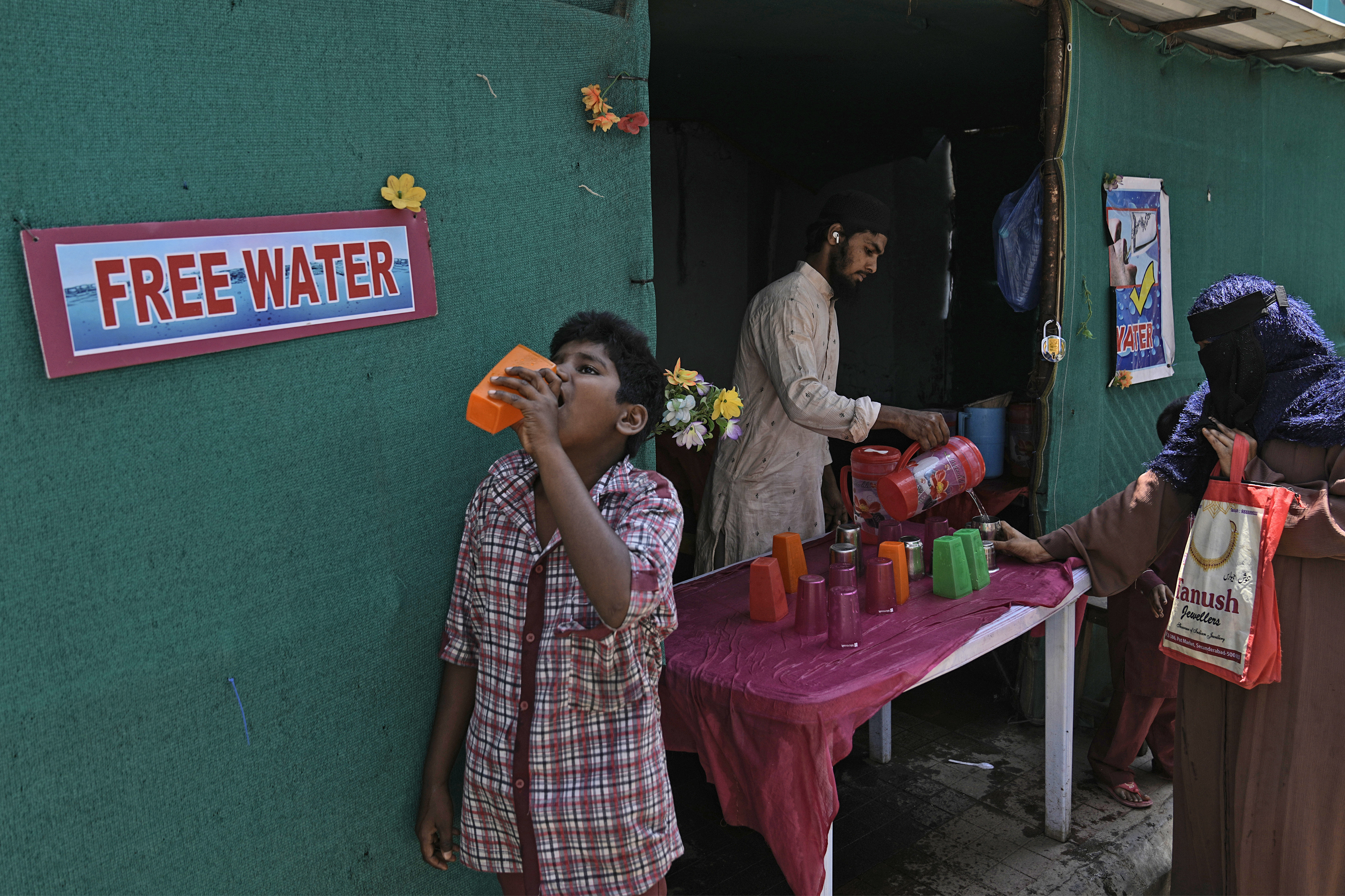
HOTTEST MONTH ON RECORD – A volunteer distributes drinking water next to a bus stand on a hot summer day in Hyderabad, India, Thursday, March 21, 2024. Another month, another heat record for the planet. Earth just had its warmest March ever recorded, the 10th month in a row to set such a record, according to the European Union climate agency Copernicus. (AP)


WASHINGTON — For the 10th consecutive month, Earth in March set a new monthly record for global heat — with both air temperatures and the world's oceans hitting an all-time high for the month, the European Union climate agency Copernicus said.

March 2024 averaged 14.14 degrees Celsius (57.9 degrees Fahrenheit), exceeding the previous record from 2016 by a tenth of a degree, according to Copernicus data. And it was 1.68 degrees C (3 degrees F) warmer than in the late 1800s, the base used for temperatures before the burning of fossil fuels began growing rapidly.

Since last June, the globe has broken heat records each month, with marine heat waves across large areas of the globe's oceans contributing.

Scientists say the record-breaking heat during this time wasn't entirely surprising due to a strong El Nino, a climatic condition that warms the central Pacific and changes global weather patterns.

"But its combination with the non-natural marine heat waves made these records so breathtaking," said Woodwell Climate Research Center scientist Jennifer Francis.

With El Nino waning, the margins by which global average temperatures are surpassed each month should go down, Francis said.

Climate scientists attribute most of the record heat to human-caused climate change from carbon dioxide and methane emissions produced by the burning of coal, oil and natural gas.

"The trajectory will not change until concentrations of greenhouse gases in the atmosphere stop rising," Francis said, "which means we must stop burning fossil fuels, stop deforestation, and grow our food more sustainably as quickly as possible."

Until then, expect more broken records, she said.

Under the 2015 Paris Agreement, the world set a goal to keep warming at or below 1.5 degrees Celsius (2.7 degrees Fahrenheit) since pre-industrial times. Copernicus' temperature data is monthly and uses a slightly different measurement system than the Paris threshold, which is averaged over two or three decades.

Samantha Burgess, deputy director of Copernicus, said March's record-breaking temperature wasn't as exceptional as some other months in the past year that broke records by wider margins.

"We've had record-breaking months that have been even more unusual," Burgess said, pointing to February 2024 and September 2023. But the "trajectory is not in the right direction," she added.

The globe has now experienced 12 months with average monthly temperatures 1.58 degrees Celsius (2.8 degrees Fahrenheit) above the Paris threshold, according to Copernicus data.

In March, global sea surface temperature averaged 21.07 degrees Celsius (69.93 degrees Fahrenheit), the highest monthly value on record and slightly higher than what was recorded in February.

"We need more ambitious global action to ensure that we can get to net zero as soon as possible," Burgess said.


Related Tags

WORLDNEWS
ADVERTISEMENT
.most-popular .layout-ratio{ padding-bottom: 79.13%; } @media (min-width: 768px) and (max-width: 1024px) { .widget-title { font-size: 15px !important; } }

{{ articles_filter_1561_widget.title }}

.most-popular .layout-ratio{ padding-bottom: 79.13%; } @media (min-width: 768px) and (max-width: 1024px) { .widget-title { font-size: 15px !important; } }

{{ articles_filter_1562_widget.title }}

.most-popular .layout-ratio{ padding-bottom: 79.13%; } @media (min-width: 768px) and (max-width: 1024px) { .widget-title { font-size: 15px !important; } }

{{ articles_filter_1563_widget.title }}

{{ articles_filter_1564_widget.title }}

.mb-article-details { position: relative; } .mb-article-details .article-body-preview, .mb-article-details .article-body-summary{ font-size: 17px; line-height: 30px; font-family: "Libre Caslon Text", serif; color: #000; } .mb-article-details .article-body-preview iframe , .mb-article-details .article-body-summary iframe{ width: 100%; margin: auto; } .read-more-background { background: linear-gradient(180deg, color(display-p3 1.000 1.000 1.000 / 0) 13.75%, color(display-p3 1.000 1.000 1.000 / 0.8) 30.79%, color(display-p3 1.000 1.000 1.000) 72.5%); position: absolute; height: 200px; width: 100%; bottom: 0; display: flex; justify-content: center; align-items: center; padding: 0; } .read-more-background a{ color: #000; } .read-more-btn { padding: 17px 45px; font-family: Inter; font-weight: 700; font-size: 18px; line-height: 16px; text-align: center; vertical-align: middle; border: 1px solid black; background-color: white; } .hidden { display: none; }
function initializeAllSwipers() { // Get all hidden inputs with cms_article_id document.querySelectorAll('[id^="cms_article_id_"]').forEach(function (input) { const cmsArticleId = input.value; const articleSelector = '#article-' + cmsArticleId + ' .body_images'; const swiperElement = document.querySelector(articleSelector); if (swiperElement && !swiperElement.classList.contains('swiper-initialized')) { new Swiper(articleSelector, { loop: true, pagination: false, navigation: { nextEl: '#article-' + cmsArticleId + ' .swiper-button-next', prevEl: '#article-' + cmsArticleId + ' .swiper-button-prev', }, }); } }); } setTimeout(initializeAllSwipers, 3000); const intersectionObserver = new IntersectionObserver( (entries) => { entries.forEach((entry) => { if (entry.isIntersecting) { const newUrl = entry.target.getAttribute("data-url"); if (newUrl) { history.pushState(null, null, newUrl); let article = entry.target; // Extract metadata const author = article.querySelector('.author-section').textContent.replace('By', '').trim(); const section = article.querySelector('.section-info ').textContent.replace(' ', ' '); const title = article.querySelector('.article-title h1').textContent; // Parse URL for Chartbeat path format const parsedUrl = new URL(newUrl, window.location.origin); const cleanUrl = parsedUrl.host + parsedUrl.pathname; // Update Chartbeat configuration if (typeof window._sf_async_config !== 'undefined') { window._sf_async_config.path = cleanUrl; window._sf_async_config.sections = section; window._sf_async_config.authors = author; } // Track virtual page view with Chartbeat if (typeof pSUPERFLY !== 'undefined' && typeof pSUPERFLY.virtualPage === 'function') { try { pSUPERFLY.virtualPage({ path: cleanUrl, title: title, sections: section, authors: author }); } catch (error) { console.error('ping error', error); } } // Optional: Update document title if (title && title !== document.title) { document.title = title; } } } }); }, { threshold: 0.1 } ); function showArticleBody(button) { const article = button.closest("article"); const summary = article.querySelector(".article-body-summary"); const body = article.querySelector(".article-body-preview"); const readMoreSection = article.querySelector(".read-more-background"); // Hide summary and read-more section summary.style.display = "none"; readMoreSection.style.display = "none"; // Show the full article body body.classList.remove("hidden"); } document.addEventListener("DOMContentLoaded", () => { let loadCount = 0; // Track how many times articles are loaded const offset = [1, 2, 3, 4, 5, 6, 7, 8, 9, 10]; // Offset values const currentUrl = window.location.pathname.substring(1); let isLoading = false; // Prevent multiple calls if (!currentUrl) { console.log("Current URL is invalid."); return; } const sentinel = document.getElementById("load-more-sentinel"); if (!sentinel) { console.log("Sentinel element not found."); return; } function isSentinelVisible() { const rect = sentinel.getBoundingClientRect(); return ( rect.top < window.innerHeight && rect.bottom >= 0 ); } function onScroll() { if (isLoading) return; if (isSentinelVisible()) { if (loadCount >= offset.length) { console.log("Maximum load attempts reached."); window.removeEventListener("scroll", onScroll); return; } isLoading = true; const currentOffset = offset[loadCount]; window.loadMoreItems().then(() => { let article = document.querySelector('#widget_1690 > div:nth-last-of-type(2) article'); intersectionObserver.observe(article) loadCount++; }).catch(error => { console.error("Error loading more items:", error); }).finally(() => { isLoading = false; }); } } window.addEventListener("scroll", onScroll); });

Sign up by email to receive news.