

ADVERTISEMENT

ASEAN finance leaders point to challenges from geopolitics, volatile prices

Published Apr 6, 2024 04:27 am

LUANG PRABANG, Laos — Southeast Asian economies are gaining ground as tourism and exports recover from the shocks of the pandemic, but geopolitical tensions and volatile commodity prices still pose serious risks, regional financial leaders said Friday.

Laos' Finance Minister Santiphab Phomvihane read out a joint statement following meetings among finance ministers at a hotel in the Laotian city of Luang Prabang, a UNESCO heritage site, but he made no other remarks and took no questions.
 

24097125539257.jpg
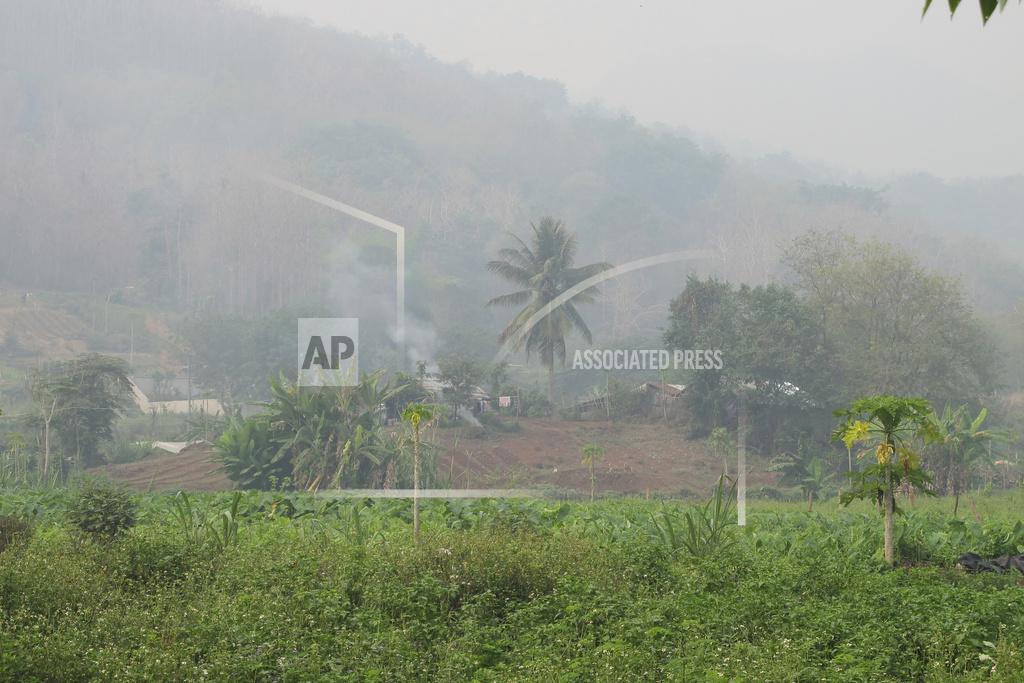
Smoke from trash burning in a village outside the Lao UNESCO heritage site of Luang Prabang joins the heavy haze over much of inland Southeast Asia due to crop and waste burning, Saturday, April 6, 2024. ASEAN finance ministers met in Luang Prabang this week to discuss economic and financial issues including ways to help finance reductions in carbon emissions that contribute to global warming. (AP Photo/Elaine Kurtenbach)

Estimates for economic growth in members of the 10-nation Association of Southeast Asian Nations vary but are generally near a robust 5% for 2024.
 

"Nevertheless, there are still challenges due to adverse financial spillovers from geopolitical tensions, volatility in global commodity prices," Phomvihane said, also pointing to climate change, aging populations and rapid development of digitalization as key factors for the region.
 

He did not elaborate, but the repercussions of the war in Ukraine and tensions between Washington and Beijing are among the geopolitical risks that have impacted trade and global commodity prices in recent years, trickling down to the smaller ASEAN economies that depend heavily on trade with China.
 

ASEAN members also include Brunei, Cambodia, Indonesia, Malaysia, Myanmar, the Philippines, Singapore, Thailand and Vietnam. East-Timor is seeking to join.
 

As ASEAN's most economically challenged economy, excluding its strife-torn neighbor Myanmar, Laos has time to prepare for the aging of its youthful population of about 7.5 million. Some of its neighbors are growing old before they become affluent. The government reckons it is in a demographic sweet spot with a couple of decades to prepare. But it faces a raft of other troubles, with massive foreign debt, a weakening currency and inflation running at about 25%.
 

In terms of U.S. dollars Laos' economy is shrinking due to the devaluation of its currency, the kip. However, in local currency terms it grew at a 3.7% rate last year and is forecast to expand at a 4% rate in 2024.
 

"Things are normalizing," said Winfried F. Wicklein, director general for Southeast Asia for the Asian Development Bank.
 

But the country is deemed to be in debt distress, with payment obligations exceeding $1 billion a year and total borrowing amounting to about 125% of its economy, with half owed to China.
 

Chinese financial institutions are believed to have rescheduled payments for about $2 billion in those debts since 2020, helping Laos to avoid an outright default and relieving some pressure on the economy.
 

"Large chunks of debt repayments owed to China are being pushed into the future with little transparency around the interest and repayment process for this," said Keith Barney, a professor at Australia National University's Crawford School of Public Policy and who has been researching Laos for more than 20 years.
 

"The Lao economy is facing serious problems and it's hard to see an immediately apparent exit route"," he said. "Laos's debt problems are narrowing its future pathways for economic growth in different ways."
Still, Laos has acknowledged the seriousness of its debt quandary, allowing the public release of a report by the International Monetary Fund last year that minced no words in outlining urgent actions it said were needed to repair the country's finances, Wicklein noted.
 

"They realize they have a problem and are open to help. They are inviting you to the kitchen and it means a lot," he said.
 

On the sidelines of the ASEAN meetings this week, Laos signed agreements on launching cross-border payments using QR codes, among other incremental steps aimed at integrating its finances and economy into those of its bigger and richer neighbors.
 

There were no big statements on climate-related issues as the officials met surrounded by forests obscured by thick smoke from hill fires and burning of fields and waste, a seasonal problem that Laos shares with its ASEAN neighbors.
 

But such meetings allow top financial officials to collaborate in sharing lessons they have learned as they plot strategies on curbing carbon emissions.
 

"It's a long way to go, but everybody is committed to the same direction," Wicklein said.
 

Wicklein pointed to a 600 megawatt monsoon wind power project that will allow Laos to export electricity to neighboring Vietnam as an example of increasing investments in the energy sector beyond Laos' huge hydroelectric power sector.
 

"These megadeals have a demonstrable effect," he said.
 

ADVERTISEMENT
.most-popular .layout-ratio{ padding-bottom: 79.13%; } @media (min-width: 768px) and (max-width: 1024px) { .widget-title { font-size: 15px !important; } }

{{ articles_filter_1561_widget.title }}

.most-popular .layout-ratio{ padding-bottom: 79.13%; } @media (min-width: 768px) and (max-width: 1024px) { .widget-title { font-size: 15px !important; } }

{{ articles_filter_1562_widget.title }}

.most-popular .layout-ratio{ padding-bottom: 79.13%; } @media (min-width: 768px) and (max-width: 1024px) { .widget-title { font-size: 15px !important; } }

{{ articles_filter_1563_widget.title }}

{{ articles_filter_1564_widget.title }}

.mb-article-details { position: relative; } .mb-article-details .article-body-preview, .mb-article-details .article-body-summary{ font-size: 17px; line-height: 30px; font-family: "Libre Caslon Text", serif; color: #000; } .mb-article-details .article-body-preview iframe , .mb-article-details .article-body-summary iframe{ width: 100%; margin: auto; } .read-more-background { background: linear-gradient(180deg, color(display-p3 1.000 1.000 1.000 / 0) 13.75%, color(display-p3 1.000 1.000 1.000 / 0.8) 30.79%, color(display-p3 1.000 1.000 1.000) 72.5%); position: absolute; height: 200px; width: 100%; bottom: 0; display: flex; justify-content: center; align-items: center; padding: 0; } .read-more-background a{ color: #000; } .read-more-btn { padding: 17px 45px; font-family: Inter; font-weight: 700; font-size: 18px; line-height: 16px; text-align: center; vertical-align: middle; border: 1px solid black; background-color: white; } .hidden { display: none; }
function initializeAllSwipers() { // Get all hidden inputs with cms_article_id document.querySelectorAll('[id^="cms_article_id_"]').forEach(function (input) { const cmsArticleId = input.value; const articleSelector = '#article-' + cmsArticleId + ' .body_images'; const swiperElement = document.querySelector(articleSelector); if (swiperElement && !swiperElement.classList.contains('swiper-initialized')) { new Swiper(articleSelector, { loop: true, pagination: false, navigation: { nextEl: '#article-' + cmsArticleId + ' .swiper-button-next', prevEl: '#article-' + cmsArticleId + ' .swiper-button-prev', }, }); } }); } setTimeout(initializeAllSwipers, 3000); const intersectionObserver = new IntersectionObserver( (entries) => { entries.forEach((entry) => { if (entry.isIntersecting) { const newUrl = entry.target.getAttribute("data-url"); if (newUrl) { history.pushState(null, null, newUrl); let article = entry.target; // Extract metadata const author = article.querySelector('.author-section').textContent.replace('By', '').trim(); const section = article.querySelector('.section-info ').textContent.replace(' ', ' '); const title = article.querySelector('.article-title h1').textContent; // Parse URL for Chartbeat path format const parsedUrl = new URL(newUrl, window.location.origin); const cleanUrl = parsedUrl.host + parsedUrl.pathname; // Update Chartbeat configuration if (typeof window._sf_async_config !== 'undefined') { window._sf_async_config.path = cleanUrl; window._sf_async_config.sections = section; window._sf_async_config.authors = author; } // Track virtual page view with Chartbeat if (typeof pSUPERFLY !== 'undefined' && typeof pSUPERFLY.virtualPage === 'function') { try { pSUPERFLY.virtualPage({ path: cleanUrl, title: title, sections: section, authors: author }); } catch (error) { console.error('ping error', error); } } // Optional: Update document title if (title && title !== document.title) { document.title = title; } } } }); }, { threshold: 0.1 } ); function showArticleBody(button) { const article = button.closest("article"); const summary = article.querySelector(".article-body-summary"); const body = article.querySelector(".article-body-preview"); const readMoreSection = article.querySelector(".read-more-background"); // Hide summary and read-more section summary.style.display = "none"; readMoreSection.style.display = "none"; // Show the full article body body.classList.remove("hidden"); } document.addEventListener("DOMContentLoaded", () => { let loadCount = 0; // Track how many times articles are loaded const offset = [1, 2, 3, 4, 5, 6, 7, 8, 9, 10]; // Offset values const currentUrl = window.location.pathname.substring(1); let isLoading = false; // Prevent multiple calls if (!currentUrl) { console.log("Current URL is invalid."); return; } const sentinel = document.getElementById("load-more-sentinel"); if (!sentinel) { console.log("Sentinel element not found."); return; } function isSentinelVisible() { const rect = sentinel.getBoundingClientRect(); return ( rect.top < window.innerHeight && rect.bottom >= 0 ); } function onScroll() { if (isLoading) return; if (isSentinelVisible()) { if (loadCount >= offset.length) { console.log("Maximum load attempts reached."); window.removeEventListener("scroll", onScroll); return; } isLoading = true; const currentOffset = offset[loadCount]; window.loadMoreItems().then(() => { let article = document.querySelector('#widget_1690 > div:nth-last-of-type(2) article'); intersectionObserver.observe(article) loadCount++; }).catch(error => { console.error("Error loading more items:", error); }).finally(() => { isLoading = false; }); } } window.addEventListener("scroll", onScroll); });

Sign up by email to receive news.