






 Opinion
Reflecting on life lessons from business, the academe and government service
Opinion
Reflecting on life lessons from business, the academe and government service
Reflecting on life lessons from business, the academe and government service
By Sonny Coloma


ENDEAVOR
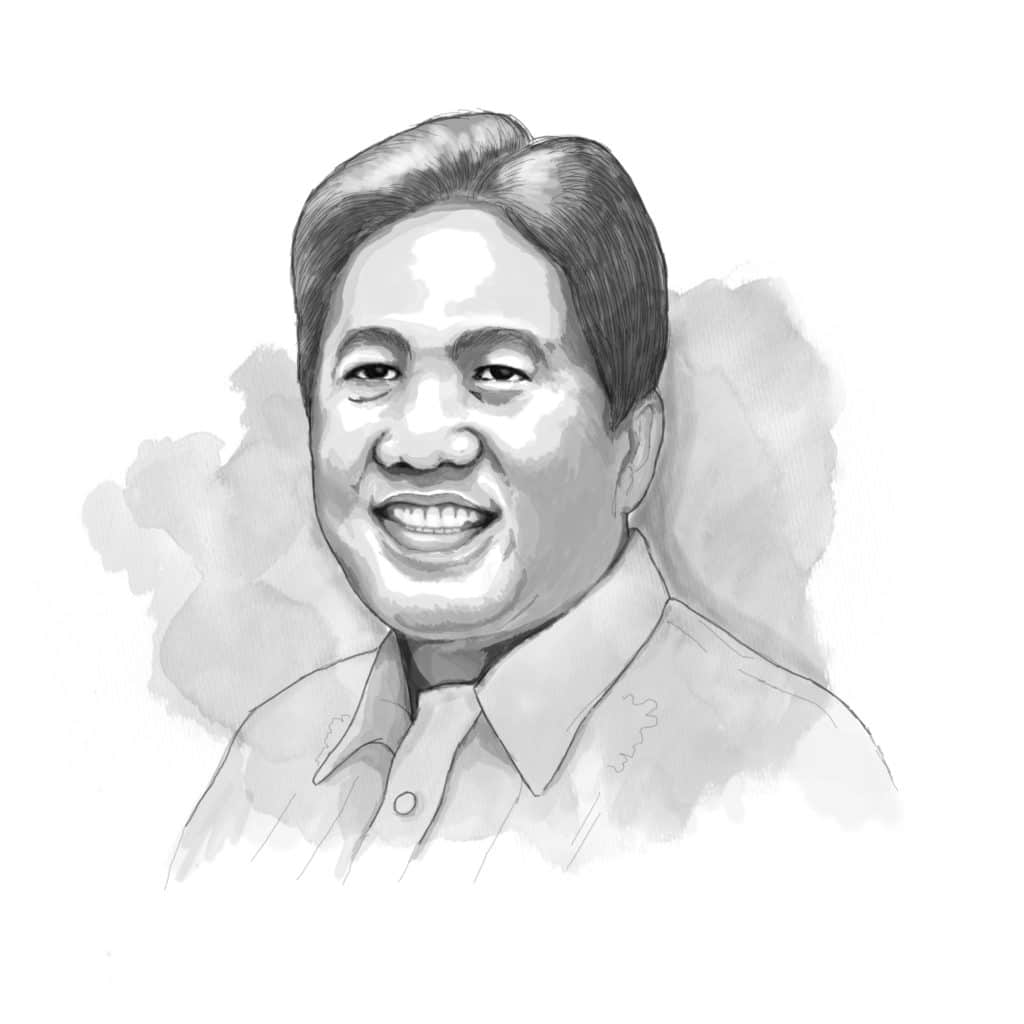
When I earned my doctoral degree in 2009 at age 56, I wondered how things would have turned out differently if I, after getting my MBA degree at age 25, how much farther I would have advanced in my career, if I had gone on immediately to continue and become a Ph.D. in my early thirties. Indeed, as Danish philosopher Sorën Kierkegaard said: “Life can only be understood backwards, but it must always be lived forward.”
On further reflection, I now realize that, truly, such long interval had been beneficial, instead of detrimental, to my personal development. “In God’s own good time”, I have learned many lessons from the best teacher of all: experience. “
My B-A-G of life lessons is filled by experiences I have gained from Business, the Academe, and Government, the three spheres in which I have been working since graduating from the University of the Philippines in 1973.
From my corporate work experience, I have learned how to deal with high-pressure deadlines and be target-focused. The discipline of the bottom line impels members of a business organization to be mindful of costs as well as time to deliver, keeping in mind that customer satisfaction is the primary imperative. We cannot choose our co-workers. We need to adjust our temperament, and be tolerant of others’ unique qualities, as well as idiosyncracies.
I have been fortunate to have worked with organizations where there is a high level of camaraderie and esprit de corps. To this day, thanks to the breadth of social media reach, I am able to keep touch with officemates from decades ago, including those who have resettled permanently abroad.
The Bankers Council for Personnel Management was another fertile ground for enabling me to establish a network of fellow professionals who regularly exchanged information on policies and practices in the banking and finance industry. My association with them instilled in me the consciousness that even in the highly competitive business arena, it is possible to foster camaraderie and foster genuine friendship.
I realized, too, that when one assumes a high-profile position in a professional association, one may find oneself conflicted, or even constrained, to act against one’s cherished beliefs. I conveyed to a committee of the House of Representatives the organization’s stand against a legislated increase in minimum wages. This was before the creation of regional wage-setting bodies in June 1989.
As a student activist in the seventies, I became aware of the massive exploitation of workers, including children and minors who were conscripted to work in sweat shops where there was minimal observance of occupational safety and health standards.
In 1988, I decided to launch myself into a new field of endeavor by serving as a professor in the Asian Institute of Management (AIM) where I had earned my MBA degree a decade earlier. A practitioner-oriented institution of higher learning, AIM adopted the educational philosophy of the Harvard Business School (HBS). Management lessons were extracted from the crucible of praxis, which is defined as “the process by which a theory, lesson, or skill is enacted, embodied, realized, applied, or put into practice; the act of engaging, applying, exercising, realizing.”
I wish to share, too, the important lessons that I learned from being a teacher or professor: First: Business exists to create value through products and services that provide meaningful benefits to people. Second: Leaders of business enterprises are expected to act ethically, or in accordance with the highest moral standards of the society in which these businesses thrive. As such they assume responsibility and become accountable for the ways in which their products and services affect the lives of people.
These first two lessons stem from the realization that, at its core, a business produces goods or services. Notice the use of the word “goods”; notice too, the use of the word “services” that imply something good or beneficial. So how could anyone insist that the basic purpose of a business is something other than “good”?
During a brief stint as visiting professor at the University of Southern California in the nineties, I came across a seminal book by James O’Toole on Leading Change: Overcoming the Ideology of Comfort and the Tyranny of Custom. From this book I derived the third lesson: “Leadership is not situational; it is not “morally and behaviorally relativistic.” “Leaders must adopt the unnatural behavior of always leading by the pull of inspiring values.” This reinforces the previous point. Leadership, be it in business or any other fields, is not value-free or neutral; in fact, it is value- and values-laden and biased toward what is good or beneficial. Hence, the fourth lesson logically flows from the third: “Leaders of business enterprises are expected to act ethically, or in accordance with the highest moral standards.”
The fifth and final lesson from teaching: “The servant-leader is servant first … It begins with the natural feeling that one wants to serve, to serve first. Then conscious choice brings one to aspire to lead.” This is attributed to Robert Greenleaf, founder of the Center for Servant Leadership.
From my work as a consultant, while being a professor, I also learned many important lessons.
First: A common source of employee alienation is the apparent dissonance between their own values and beliefs and the practices in their organizations. Second: In most Philippine companies, the top three values, of all employees across all levels, in the order of priority, are: faith in God; love and caring for one’s family; and the desire to succeed professionally. Third: Well-performing and successful organizations are those that are able to create alignment between their people’s closely held values and their organizational goals.
In conclusion, there is need for an alternative organization that fosters: Integration of mind, body and spirit and alignment of individual goals with organizational goals.
It is possible to create an organization that honors the faith, values and beliefs of people; and composed of teams of people that are capable of acting as a community of shared vision, meaning and purpose.
Such is Spirit-Led Organization in which people derive wisdom and inspiration from their faith in God, regard their business or occupation as their life’s mission, and interact with each other as caring members of a community.