

ADVERTISEMENT

US expected to provide $6 billion to fund long-term weapons contracts for Ukraine, officials say

Published Apr 26, 2024 12:06 pm

WASHINGTON (AP) — The U.S. is expected to announce Friday that it will provide about $6 billion in long-term military aid to Ukraine, U.S. officials said, adding that it will include much sought after munitions for Patriot air defense systems.
AP24116851793722.jpg
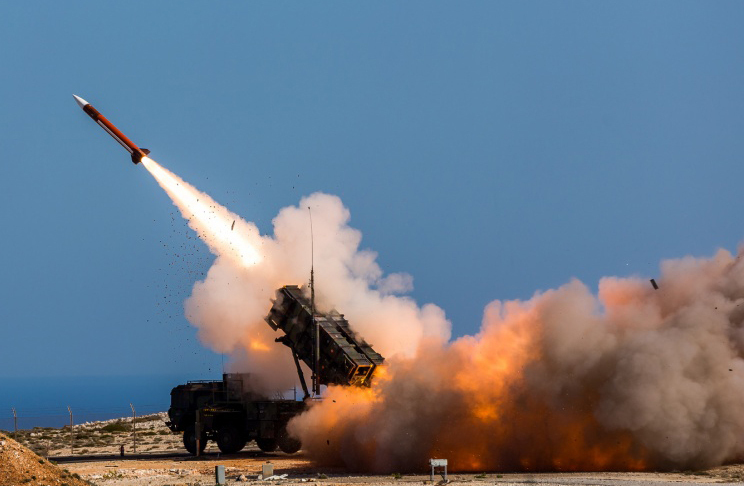
FILE - In this image released by the U.S. Department of Defense, German soldiers assigned to Surface Air and Missile Defense Wing 1, fire the Patriot weapons system at the NATO Missile Firing Installation, in Chania, Greece, on Nov. 8, 2017. U.S. officials say the Pentagon is expected to announce that it will provide about $6 billion in long-term military aid to Ukraine. It will include much sought after munitions for Patriot air defense systems and other weapons. (Sebastian Apel/U.S. Department of Defense, via AP, File)


The officials said the aid package will be funded through the Ukraine Security Assistance Initiative, which pays for longer-term contracts with the defense industry and means that it could take many months or years for the weapons to arrive. The officials spoke on condition of anonymity to discuss details not yet made public.


The new funding — the largest tranche of USAI aid sent to date - will include a wide array of munitions for air defense, such as the National Advanced Surface to Air Missile System (NASAM) and the High Mobility Artillery Rocket System (HIMARS), as well as the Patriot munitions, Switchblade and Puma drones, counter drone systems and artillery.


The announcement is expected to come as Defense Secretary Lloyd Austin convenes a virtual meeting on Friday of defense officials from Europe and around the world to discuss international aid for Ukraine. The gathering — created by Austin and known as the Ukraine Defense Contact Group — has been meeting about monthly for the past two years, and is the primary forum for weapons contributions to Kyiv for the war.


It follows the White House decision earlier this week to approve the delivery of $1 billion in weapons and equipment to Ukraine. Those weapons include a variety of ammunition, including air defense munitions and large amounts of artillery rounds that are much in demand by Ukrainian forces, as well as armored vehicles and other weapons.


That aid, however, will get to Ukraine quickly because it is being pulled off Pentagon shelves, including in warehouses in Europe.


The large back-to-back packages are the result of the new infusion of about $61 billion in funding for Ukraine that was passed by Congress and signed into law by President Joe Biden on Wednesday. And they provide weapons Kyiv desperately needs to stall gains being made by Russian forces in the war.


Bitterly divided members of Congress deadlocked over the funding for months, forcing House Speaker Mike Johnson to cobble together a bipartisan coalition to pass the bill. The $95 billion foreign aid package, which also included billions for Israel and Taiwan, passed the House on Saturday, and the Senate approved it Tuesday.


Senior U.S. officials have described dire battlefield conditions in Ukraine, as troops run low on munitions and Russian forces make gains.


Since Russia's February 2022 invasion, the U.S. has sent more than $44 billion worth of weapons, maintenance, training and spare parts to Ukraine.


Among the weapons provided to Ukraine were Abrams M1A1 battle tanks. But Ukraine has now sidelined them in part because Russian drone warfare has made it too difficult for them to operate without detection or coming under attack, two U.S. military officials told The Associated Press.
 

Related Tags

world news
ADVERTISEMENT
.most-popular .layout-ratio{ padding-bottom: 79.13%; } @media (min-width: 768px) and (max-width: 1024px) { .widget-title { font-size: 15px !important; } }

{{ articles_filter_1561_widget.title }}

.most-popular .layout-ratio{ padding-bottom: 79.13%; } @media (min-width: 768px) and (max-width: 1024px) { .widget-title { font-size: 15px !important; } }

{{ articles_filter_1562_widget.title }}

.most-popular .layout-ratio{ padding-bottom: 79.13%; } @media (min-width: 768px) and (max-width: 1024px) { .widget-title { font-size: 15px !important; } }

{{ articles_filter_1563_widget.title }}

{{ articles_filter_1564_widget.title }}

.mb-article-details { position: relative; } .mb-article-details .article-body-preview, .mb-article-details .article-body-summary{ font-size: 17px; line-height: 30px; font-family: "Libre Caslon Text", serif; color: #000; } .mb-article-details .article-body-preview iframe , .mb-article-details .article-body-summary iframe{ width: 100%; margin: auto; } .read-more-background { background: linear-gradient(180deg, color(display-p3 1.000 1.000 1.000 / 0) 13.75%, color(display-p3 1.000 1.000 1.000 / 0.8) 30.79%, color(display-p3 1.000 1.000 1.000) 72.5%); position: absolute; height: 200px; width: 100%; bottom: 0; display: flex; justify-content: center; align-items: center; padding: 0; } .read-more-background a{ color: #000; } .read-more-btn { padding: 17px 45px; font-family: Inter; font-weight: 700; font-size: 18px; line-height: 16px; text-align: center; vertical-align: middle; border: 1px solid black; background-color: white; } .hidden { display: none; }
function initializeAllSwipers() { // Get all hidden inputs with cms_article_id document.querySelectorAll('[id^="cms_article_id_"]').forEach(function (input) { const cmsArticleId = input.value; const articleSelector = '#article-' + cmsArticleId + ' .body_images'; const swiperElement = document.querySelector(articleSelector); if (swiperElement && !swiperElement.classList.contains('swiper-initialized')) { new Swiper(articleSelector, { loop: true, pagination: false, navigation: { nextEl: '#article-' + cmsArticleId + ' .swiper-button-next', prevEl: '#article-' + cmsArticleId + ' .swiper-button-prev', }, }); } }); } setTimeout(initializeAllSwipers, 3000); const intersectionObserver = new IntersectionObserver( (entries) => { entries.forEach((entry) => { if (entry.isIntersecting) { const newUrl = entry.target.getAttribute("data-url"); if (newUrl) { history.pushState(null, null, newUrl); let article = entry.target; // Extract metadata const author = article.querySelector('.author-section').textContent.replace('By', '').trim(); const section = article.querySelector('.section-info ').textContent.replace(' ', ' '); const title = article.querySelector('.article-title h1').textContent; // Parse URL for Chartbeat path format const parsedUrl = new URL(newUrl, window.location.origin); const cleanUrl = parsedUrl.host + parsedUrl.pathname; // Update Chartbeat configuration if (typeof window._sf_async_config !== 'undefined') { window._sf_async_config.path = cleanUrl; window._sf_async_config.sections = section; window._sf_async_config.authors = author; } // Track virtual page view with Chartbeat if (typeof pSUPERFLY !== 'undefined' && typeof pSUPERFLY.virtualPage === 'function') { try { pSUPERFLY.virtualPage({ path: cleanUrl, title: title, sections: section, authors: author }); } catch (error) { console.error('ping error', error); } } // Optional: Update document title if (title && title !== document.title) { document.title = title; } } } }); }, { threshold: 0.1 } ); function showArticleBody(button) { const article = button.closest("article"); const summary = article.querySelector(".article-body-summary"); const body = article.querySelector(".article-body-preview"); const readMoreSection = article.querySelector(".read-more-background"); // Hide summary and read-more section summary.style.display = "none"; readMoreSection.style.display = "none"; // Show the full article body body.classList.remove("hidden"); } document.addEventListener("DOMContentLoaded", () => { let loadCount = 0; // Track how many times articles are loaded const offset = [1, 2, 3, 4, 5, 6, 7, 8, 9, 10]; // Offset values const currentUrl = window.location.pathname.substring(1); let isLoading = false; // Prevent multiple calls if (!currentUrl) { console.log("Current URL is invalid."); return; } const sentinel = document.getElementById("load-more-sentinel"); if (!sentinel) { console.log("Sentinel element not found."); return; } function isSentinelVisible() { const rect = sentinel.getBoundingClientRect(); return ( rect.top < window.innerHeight && rect.bottom >= 0 ); } function onScroll() { if (isLoading) return; if (isSentinelVisible()) { if (loadCount >= offset.length) { console.log("Maximum load attempts reached."); window.removeEventListener("scroll", onScroll); return; } isLoading = true; const currentOffset = offset[loadCount]; window.loadMoreItems().then(() => { let article = document.querySelector('#widget_1690 > div:nth-last-of-type(2) article'); intersectionObserver.observe(article) loadCount++; }).catch(error => { console.error("Error loading more items:", error); }).finally(() => { isLoading = false; }); } } window.addEventListener("scroll", onScroll); });

Sign up by email to receive news.