

ADVERTISEMENT

PAGASA: El Niño continues to weaken but hotter, drier conditions may persist

Published Apr 24, 2024 04:05 am

The Philippine Atmospheric, Geophysical, and Astronomical Services Administration (PAGASA) on Wednesday, April 24 said the El Niño is gradually weakening, but its effects may still be felt in the country.
IMG_3990.jpeg
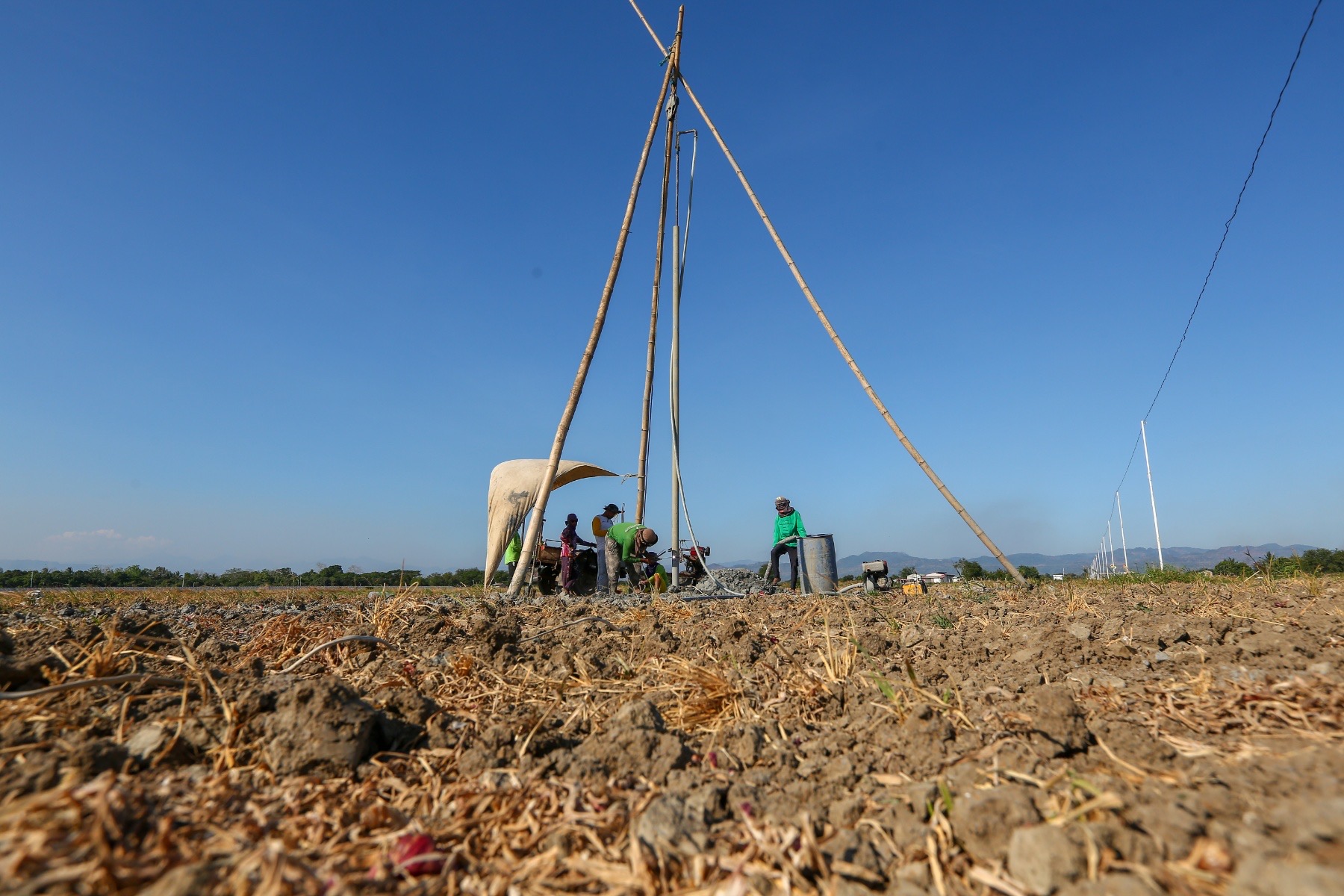
Farmers burying metal pipe to assess water flow beneath an onion and rice field for possible deep well irrigation during a hot day with a 41 degree Celcius temparature in Brgy. San Isidro, San Jose, Occidental Mindoro, on Sunday, April 21, 2024. San Jose was under the state of calamity in March due to El Niño. (Noel B. Pabalate/Manila Bulletin)

During the PAGASA’s climate forum, Climatology and Agrometeorology Division-Climate Monitoring and Prediction Section (CAD-CLIMPS) Senior Weather Specialist Ruby Abastillas warned that while the El Niño phenomenon is weakening, hotter and drier conditions may persist. 

In May, PAGASA forecasts maximum temperatures of 31.5-40.8 degrees Celsius (°C) in Northern Luzon; 31.7-39.8°C in lowlands Luzon; 26.3-29.0°C in mountainous Luzon; 36.5-38.3°C in Metro Manila; 32.5-37.5°C in lowlands Visayas; 33.4-38.8°C in lowlands Mindanao; and 34-36.3°C in mountainous Mindanao. 

Meanwhile, for the May rainfall forecast, PAGASA said “below-normal” rainfall (41-80 millimeters) is expected in most parts of Luzon, Visayas, and northern Mindanao, while “near-normal” rainfall (81-120 mm) will be felt in northern Luzon and the rest of Mindanao, with a high probability of below-normal in most parts of the country.

In June, below-normal rainfall will be experienced in most parts of western and Central Luzon as well as in some parts of Visayas, while near-normal rainfall will be felt in most of the country with high probability for below-normal rainfall in most parts of Luzon and Visayas and high probability for near to above-normal (more than 120 mm) in the eastern side of Luzon, some parts of Visayas, and most parts of Mindanao. 

For July, below-normal to near-normal rainfall will occur in Luzon and Visayas, while Mindanao may have near-normal with some areas being under above-normal rainfall condition. 

In August, near-normal conditions will be felt in most of the country, but still, the western Luzon may have below-normal rainfall, while Visayas and Mindanao may have patches of above-normal rainfall. 

PAGASA said in April-May-June season, there is an increasing probability of 85 percent for an El Niño Southern Oscillation (ENSO) neutral occurrence, while the probability for La Niña in June-July-August season remained at 62 percent. 

Related Tags

PAGASA El Niño phenomenon
ADVERTISEMENT
.most-popular .layout-ratio{ padding-bottom: 79.13%; } @media (min-width: 768px) and (max-width: 1024px) { .widget-title { font-size: 15px !important; } }

{{ articles_filter_1561_widget.title }}

.most-popular .layout-ratio{ padding-bottom: 79.13%; } @media (min-width: 768px) and (max-width: 1024px) { .widget-title { font-size: 15px !important; } }

{{ articles_filter_1562_widget.title }}

.most-popular .layout-ratio{ padding-bottom: 79.13%; } @media (min-width: 768px) and (max-width: 1024px) { .widget-title { font-size: 15px !important; } }

{{ articles_filter_1563_widget.title }}

{{ articles_filter_1564_widget.title }}

.mb-article-details { position: relative; } .mb-article-details .article-body-preview, .mb-article-details .article-body-summary{ font-size: 17px; line-height: 30px; font-family: "Libre Caslon Text", serif; color: #000; } .mb-article-details .article-body-preview iframe , .mb-article-details .article-body-summary iframe{ width: 100%; margin: auto; } .read-more-background { background: linear-gradient(180deg, color(display-p3 1.000 1.000 1.000 / 0) 13.75%, color(display-p3 1.000 1.000 1.000 / 0.8) 30.79%, color(display-p3 1.000 1.000 1.000) 72.5%); position: absolute; height: 200px; width: 100%; bottom: 0; display: flex; justify-content: center; align-items: center; padding: 0; } .read-more-background a{ color: #000; } .read-more-btn { padding: 17px 45px; font-family: Inter; font-weight: 700; font-size: 18px; line-height: 16px; text-align: center; vertical-align: middle; border: 1px solid black; background-color: white; } .hidden { display: none; }
function initializeAllSwipers() { // Get all hidden inputs with cms_article_id document.querySelectorAll('[id^="cms_article_id_"]').forEach(function (input) { const cmsArticleId = input.value; const articleSelector = '#article-' + cmsArticleId + ' .body_images'; const swiperElement = document.querySelector(articleSelector); if (swiperElement && !swiperElement.classList.contains('swiper-initialized')) { new Swiper(articleSelector, { loop: true, pagination: false, navigation: { nextEl: '#article-' + cmsArticleId + ' .swiper-button-next', prevEl: '#article-' + cmsArticleId + ' .swiper-button-prev', }, }); } }); } setTimeout(initializeAllSwipers, 3000); const intersectionObserver = new IntersectionObserver( (entries) => { entries.forEach((entry) => { if (entry.isIntersecting) { const newUrl = entry.target.getAttribute("data-url"); if (newUrl) { history.pushState(null, null, newUrl); let article = entry.target; // Extract metadata const author = article.querySelector('.author-section').textContent.replace('By', '').trim(); const section = article.querySelector('.section-info ').textContent.replace(' ', ' '); const title = article.querySelector('.article-title h1').textContent; // Parse URL for Chartbeat path format const parsedUrl = new URL(newUrl, window.location.origin); const cleanUrl = parsedUrl.host + parsedUrl.pathname; // Update Chartbeat configuration if (typeof window._sf_async_config !== 'undefined') { window._sf_async_config.path = cleanUrl; window._sf_async_config.sections = section; window._sf_async_config.authors = author; } // Track virtual page view with Chartbeat if (typeof pSUPERFLY !== 'undefined' && typeof pSUPERFLY.virtualPage === 'function') { try { pSUPERFLY.virtualPage({ path: cleanUrl, title: title, sections: section, authors: author }); } catch (error) { console.error('ping error', error); } } // Optional: Update document title if (title && title !== document.title) { document.title = title; } } } }); }, { threshold: 0.1 } ); function showArticleBody(button) { const article = button.closest("article"); const summary = article.querySelector(".article-body-summary"); const body = article.querySelector(".article-body-preview"); const readMoreSection = article.querySelector(".read-more-background"); // Hide summary and read-more section summary.style.display = "none"; readMoreSection.style.display = "none"; // Show the full article body body.classList.remove("hidden"); } document.addEventListener("DOMContentLoaded", () => { let loadCount = 0; // Track how many times articles are loaded const offset = [1, 2, 3, 4, 5, 6, 7, 8, 9, 10]; // Offset values const currentUrl = window.location.pathname.substring(1); let isLoading = false; // Prevent multiple calls if (!currentUrl) { console.log("Current URL is invalid."); return; } const sentinel = document.getElementById("load-more-sentinel"); if (!sentinel) { console.log("Sentinel element not found."); return; } function isSentinelVisible() { const rect = sentinel.getBoundingClientRect(); return ( rect.top < window.innerHeight && rect.bottom >= 0 ); } function onScroll() { if (isLoading) return; if (isSentinelVisible()) { if (loadCount >= offset.length) { console.log("Maximum load attempts reached."); window.removeEventListener("scroll", onScroll); return; } isLoading = true; const currentOffset = offset[loadCount]; window.loadMoreItems().then(() => { let article = document.querySelector('#widget_1690 > div:nth-last-of-type(2) article'); intersectionObserver.observe(article) loadCount++; }).catch(error => { console.error("Error loading more items:", error); }).finally(() => { isLoading = false; }); } } window.addEventListener("scroll", onScroll); });

Sign up by email to receive news.