

ADVERTISEMENT

Radenta brings fun in learning with Fable Robotics

Published Apr 22, 2024 05:41 am

At A Glance

  • Radenta showcased the Fable Explore 2.5 Educational Modular Robot at the FAPSA National Annual Convergence, offering a dynamic tool for teaching programming and robotics in schools.
  • The Fable Explore 2.5 is a modular robotics kit that allows students to quickly assemble robots and begin programming, catering to both beginners using block programming and those more advanced using Python.
  • The kit includes various components like a Fable Hub, joint module, flex phone holder, and additional accessories like a throwing arm and maze, facilitating diverse and engaging educational activities.
  • It features a Fable Hub that connects to PCs, tablets, or smartphones via USB or Bluetooth, supporting a wide range of devices including iOS and Windows systems.
  • Produced by Shape Robotics in Denmark, the Fable system is designed for STEAM education, blending science, technology, engineering, arts, and mathematics to foster comprehensive student engagement and problem-solving skills.

Radenta, one of the country’s leading solutions integrators, is showing teachers and students the most advanced and creative ways to teach and learn programming and robotics.  
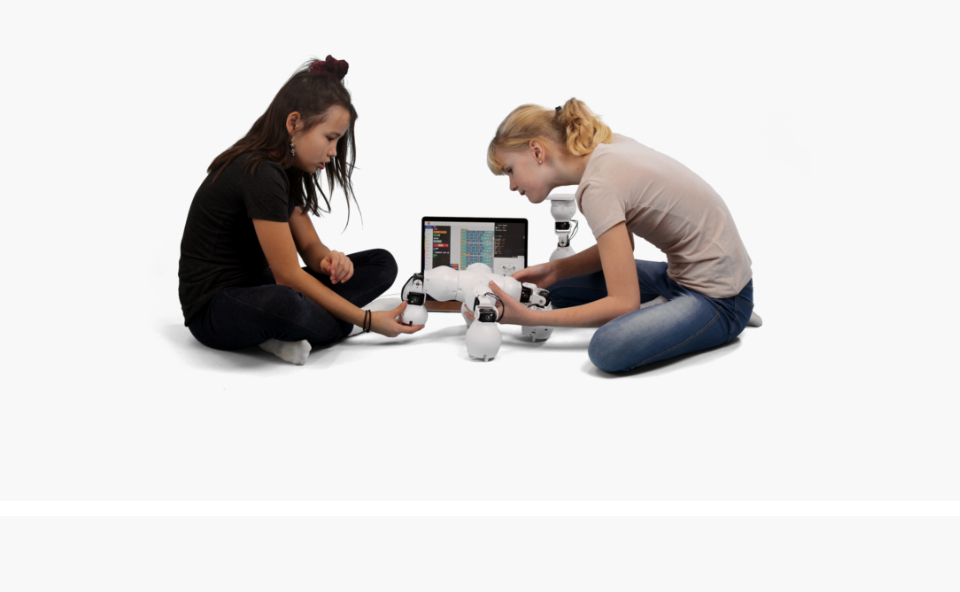
Image 1.jpg
Students can build a robot in seconds and start programming in minutes. 


Radenta introduced the Fable Explore 2.5 Educational Modular Robot at the recent National Annual Convergence of the Federation of Association of Private Schools Administrators (FAPSA), which was held at the Waterfront Cebu City Hotel.

Fable is a modular robotics kit for the classroom that makes it easy and fun for students to build and program their robots. Kids can quickly prototype, test, and improve their creations while learning real-world problem-solving skills. Students can create a robot in seconds and start programming in minutes. Depending on their experience, they can encode Fable using simple block programming or the advanced Python language.

Several types of robots can be assembled in seconds by snapping various Fable modules together.
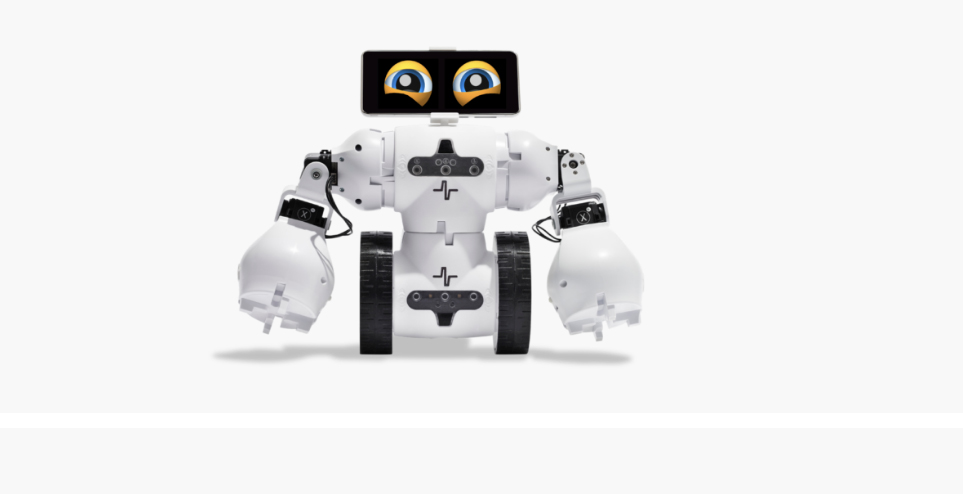
Image 2 (1).jpg
Fable is a modular robotics kit for the classroom that makes it easy and fun for students to build and program their own robots.

The kit has a Fable Hub that provides wireless communications between the PC, tablet, or smartphone and one or several modules. It is a required component for executing programs.  

To use with a PC, the Hub must be connected to it via a USB cable. A driver must be installed for the Hub to work on Windows 7, Windows 8 or higher operating systems. The Hub must always be plugged to a USB port on PC or Smart Screen. The tablet or smartphone can then connect via Bluetooth.  

The Fable Explore 2.5 kit includes a Fable Hub, joint module, Fable stand, 4xy module, flex phone holder, cables, throwing arm, ping-pong ball, ball stand, 2 accessory adapters, Fable Fork, and Maze plus 2 steel balls. Additional modules are available for more advanced learning and configurations.  

Full charging is approximately 3 hours that translates to 4 to 5 hours of continuous use.  

Fable Blocky is the official programming app for the Fable System. It comes free with the unit. Upgrades are automatic with no additional fee. It is compatible with any iOS or Windows operating system and can be used with either an iPhone or android mobile phone.  
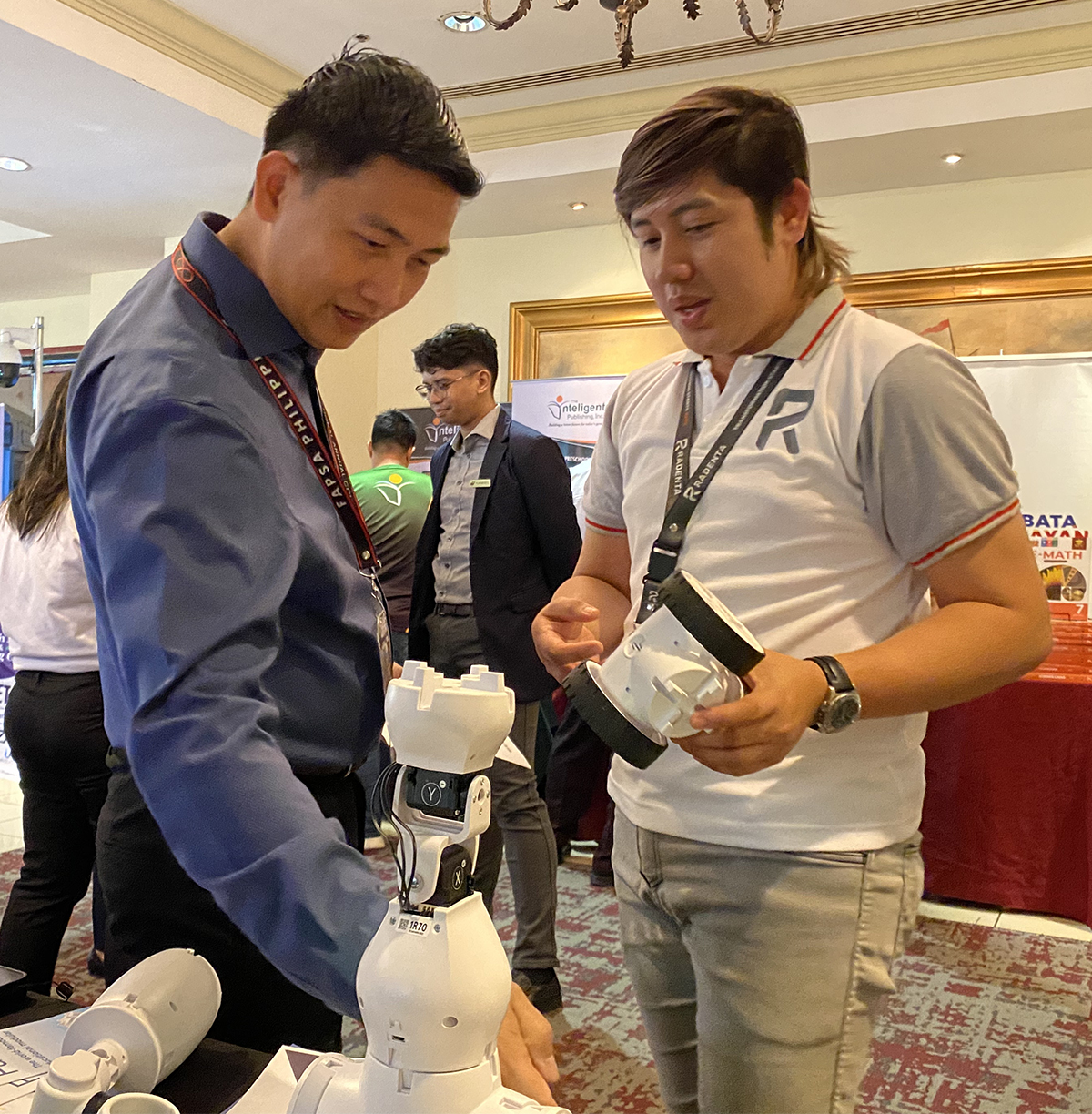
Image 6.jpg
Radenta introduced the Fable Explore 2.5 Educational Modular Robot to the delegates/participants/attendees of the recent National Annual Convergence of the Federation of Association of Private Schools Administrators (FAPSA). 


Fable Educational Modular Robot is recommended for elementary and high school levels. A 2–3-hour session twice a week is sufficient to maximize learning.  

In a classroom setting, it is advisable to have one unit for every 10 students. To preserve the integrity of the unit, it is best to use it on a low, flat surface.  

Shape Robotics, the maker of Fable has headquarters in Denmark. It provides excellent classroom technology for STEAM Education - an approach to teaching and learning that combines science, technology, engineering, the arts, and mathematics to guide student inquiry, discussion, and problem solving. To date, more than 12,000 schools and institutions use Fable worldwide.  

The company also offers teaching materials developed by teachers for teachers. Their TeacherZone platform has ready-made materials for teachers’ use in classrooms.     Be in step with the latest productivity tools for educational technology. Call Radenta at 0998-9816302, email [email protected] or log on to www.radenta.com.  

ADVERTISEMENT
.most-popular .layout-ratio{ padding-bottom: 79.13%; } @media (min-width: 768px) and (max-width: 1024px) { .widget-title { font-size: 15px !important; } }

{{ articles_filter_1561_widget.title }}

.most-popular .layout-ratio{ padding-bottom: 79.13%; } @media (min-width: 768px) and (max-width: 1024px) { .widget-title { font-size: 15px !important; } }

{{ articles_filter_1562_widget.title }}

.most-popular .layout-ratio{ padding-bottom: 79.13%; } @media (min-width: 768px) and (max-width: 1024px) { .widget-title { font-size: 15px !important; } }

{{ articles_filter_1563_widget.title }}

{{ articles_filter_1564_widget.title }}

.mb-article-details { position: relative; } .mb-article-details .article-body-preview, .mb-article-details .article-body-summary{ font-size: 17px; line-height: 30px; font-family: "Libre Caslon Text", serif; color: #000; } .mb-article-details .article-body-preview iframe , .mb-article-details .article-body-summary iframe{ width: 100%; margin: auto; } .read-more-background { background: linear-gradient(180deg, color(display-p3 1.000 1.000 1.000 / 0) 13.75%, color(display-p3 1.000 1.000 1.000 / 0.8) 30.79%, color(display-p3 1.000 1.000 1.000) 72.5%); position: absolute; height: 200px; width: 100%; bottom: 0; display: flex; justify-content: center; align-items: center; padding: 0; } .read-more-background a{ color: #000; } .read-more-btn { padding: 17px 45px; font-family: Inter; font-weight: 700; font-size: 18px; line-height: 16px; text-align: center; vertical-align: middle; border: 1px solid black; background-color: white; } .hidden { display: none; }
function initializeAllSwipers() { // Get all hidden inputs with cms_article_id document.querySelectorAll('[id^="cms_article_id_"]').forEach(function (input) { const cmsArticleId = input.value; const articleSelector = '#article-' + cmsArticleId + ' .body_images'; const swiperElement = document.querySelector(articleSelector); if (swiperElement && !swiperElement.classList.contains('swiper-initialized')) { new Swiper(articleSelector, { loop: true, pagination: false, navigation: { nextEl: '#article-' + cmsArticleId + ' .swiper-button-next', prevEl: '#article-' + cmsArticleId + ' .swiper-button-prev', }, }); } }); } setTimeout(initializeAllSwipers, 3000); const intersectionObserver = new IntersectionObserver( (entries) => { entries.forEach((entry) => { if (entry.isIntersecting) { const newUrl = entry.target.getAttribute("data-url"); if (newUrl) { history.pushState(null, null, newUrl); let article = entry.target; // Extract metadata const author = article.querySelector('.author-section').textContent.replace('By', '').trim(); const section = article.querySelector('.section-info ').textContent.replace(' ', ' '); const title = article.querySelector('.article-title h1').textContent; // Parse URL for Chartbeat path format const parsedUrl = new URL(newUrl, window.location.origin); const cleanUrl = parsedUrl.host + parsedUrl.pathname; // Update Chartbeat configuration if (typeof window._sf_async_config !== 'undefined') { window._sf_async_config.path = cleanUrl; window._sf_async_config.sections = section; window._sf_async_config.authors = author; } // Track virtual page view with Chartbeat if (typeof pSUPERFLY !== 'undefined' && typeof pSUPERFLY.virtualPage === 'function') { try { pSUPERFLY.virtualPage({ path: cleanUrl, title: title, sections: section, authors: author }); } catch (error) { console.error('ping error', error); } } // Optional: Update document title if (title && title !== document.title) { document.title = title; } } } }); }, { threshold: 0.1 } ); function showArticleBody(button) { const article = button.closest("article"); const summary = article.querySelector(".article-body-summary"); const body = article.querySelector(".article-body-preview"); const readMoreSection = article.querySelector(".read-more-background"); // Hide summary and read-more section summary.style.display = "none"; readMoreSection.style.display = "none"; // Show the full article body body.classList.remove("hidden"); } document.addEventListener("DOMContentLoaded", () => { let loadCount = 0; // Track how many times articles are loaded const offset = [1, 2, 3, 4, 5, 6, 7, 8, 9, 10]; // Offset values const currentUrl = window.location.pathname.substring(1); let isLoading = false; // Prevent multiple calls if (!currentUrl) { console.log("Current URL is invalid."); return; } const sentinel = document.getElementById("load-more-sentinel"); if (!sentinel) { console.log("Sentinel element not found."); return; } function isSentinelVisible() { const rect = sentinel.getBoundingClientRect(); return ( rect.top < window.innerHeight && rect.bottom >= 0 ); } function onScroll() { if (isLoading) return; if (isSentinelVisible()) { if (loadCount >= offset.length) { console.log("Maximum load attempts reached."); window.removeEventListener("scroll", onScroll); return; } isLoading = true; const currentOffset = offset[loadCount]; window.loadMoreItems().then(() => { let article = document.querySelector('#widget_1690 > div:nth-last-of-type(2) article'); intersectionObserver.observe(article) loadCount++; }).catch(error => { console.error("Error loading more items:", error); }).finally(() => { isLoading = false; }); } } window.addEventListener("scroll", onScroll); });

Sign up by email to receive news.