

ADVERTISEMENT

'Many' large earthquakes could strike various provinces, regions in the Philippines — expert

Published Apr 22, 2024 07:12 am

Although referred to as a “Big One,” the Philippines may experience "many" large or powerful earthquakes rather than just one, an expert from the Philippine Institute of Volcanology and Seismology (Phivolcs) said on Monday, April 22.
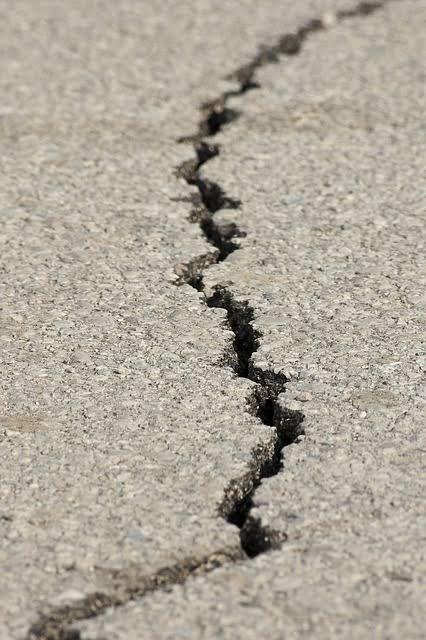
IMG_3902.jpeg
(Photo from Pixabay) 

In an interview with the "Ako at Geo" program, Phivolcs Supervising Science Research Specialist Jeffrey Perez said the Big One could occur in any region or province, with the exception of Palawan.

“Itong mga regions, mga provinces na ito, mayroon silang mga sources ng earthquake at itong mga sources na ito may generate different earthquake scenarios, at iyong pinakamalakas na earthquake scenario, iyon ‘yung posibleng maging Big One sa lugar nila (These regions, these provinces, they have sources of earthquake which may generate different earthquake scenarios, and the strongest earthquake scenario, that will be the Big One in their area),” Perez said. 

Perez said the Big One may occur in Metro Manila when the West Valley Fault moves, while it may occur in Davao City due to the movement of the Davao Fault System. 

He also said the Big One may be felt in the Ilocos Region, similar to the magnitude 7.0 earthquake on July 27, 2022, but that there were faults that had not yet moved, including the West Ilocos Fault.

Perez added that a magnitude 8.0 earthquake in the Eastern Samar could result from a movement in the Philippine Trench.

“Iba’t-ibang scenario sa bawat region, ibig-sabihin they have their own Big One at hindi lang isang one, maraming one kaya tinawag natin siyang Big Ones (Different scenarios in every region, meaning, they have their own Big One, and not only one Big One, many ones that is why we call it Big Ones),” he said. 

Meanwhile, Perez said Palawan may not experience the Big One because no earthquake sources had been mapped; however, strong earthquakes may still be felt in Palawan, but the epicenter will not be traced.

Active faults 

Perez said active faults in the Philippines include the Philippine Fault, Valley Fault System, Aglubang River Fault, Central Mindoro Fault, Casiguran Fault, East Zambales Fault, West Panay Fault, North Bohol Fault, East Bohol Fault, Tablas Fault, Mindanao Fault, Central Mindanao Fault, Cotabato-Sindangan Fault, Davao Fault System, and Cotabato Fault System. 

Phivolcs said the longest fault is the Philippine Fault with more than 1,300 kilometers (km) in length starting from Ilocos Norte traversing the middle part of the Philippines and ending in Mati, Davao Oriental. 

Perez noted that the whole 1,300-km will not move “one-time, big-time,” as when it does, a magnitude 9.0 earthquake may be generated. 

He said the whole fault is being mapped into segments, and the areas in each segment that may move will only be the ones affected. 

Related Tags

PHIVOLCS Big One
ADVERTISEMENT
.most-popular .layout-ratio{ padding-bottom: 79.13%; } @media (min-width: 768px) and (max-width: 1024px) { .widget-title { font-size: 15px !important; } }

{{ articles_filter_1561_widget.title }}

.most-popular .layout-ratio{ padding-bottom: 79.13%; } @media (min-width: 768px) and (max-width: 1024px) { .widget-title { font-size: 15px !important; } }

{{ articles_filter_1562_widget.title }}

.most-popular .layout-ratio{ padding-bottom: 79.13%; } @media (min-width: 768px) and (max-width: 1024px) { .widget-title { font-size: 15px !important; } }

{{ articles_filter_1563_widget.title }}

{{ articles_filter_1564_widget.title }}

.mb-article-details { position: relative; } .mb-article-details .article-body-preview, .mb-article-details .article-body-summary{ font-size: 17px; line-height: 30px; font-family: "Libre Caslon Text", serif; color: #000; } .mb-article-details .article-body-preview iframe , .mb-article-details .article-body-summary iframe{ width: 100%; margin: auto; } .read-more-background { background: linear-gradient(180deg, color(display-p3 1.000 1.000 1.000 / 0) 13.75%, color(display-p3 1.000 1.000 1.000 / 0.8) 30.79%, color(display-p3 1.000 1.000 1.000) 72.5%); position: absolute; height: 200px; width: 100%; bottom: 0; display: flex; justify-content: center; align-items: center; padding: 0; } .read-more-background a{ color: #000; } .read-more-btn { padding: 17px 45px; font-family: Inter; font-weight: 700; font-size: 18px; line-height: 16px; text-align: center; vertical-align: middle; border: 1px solid black; background-color: white; } .hidden { display: none; }
function initializeAllSwipers() { // Get all hidden inputs with cms_article_id document.querySelectorAll('[id^="cms_article_id_"]').forEach(function (input) { const cmsArticleId = input.value; const articleSelector = '#article-' + cmsArticleId + ' .body_images'; const swiperElement = document.querySelector(articleSelector); if (swiperElement && !swiperElement.classList.contains('swiper-initialized')) { new Swiper(articleSelector, { loop: true, pagination: false, navigation: { nextEl: '#article-' + cmsArticleId + ' .swiper-button-next', prevEl: '#article-' + cmsArticleId + ' .swiper-button-prev', }, }); } }); } setTimeout(initializeAllSwipers, 3000); const intersectionObserver = new IntersectionObserver( (entries) => { entries.forEach((entry) => { if (entry.isIntersecting) { const newUrl = entry.target.getAttribute("data-url"); if (newUrl) { history.pushState(null, null, newUrl); let article = entry.target; // Extract metadata const author = article.querySelector('.author-section').textContent.replace('By', '').trim(); const section = article.querySelector('.section-info ').textContent.replace(' ', ' '); const title = article.querySelector('.article-title h1').textContent; // Parse URL for Chartbeat path format const parsedUrl = new URL(newUrl, window.location.origin); const cleanUrl = parsedUrl.host + parsedUrl.pathname; // Update Chartbeat configuration if (typeof window._sf_async_config !== 'undefined') { window._sf_async_config.path = cleanUrl; window._sf_async_config.sections = section; window._sf_async_config.authors = author; } // Track virtual page view with Chartbeat if (typeof pSUPERFLY !== 'undefined' && typeof pSUPERFLY.virtualPage === 'function') { try { pSUPERFLY.virtualPage({ path: cleanUrl, title: title, sections: section, authors: author }); } catch (error) { console.error('ping error', error); } } // Optional: Update document title if (title && title !== document.title) { document.title = title; } } } }); }, { threshold: 0.1 } ); function showArticleBody(button) { const article = button.closest("article"); const summary = article.querySelector(".article-body-summary"); const body = article.querySelector(".article-body-preview"); const readMoreSection = article.querySelector(".read-more-background"); // Hide summary and read-more section summary.style.display = "none"; readMoreSection.style.display = "none"; // Show the full article body body.classList.remove("hidden"); } document.addEventListener("DOMContentLoaded", () => { let loadCount = 0; // Track how many times articles are loaded const offset = [1, 2, 3, 4, 5, 6, 7, 8, 9, 10]; // Offset values const currentUrl = window.location.pathname.substring(1); let isLoading = false; // Prevent multiple calls if (!currentUrl) { console.log("Current URL is invalid."); return; } const sentinel = document.getElementById("load-more-sentinel"); if (!sentinel) { console.log("Sentinel element not found."); return; } function isSentinelVisible() { const rect = sentinel.getBoundingClientRect(); return ( rect.top < window.innerHeight && rect.bottom >= 0 ); } function onScroll() { if (isLoading) return; if (isSentinelVisible()) { if (loadCount >= offset.length) { console.log("Maximum load attempts reached."); window.removeEventListener("scroll", onScroll); return; } isLoading = true; const currentOffset = offset[loadCount]; window.loadMoreItems().then(() => { let article = document.querySelector('#widget_1690 > div:nth-last-of-type(2) article'); intersectionObserver.observe(article) loadCount++; }).catch(error => { console.error("Error loading more items:", error); }).finally(() => { isLoading = false; }); } } window.addEventListener("scroll", onScroll); });

Sign up by email to receive news.