ADVERTISEMENT

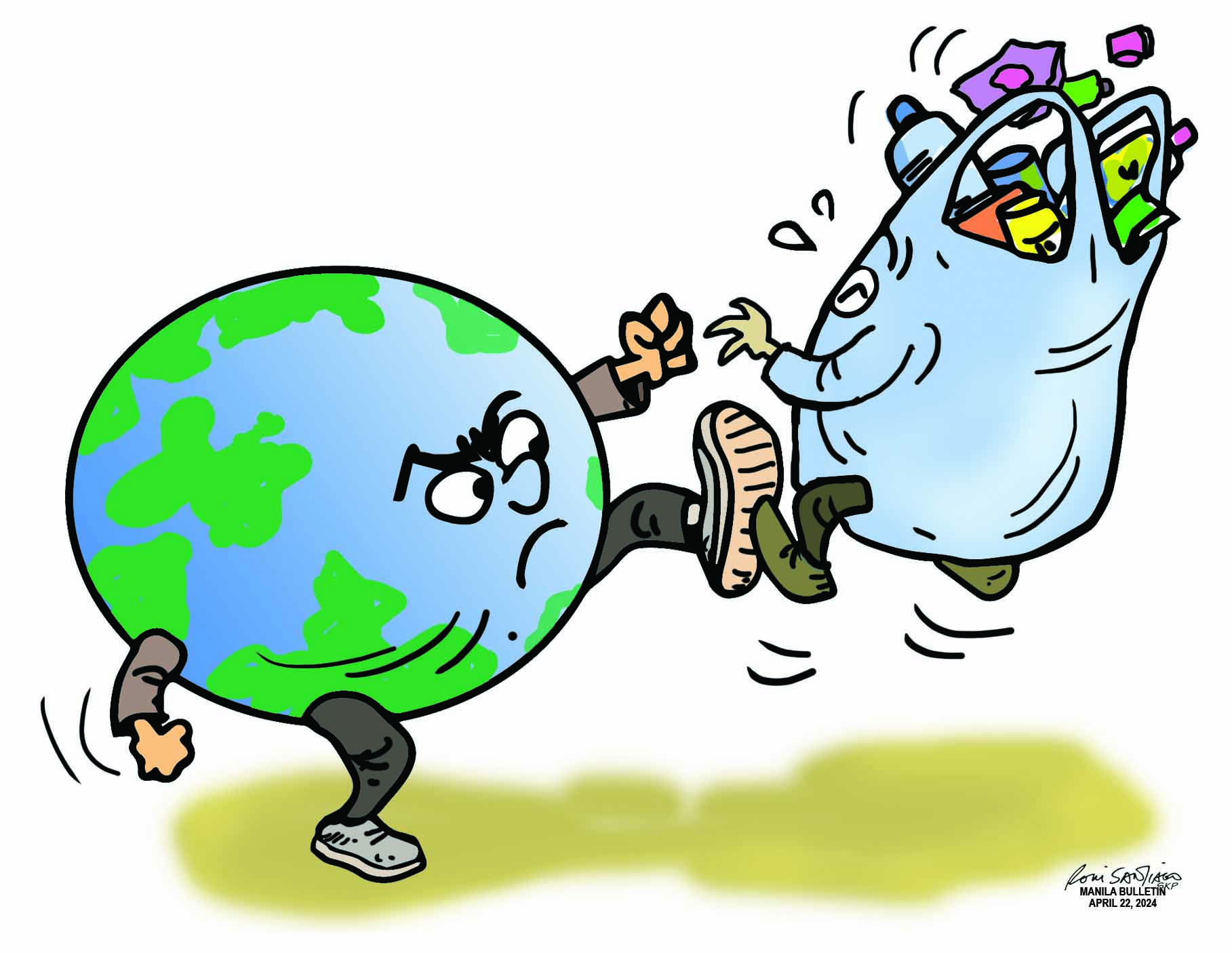
Earth Day imperative: Large-scale systems to regulate, eliminate single-use plastics

Published Apr 22, 2024 12:11 am

E CARTOON APR 22, 2024 (1).jpg

Filipinos join today’s observance of Earth Day, a practice that was launched in 1970 in the United States, with a rally for clean air and water. In 1990, this became a global movement, when an estimated 200 million people in 141 countries manifested solidarity in protecting the environment. At the turn of the 21st century, this movement had spread to 184 countries . In 2016, 175 nations, decided to join cause with the Paris Agreement, an international treaty on climate change.


As leader of the Climate Vulnerable Forum, “a global partnership of countries that are disproportionately affected by the consequences of climate change,” the Philippines hosted an important conference in Manila in 2015 that provided the springboard for the Paris Agreement that was forged during COP 21, the Conference of Parties convened by the United Nations to discuss climate change. An important agreement was reached: Limit global temperature rise this century to well below 2 degrees Celsius above pre-industrial levels and pursue efforts to limit the temperature increase even further to 1.5 degrees Celsius.


Heightened awareness on the perils of global warming and climate change has led to this year’s Earth Day theme, Planet vs. Plastics. 
Plastic pollution in oceans has exacerbated difficulties in controlling the volume of carbon dioxide (CO2) in the atmosphere and, consequently, the rise in temperature. Oceans serve as the largest natural carbon store. 


Writing for Mongabay, an authoritative web-based source on the environment, Claire Asher pointed out that: “Trillions of microplastic particles in the ocean threaten marine life, from huge filter-feeders to tiny plankton…Changes in plankton communities at the ocean surface could exacerbate deoxygenation driven by climate change, starving marine organisms of oxygen.” As plastic production “continues to soar year-on year”, the enactment of a UN treaty to address plastic pollution “could offer a glimmer of hope that the international community is ready to take action.”


A grassroots-based initiative of the Quezon City and San Juan City local governments — dubbed as Kuha sa Tingi, or derived from retail efforts — has demonstrated the efficacy of stemming the tide at the barangay-level. 


This involves establishing “small-portion refill systems for personal and home care products in city sari-sari stores at highly competitive price points.”
Consumers bring bottles, cans, and similar containers when they purchase shampoo, hairstyling gel, and similar items. In this way, they forego the use of plastic sachets that ultimately end up in canals, rivers and oceans. As observed by Greenpeace Philippines: 


“(T)he project is proof-of-concept that reuse and refill systems are not just effective solutions to the plastic crisis, but are also sound business models that benefit suppliers, retailers, consumers, and local government units—while helping protect the environment and communities.” 


We echo the proposal articulated by Marian Ledesma, Greenpeace Philippines Zero Waste Campaigner: “The government must drive major investment into these solutions while instituting strong policies to regulate and eliminate single-use plastics. With political will, as seen in Quezon City and San Juan City, these models can be effectively replicated and scaled up, and will provide benefits to citizens and the local government unit by reducing sachet pollution, material resource usage, and greenhouse gas emissions. In doing so, they subsequently decrease the harm felt by affected communities throughout the lifecycle of plastic.”

Related Tags

MANILA BULLETN EDITORIAL
ADVERTISEMENT
.most-popular .layout-ratio{ padding-bottom: 79.13%; } @media (min-width: 768px) and (max-width: 1024px) { .widget-title { font-size: 15px !important; } }

{{ articles_filter_1561_widget.title }}

.most-popular .layout-ratio{ padding-bottom: 79.13%; } @media (min-width: 768px) and (max-width: 1024px) { .widget-title { font-size: 15px !important; } }

{{ articles_filter_1562_widget.title }}

.most-popular .layout-ratio{ padding-bottom: 79.13%; } @media (min-width: 768px) and (max-width: 1024px) { .widget-title { font-size: 15px !important; } }

{{ articles_filter_1563_widget.title }}

{{ articles_filter_1564_widget.title }}

.mb-article-details { position: relative; } .mb-article-details .article-body-preview, .mb-article-details .article-body-summary{ font-size: 17px; line-height: 30px; font-family: "Libre Caslon Text", serif; color: #000; } .mb-article-details .article-body-preview iframe , .mb-article-details .article-body-summary iframe{ width: 100%; margin: auto; } .read-more-background { background: linear-gradient(180deg, color(display-p3 1.000 1.000 1.000 / 0) 13.75%, color(display-p3 1.000 1.000 1.000 / 0.8) 30.79%, color(display-p3 1.000 1.000 1.000) 72.5%); position: absolute; height: 200px; width: 100%; bottom: 0; display: flex; justify-content: center; align-items: center; padding: 0; } .read-more-background a{ color: #000; } .read-more-btn { padding: 17px 45px; font-family: Inter; font-weight: 700; font-size: 18px; line-height: 16px; text-align: center; vertical-align: middle; border: 1px solid black; background-color: white; } .hidden { display: none; }
function initializeAllSwipers() { // Get all hidden inputs with cms_article_id document.querySelectorAll('[id^="cms_article_id_"]').forEach(function (input) { const cmsArticleId = input.value; const articleSelector = '#article-' + cmsArticleId + ' .body_images'; const swiperElement = document.querySelector(articleSelector); if (swiperElement && !swiperElement.classList.contains('swiper-initialized')) { new Swiper(articleSelector, { loop: true, pagination: false, navigation: { nextEl: '#article-' + cmsArticleId + ' .swiper-button-next', prevEl: '#article-' + cmsArticleId + ' .swiper-button-prev', }, }); } }); } setTimeout(initializeAllSwipers, 3000); const intersectionObserver = new IntersectionObserver( (entries) => { entries.forEach((entry) => { if (entry.isIntersecting) { const newUrl = entry.target.getAttribute("data-url"); if (newUrl) { history.pushState(null, null, newUrl); let article = entry.target; // Extract metadata const author = article.querySelector('.author-section').textContent.replace('By', '').trim(); const section = article.querySelector('.section-info ').textContent.replace(' ', ' '); const title = article.querySelector('.article-title h1').textContent; // Parse URL for Chartbeat path format const parsedUrl = new URL(newUrl, window.location.origin); const cleanUrl = parsedUrl.host + parsedUrl.pathname; // Update Chartbeat configuration if (typeof window._sf_async_config !== 'undefined') { window._sf_async_config.path = cleanUrl; window._sf_async_config.sections = section; window._sf_async_config.authors = author; } // Track virtual page view with Chartbeat if (typeof pSUPERFLY !== 'undefined' && typeof pSUPERFLY.virtualPage === 'function') { try { pSUPERFLY.virtualPage({ path: cleanUrl, title: title, sections: section, authors: author }); } catch (error) { console.error('ping error', error); } } // Optional: Update document title if (title && title !== document.title) { document.title = title; } } } }); }, { threshold: 0.1 } ); function showArticleBody(button) { const article = button.closest("article"); const summary = article.querySelector(".article-body-summary"); const body = article.querySelector(".article-body-preview"); const readMoreSection = article.querySelector(".read-more-background"); // Hide summary and read-more section summary.style.display = "none"; readMoreSection.style.display = "none"; // Show the full article body body.classList.remove("hidden"); } document.addEventListener("DOMContentLoaded", () => { let loadCount = 0; // Track how many times articles are loaded const offset = [1, 2, 3, 4, 5, 6, 7, 8, 9, 10]; // Offset values const currentUrl = window.location.pathname.substring(1); let isLoading = false; // Prevent multiple calls if (!currentUrl) { console.log("Current URL is invalid."); return; } const sentinel = document.getElementById("load-more-sentinel"); if (!sentinel) { console.log("Sentinel element not found."); return; } function isSentinelVisible() { const rect = sentinel.getBoundingClientRect(); return ( rect.top < window.innerHeight && rect.bottom >= 0 ); } function onScroll() { if (isLoading) return; if (isSentinelVisible()) { if (loadCount >= offset.length) { console.log("Maximum load attempts reached."); window.removeEventListener("scroll", onScroll); return; } isLoading = true; const currentOffset = offset[loadCount]; window.loadMoreItems().then(() => { let article = document.querySelector('#widget_1690 > div:nth-last-of-type(2) article'); intersectionObserver.observe(article) loadCount++; }).catch(error => { console.error("Error loading more items:", error); }).finally(() => { isLoading = false; }); } } window.addEventListener("scroll", onScroll); });

Sign up by email to receive news.