






 Philippines
National
Don't be fault-finders: Rodriguez rails UP economists for opposing economic Cha-cha
Philippines
National
Don't be fault-finders: Rodriguez rails UP economists for opposing economic Cha-cha
Don't be fault-finders: Rodriguez rails UP economists for opposing economic Cha-cha


At A Glance
- Cagayan de Oro City 2nd district Rep. Rufus Rodriguez didn't mince his words Monday, April 22 as he slammed a group of economists from his alma mater, the University of the Philippines (UP), for opposing Congress' proposed economic Charter change (Cha-cha).
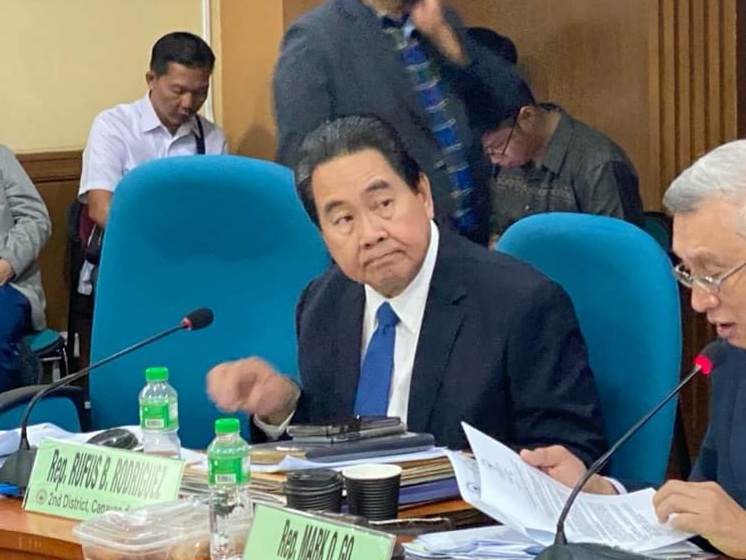 Cagayan de Oro City 2nd district Rep. Rufus Rodriguez (Facebook)
Cagayan de Oro City 2nd district Rep. Rufus Rodriguez didn't mince his words Monday, April 22 as he slammed a group of economists from his alma mater, the University of the Philippines (UP), for opposing Congress' proposed economic Charter change (Cha-cha).
“This group is anti-development, anti-employment, anti-economic progress, and anti poor. They are trying to block economic Charter reforms which we believe will bring in more foreign direct investments (FDIs), which in turn will accelerate our country’s economic development, and create more job and income opportunities for our people,” he said in an impassioned statement.
Rodriguez says UP, where he obtained his law degree, is known as the bulwark of activism and academic freedom, where progressive ideas flourish.
“But its economists and other academicians should not find fault in every proposal from government, including Congress. They should not oppose just for the sake of opposing,” said the Mindanaoan.
In a position paper, the UP economists said instead of proposing economic Charter amendments, lawmakers should attend to more important factors that affect FDIs, including infrastructure, connectivity, corruption, and rule of law.
Rodriguez, whose undergraduate degree is AB Economics at De La Salle University (DLSU) graduating summa cum laude, said economic constitutional amendment proposals and other factors affecting investments are not mutually exclusive and could be addressed together.
“I do not agree that the other ingredients for attracting investments are more important than removing foreign equity restrictions in the Charter. These limitations are the root cause of the reluctance of foreign businesses to invest in our country,” said the chairman of the House Committee on Constitutional Amendments
Rodriguez reminded the UP group that Congress has been addressing other investments-related issues by passing the necessary laws, including the recently enacted Ease of Doing Business Act and the reduction of the corporate income tax and the grant of other tax incentives.
It was only last March 20 when the House voted 288-8-2 (yes-no-abstain) to pass on third and final reading the proposed economic Cha-cha, as embodied in Resolution of Both Houses (RBH) No.7. As the phrase implies, the current Cha-cha effort is only concerned with easing the restrictive economic provisions of the 37-year-old Constitution.
The Senate's version of the measure, RBH No.6, remains pending at the subcommittee level.