







BARMM youth leaders, students back economic Cha-cha


At A Glance
- The majority of students and community leaders who attended a consultative session in the Bangsamoro Autonomous Region in Muslim Mindanao (BARMM) said they were in favor of amending the economic provisions of the 1987 Constitution.
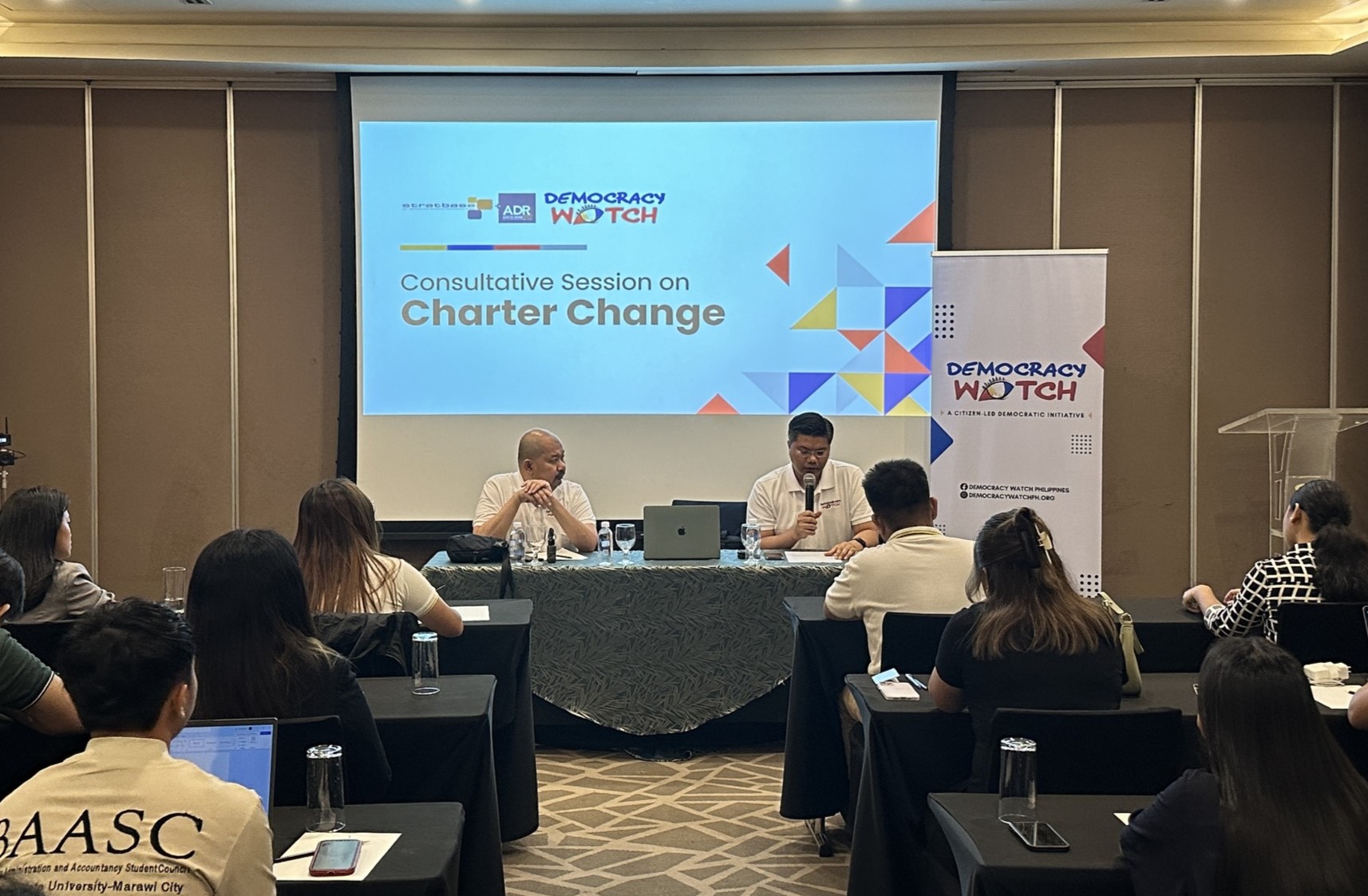 The consultative session organized by Democracy Watch Philippines in Cagayan de Oro City (Democracy Watch Philippines' Facebook page)
The majority of students and community leaders who attended a consultative session in the Bangsamoro Autonomous Region in Muslim Mindanao (BARMM) said they were in favor of amending the economic provisions of the 1987 Constitution.
Democracy Watch Philippines, which organized the session in Cagayan de Oro City, noted that participants echoed the sentiment that economic Charter change (Cha-cha) will help generate more jobs.
“We're OK with foreign investors because (of its) benefits to the people...because we are opening employment. The more we generate employment, we stop combat and (end) poverty,” said Abdul Abedin III of Mindanao State University.
Abedin opposed suggestions that the Philippines should first look inward to strengthen the economy.
“If we focus on what is in the Philippines, we don’t create employment, we don’t strengthen tourism,” he said.
The students even cited the economic boom that countries like Malaysia, Singapore, and the United Arab Emirates experienced once they opened up their economies to foreign investments.
“As BARMM we have been open to foreign investors especially in increasing Halal awareness and (developing) the Halal Industry. We see this as a potential just like what happened in Malaysia and Singapore,” Abedin added, noting that the region should follow what the UAE has done.
Jehvah Rosh Ha-shanah Cajilla, a business course student, underscored the need to “ask help” from other countries to make sure the Philippines is “globally competitive”---which is in the form of foreign investments.
She expressed support for the proposed economic amendments, which aims to remove the restrictions on foreign ownership of public utilities, education, and advertisement.
“At least one step at a time. Opening this will help us get foreign investments. I don’t think it is negative because in the business world we need investors kasi nga kung magne-negosyo ka wala kang kapital, saan ka kukuha ng pera (because if you go into business without capital, where will you get the money?) We need help, we cannot stand alone,” she said.
Other participants in the consultative session expressed support for amend the economic provisions, but they want the government to make assurances first that national security is strengthened.
Similar to lawmakers in the House of Representatives, some participants also opposed amendments to political provisions, such as lifting the term limits of elected officials.
Last March, the House approved on the third and final reading Resolution of Both Houses (RBH) No. 7, which aims to amend three economic provisions in the Constitution.
Meanwhile, the Senate’s counterpart measure, RBH No. 6, is still on the subcommittee level with public hearings set to take place.