







Makati LGU, NGO, launch DRR development training


The Makati City local government in partnership with a Japanese non-government organization (NGO) held a two day Creative Disaster Risk Reduction (DRR) Education Program Development Training last April 17 and 18 aimed at creating DRR learning materials tailored to Makati's disaster risks and customized to the stakeholders’ backgrounds and needs.
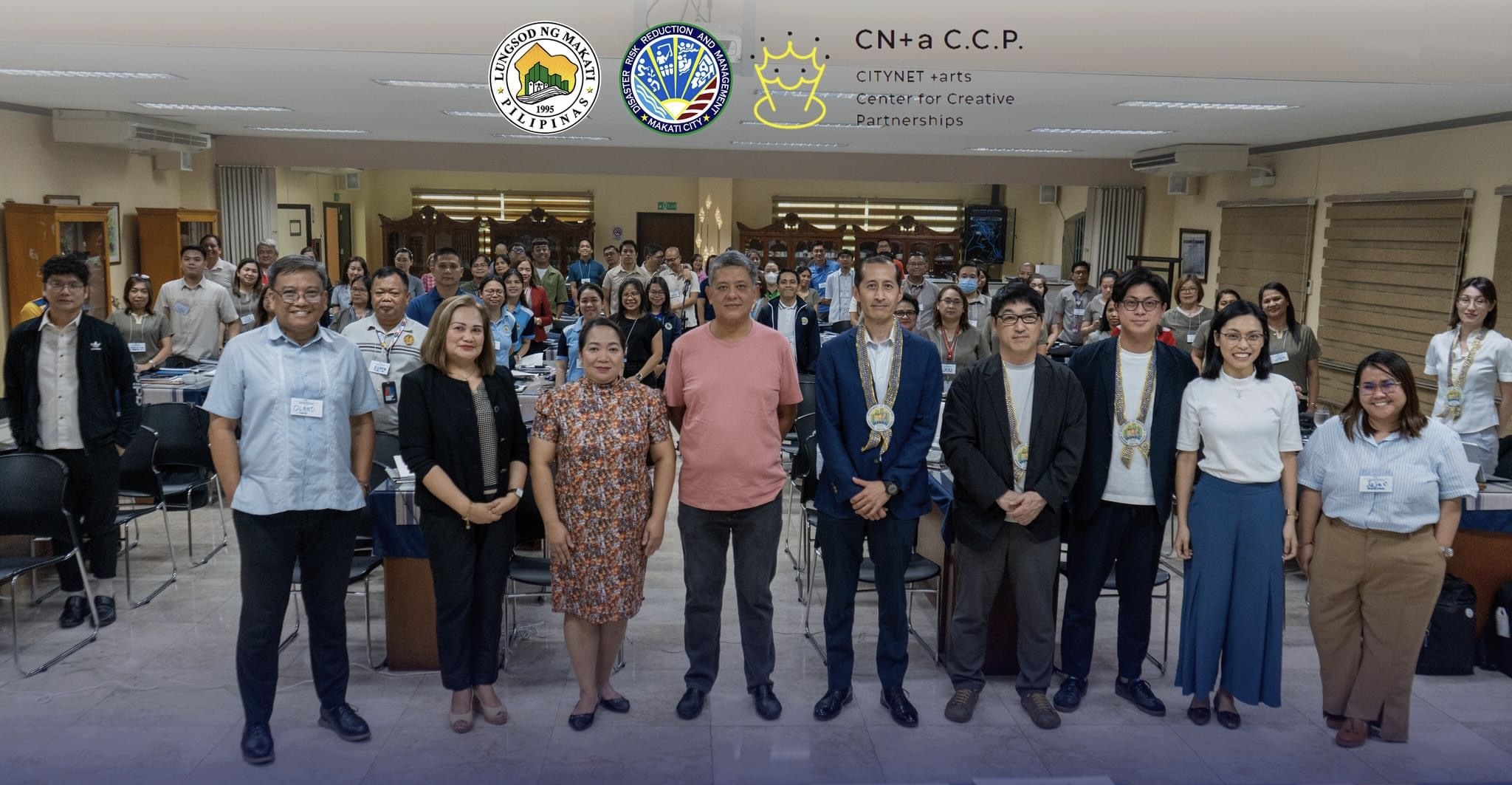
(Photo from Makati LGU)
"In partnership with Plus Arts NPO, they shared their specialized approaches in promoting DRR through creative and interactive educational activities focused on elementary and high school students. They will also assist the city in designing and developing engaging learning programs and materials aimed at raising awareness and strengthening the disaster preparedness of our students," the local government unit (LGU) said.
Officials from the Department of Education-Makati (DepEd-Makati), schools principals, DRRM coordinators, and art and science teachers from public elementary and high schools in the city as well as from the University of Makati (UMak) participated in the training program.
Aside from the inputs from Plus Arts NPO, ideas and recommendations from Makati City Mayor Abby Binay and the participants will also be used to conceptualize materials intended to help make resilience a way of life in the city.
Gawad KALASAG
In December of last year, the National Disaster Risk Reduction and Management Council (NDRRMC) lauded the city for achieving the highest rating from the agency following its nationwide assessment of local disaster risk reduction and management councils and offices.
In its annual Gawad KALASAG (Kalamidad at Sakuna Labanan, Sariling Galing ang Kaligtasan) Seal and Special Awards for Local DRRM Councils and Offices, the city was given the "Beyond Compliant" rating which is the highest rating given by the NDRRMC.
"We are thankful to the NDRRMC for recognizing the extensive efforts of the city government to build Makati’s resilience and keep all stakeholders safe and secure at all times. This two-peat achievement inspires us to pursue more innovations in DRRM alongside our efforts towards a carbon-neutral future,” Binay said.
“We humbly attribute the remarkable progress we have made in our journey towards a resilient and sustainable future to the strong synergy and collaboration between the city government and key stakeholders. Our strategic partnerships with industry leaders, national government agencies, and international organizations have enabled us to undertake high-impact and sustainable initiatives for the past seven years,” she added.
According to the Makati Disaster Risk Reduction and Management Office (DRRMO), a regional validation team from the NDRRMC conducted onsite inspection and validation of the city’s command control and communications (C3) center. The ICT-driven operations center features data analytics, automated incident report generation, and SOS function linked to the Makatizen App, the country’s first digital citizen app, among others.
The city also boasts of a state-of-the-art early warning system that includes automated weather stations, automatic rain gauges, and earthquake recording instruments. The system allows for reliable risk detection, analysis and dissemination, which are essential to providing early warning against hydrometeorological hazards, volcanic eruptions, earthquakes and tsunamis.
The Gawad KALASAG ranks cities and municipalities based on the following criteria: Structure (9 indicators), Competency (12 indicators), Management Systems (3 indicators), Enabling Policies (1 indicator), Knowledge Management and Advocacy (2 indicators), and Partnership and Participation (2 indicators).
Out of 16 cities and one municipality in the National Capital Region (NCR), five were found to be “beyond compliant.” These are Malabon City, Muntinlupa City, Parañaque City, and Quezon City. Meanwhile, Caloocan, Las Piñas, Mandaluyong, Navotas, Pasay, Pasig, San Juan, and Valenzuela City governments were recognized as “fully compliant.”
The Gawad KALASAG is a mandatory assessment for all Local Disaster Risk Reduction and Management Offices as they implement the provisions of Republic Act No. 10121 Sections 11 and 12, or the institutionalization of LDRRMOs or LDRRMCs, including the allocation and utilization of the Local DRRM Fund.
Q