

ADVERTISEMENT

Health specialists highlight vital role of vaccines 

National Immunization Program's goal, vaccine coverage emphasized

Published Apr 19, 2024 12:01 pm

Experts gathered in a forum on Friday, April 19, to highlight the important role of vaccines for individuals, families, and society.
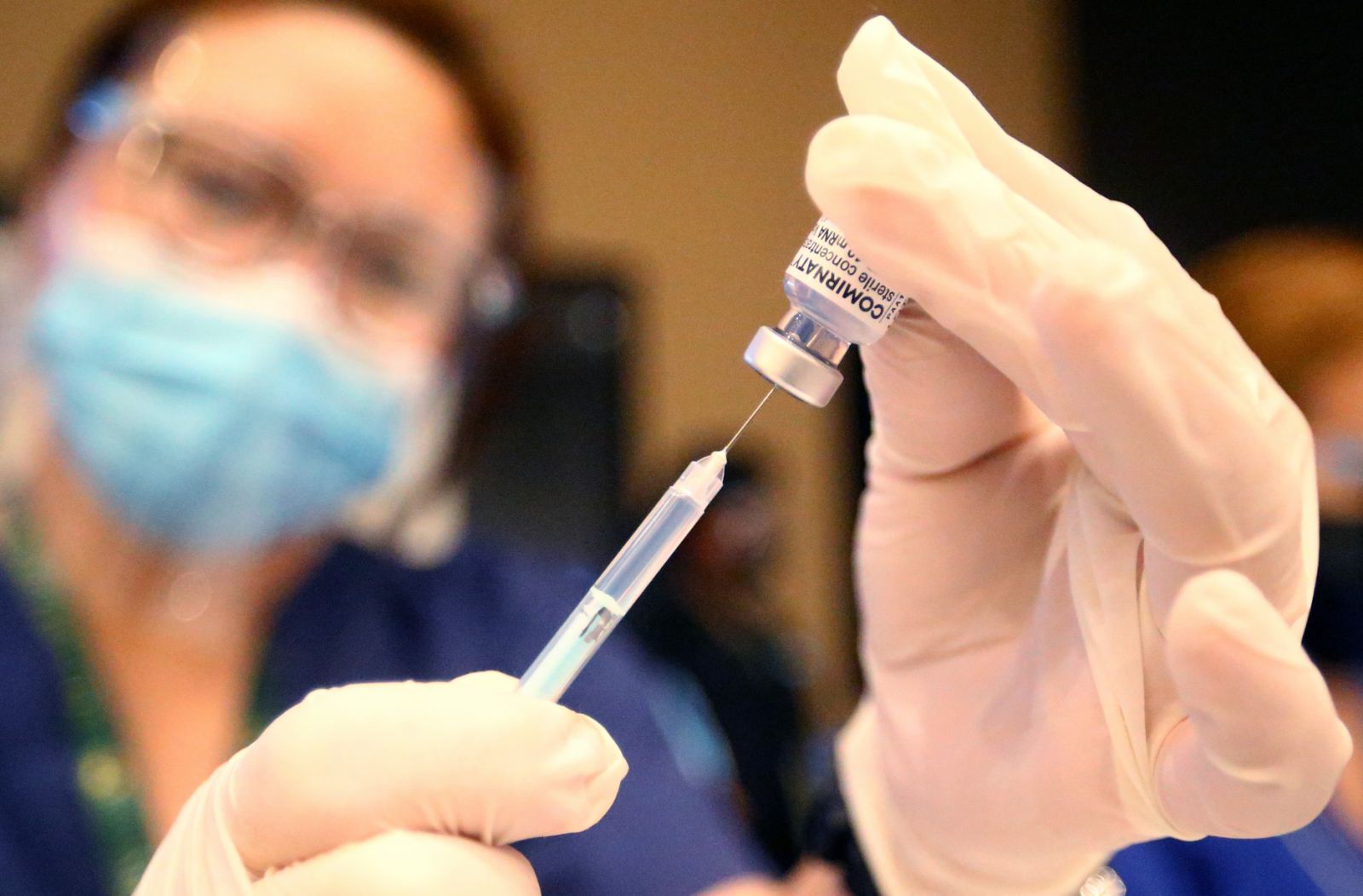
viber_image_2021-05-18_14-49-41.jpg
(ALI VICOY / MANILA BULLETIN / FILE PHOTO)

"Vaccination is an effective way to stop people from getting infected and thereby preventing the need for antibiotics, which can stop antibiotic resistance," United Nations Children's Fund (UNICEF) Philippines health specialist Carla Orozco said during the Kapihan with the Media for World Immunization Week.

Orozco clarified that the impact of vaccines extends beyond individual health, positively influencing academic performance and attendance among children, and consequently enhancing overall learning outcomes.

Additionally, she stressed vaccines as a protective shield for vulnerable populations, mitigating the risk of illness and subsequent medical expenses.

Addressing the broader societal implications, Orozco emphasized the role of vaccines in promoting gender equity by alleviating the caregiving burden on mothers with sick children.

"When children are vaccinated, that would mean less funding or budget for medical expenses, at the same time, it also increases mothers' productivity because healthier children lead to healthier adults," the health specialist said.

She also reiterated the benefits of vaccination, including a more productive workforce, decreased healthcare expenditures, and the efficient allocation of national resources toward healthcare initiatives.

National Immunization Program’s goal

Meanwhile, Department of Health (DOH) Disease Prevention and Control Bureau (DPCB) National Immunization Program Unit Dr. Janis Bunoan-Macazo revealed the inclusive nature of the National Immunization Program, extending beyond children to encompass individuals of all ages.

"Our goal is the protection from vaccine-preventable diseases across life stages," she noted.

Macazo outlined the vaccines to be provided free of charge through the National Immunization Program at local health facilities.

Expanding on the significance of vaccination, she referenced the World Health Organization's stance, stressing vaccines as essential tools in preventing and managing infectious disease outbreaks, asserting their role as a foundation of primary healthcare and an inherent human right.

"Human right, ibig sabihin lahat ng mga bata ay pagkapanganak, mayroon na silang karapatang mabakunahan (Human rights mean that all children, from birth, have the right to be vaccinated)," she noted.

Macazo disclosed statistics indicating a slight uptick in coverage of fully immunized children (FIC) and Measles Containing Vaccine (MCV2) from 2012 to 2023, though the national target of 95 percent remains unmet.

"Ang target natin ay 95 percent, masaya naman tayo na mayroong kaunting pagtaas pero kailangan pa natin ng mas mataas para makuha natin ang herd immunity na 95 percent (Our target is 95 percent, and while we are happy to see a slight increase, we still need higher numbers to achieve the 95 percent herd immunity)," she explained.

The health expert noted a "stagnation" in vaccination rates in the past decade, with the Philippines hovering between 60 and 70 percent coverage.

"This means that there are 30 percent of children here who have not completed their vaccines, and they are the ones prone to vaccine-preventable diseases such as measles, pertussis, and diphtheria because they have not completed their vaccinations," she explained in Filipino.

In a regional breakdown, Macazo highlighted areas such as Region 3, Region 1, NCR, and CARAGA, showing vaccination rates between 71 and 80 percent in 2023.

Despite progress, she said these figures fall short of the 95 percent threshold necessary for herd immunity.

Macazo stressed the urgency of addressing vaccination gaps to mitigate the risk of outbreaks, particularly concerning diseases like measles, pertussis, and diphtheria.

Pentavalent vaccine coverage

On the other hand, the health expert shed light on the coverage and importance of the pentavalent vaccine, which targets diseases such as Diptheria, Pertussis, Tetanus (DPT), Influenza B, and Hepatitis B.

"Tayo ay nasa 60 to 70 percent although nakita natin na medyo tumaas tayo ng kaunti noong 2023 with 74 to 76.8 percent (We are at 60 to 70 percent, although we saw a slight increase in 2023 with 74 to 76.8 percent)," she said.

Macazo underscored the proactive efforts of Local Government Units (LGUs) to catch up with vaccination schedules, aiming to reach those who may have missed their doses.

However, she expressed concern over the decline in pentavalent vaccine completion rates.

"The pentavalent vaccine should be received three times," she said. "In 2023, our pentavalent 1 coverage was 78 percent nationally, while pentavalent 3 was only 76.8 percent, so there is a decrease, and they are not completing the three doses," Macazo added.

Recognizing the critical role of vaccination in preventing diseases, Macazo urged the public to prioritize vaccination to safeguard against vaccine-preventable illnesses.

Related Tags

UNICEF Immunization program DOH
ADVERTISEMENT
.most-popular .layout-ratio{ padding-bottom: 79.13%; } @media (min-width: 768px) and (max-width: 1024px) { .widget-title { font-size: 15px !important; } }

{{ articles_filter_1561_widget.title }}

.most-popular .layout-ratio{ padding-bottom: 79.13%; } @media (min-width: 768px) and (max-width: 1024px) { .widget-title { font-size: 15px !important; } }

{{ articles_filter_1562_widget.title }}

.most-popular .layout-ratio{ padding-bottom: 79.13%; } @media (min-width: 768px) and (max-width: 1024px) { .widget-title { font-size: 15px !important; } }

{{ articles_filter_1563_widget.title }}

{{ articles_filter_1564_widget.title }}

.mb-article-details { position: relative; } .mb-article-details .article-body-preview, .mb-article-details .article-body-summary{ font-size: 17px; line-height: 30px; font-family: "Libre Caslon Text", serif; color: #000; } .mb-article-details .article-body-preview iframe , .mb-article-details .article-body-summary iframe{ width: 100%; margin: auto; } .read-more-background { background: linear-gradient(180deg, color(display-p3 1.000 1.000 1.000 / 0) 13.75%, color(display-p3 1.000 1.000 1.000 / 0.8) 30.79%, color(display-p3 1.000 1.000 1.000) 72.5%); position: absolute; height: 200px; width: 100%; bottom: 0; display: flex; justify-content: center; align-items: center; padding: 0; } .read-more-background a{ color: #000; } .read-more-btn { padding: 17px 45px; font-family: Inter; font-weight: 700; font-size: 18px; line-height: 16px; text-align: center; vertical-align: middle; border: 1px solid black; background-color: white; } .hidden { display: none; }
function initializeAllSwipers() { // Get all hidden inputs with cms_article_id document.querySelectorAll('[id^="cms_article_id_"]').forEach(function (input) { const cmsArticleId = input.value; const articleSelector = '#article-' + cmsArticleId + ' .body_images'; const swiperElement = document.querySelector(articleSelector); if (swiperElement && !swiperElement.classList.contains('swiper-initialized')) { new Swiper(articleSelector, { loop: true, pagination: false, navigation: { nextEl: '#article-' + cmsArticleId + ' .swiper-button-next', prevEl: '#article-' + cmsArticleId + ' .swiper-button-prev', }, }); } }); } setTimeout(initializeAllSwipers, 3000); const intersectionObserver = new IntersectionObserver( (entries) => { entries.forEach((entry) => { if (entry.isIntersecting) { const newUrl = entry.target.getAttribute("data-url"); if (newUrl) { history.pushState(null, null, newUrl); let article = entry.target; // Extract metadata const author = article.querySelector('.author-section').textContent.replace('By', '').trim(); const section = article.querySelector('.section-info ').textContent.replace(' ', ' '); const title = article.querySelector('.article-title h1').textContent; // Parse URL for Chartbeat path format const parsedUrl = new URL(newUrl, window.location.origin); const cleanUrl = parsedUrl.host + parsedUrl.pathname; // Update Chartbeat configuration if (typeof window._sf_async_config !== 'undefined') { window._sf_async_config.path = cleanUrl; window._sf_async_config.sections = section; window._sf_async_config.authors = author; } // Track virtual page view with Chartbeat if (typeof pSUPERFLY !== 'undefined' && typeof pSUPERFLY.virtualPage === 'function') { try { pSUPERFLY.virtualPage({ path: cleanUrl, title: title, sections: section, authors: author }); } catch (error) { console.error('ping error', error); } } // Optional: Update document title if (title && title !== document.title) { document.title = title; } } } }); }, { threshold: 0.1 } ); function showArticleBody(button) { const article = button.closest("article"); const summary = article.querySelector(".article-body-summary"); const body = article.querySelector(".article-body-preview"); const readMoreSection = article.querySelector(".read-more-background"); // Hide summary and read-more section summary.style.display = "none"; readMoreSection.style.display = "none"; // Show the full article body body.classList.remove("hidden"); } document.addEventListener("DOMContentLoaded", () => { let loadCount = 0; // Track how many times articles are loaded const offset = [1, 2, 3, 4, 5, 6, 7, 8, 9, 10]; // Offset values const currentUrl = window.location.pathname.substring(1); let isLoading = false; // Prevent multiple calls if (!currentUrl) { console.log("Current URL is invalid."); return; } const sentinel = document.getElementById("load-more-sentinel"); if (!sentinel) { console.log("Sentinel element not found."); return; } function isSentinelVisible() { const rect = sentinel.getBoundingClientRect(); return ( rect.top < window.innerHeight && rect.bottom >= 0 ); } function onScroll() { if (isLoading) return; if (isSentinelVisible()) { if (loadCount >= offset.length) { console.log("Maximum load attempts reached."); window.removeEventListener("scroll", onScroll); return; } isLoading = true; const currentOffset = offset[loadCount]; window.loadMoreItems().then(() => { let article = document.querySelector('#widget_1690 > div:nth-last-of-type(2) article'); intersectionObserver.observe(article) loadCount++; }).catch(error => { console.error("Error loading more items:", error); }).finally(() => { isLoading = false; }); } } window.addEventListener("scroll", onScroll); });

Sign up by email to receive news.