

ADVERTISEMENT

It's too hot!: Why some areas in the Philippines have hotter temperatures

Published Apr 18, 2024 06:28 am

The Philippine Atmospheric, Geophysical, and Astronomical Services Administration (PAGASA) has identified two primary reasons why it is hotter in some areas than others.
IMG_3573.jpeg
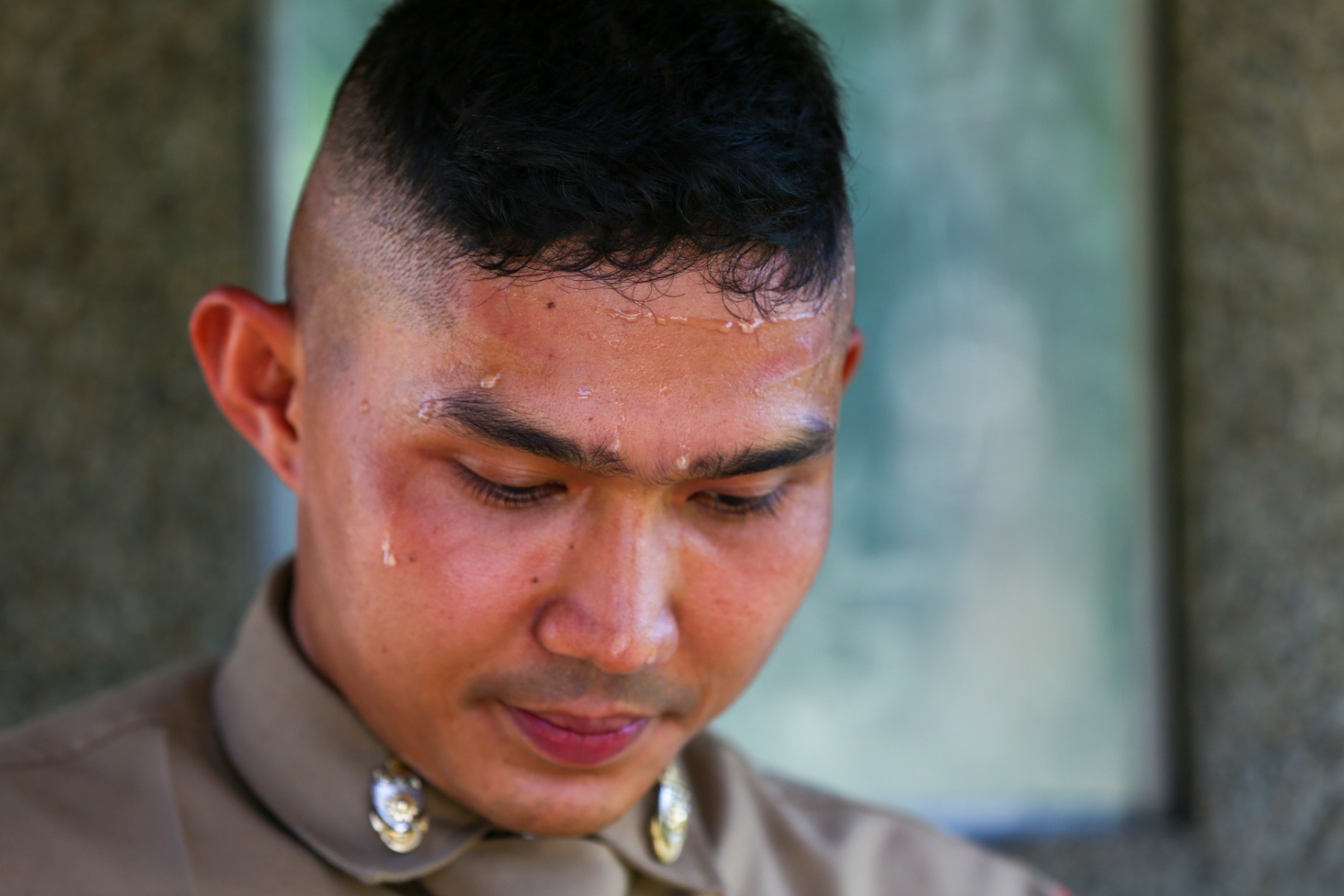
A member of the Philippine Marines enduring the scorching heat while fulfilling his duty as one of the honour guards at the Jose Rizal monument in Luneta Park, Manila on Monday, April 8, 2024 (Noel Pabalate/Manila Bulletin)

In the “Bagong Pilipinas” interview on Thursday, April 18, PAGASA-Climatology and Agrometeorology Division (CAD) Chief Ana Liza Solis said the proximity of an area to the coast may affect the increase of the maximum daytime temperature, alongside with the so-called “urban heat island” in the urban areas, just like Metro Manila. 

PAGASA said the reason why coastal areas have higher temperatures is the higher amount of relative humidity present in the coastlines, one of the factors affecting heat index. 

Moreover, the urban heat island effect in cities, particularly in Metro Manila, was caused by the pavements, buildings, and other concrete that absorb and release heat to the environment. 

Read: https://mb.com.ph/2024/3/18/heat-index-what-is-it-and-how-does-it-differ-from-actual-temperature

Solis said based on the April forecast, the maximum daytime temperature in Northern Luzon was expected to reach 39.7 degrees Celsius (°C), which was already exceeded on April 15 when Echague, Isabela recorded a temperature of 40°C.

The forecast 36.8°C maximum daytime temperature in Metro Manila was also exceeded on April 16, when the Ninoy Aquino International Airport (NAIA) in Pasay City recorded a temperature of 39.6°C.

“As early as bago pumasok itong warm and dry season, sinabi ng DOST-PAGASA that this could be one of the warmest, warm and dry season months natin—mainit na tag-init dahil na rin sa ongoing El Niño (Prior to the official declaration of the warm and dry season, DOST-PAGASA said that this could be one of the warmest warm and dry season months—hot season, also due to the ongoing El Niño phenomenon),” she said. 

Solis said Metro Manila, most of Luzon, and parts of Visayas and Mindanao including the Bangsamoro Autonomous Region in Muslim Mindanao, Cotabato City, and other Maguindanao areas will experience higher maximum temperatures. 

Meanwhile, she said lower actual air temperature and humidity will be expected in mountainous Mindanao, lowland Visayas, and upland Luzon, especially in Baguio City.

Related Tags

HEAT INDEX PAGASA
ADVERTISEMENT
.most-popular .layout-ratio{ padding-bottom: 79.13%; } @media (min-width: 768px) and (max-width: 1024px) { .widget-title { font-size: 15px !important; } }

{{ articles_filter_1561_widget.title }}

.most-popular .layout-ratio{ padding-bottom: 79.13%; } @media (min-width: 768px) and (max-width: 1024px) { .widget-title { font-size: 15px !important; } }

{{ articles_filter_1562_widget.title }}

.most-popular .layout-ratio{ padding-bottom: 79.13%; } @media (min-width: 768px) and (max-width: 1024px) { .widget-title { font-size: 15px !important; } }

{{ articles_filter_1563_widget.title }}

{{ articles_filter_1564_widget.title }}

.mb-article-details { position: relative; } .mb-article-details .article-body-preview, .mb-article-details .article-body-summary{ font-size: 17px; line-height: 30px; font-family: "Libre Caslon Text", serif; color: #000; } .mb-article-details .article-body-preview iframe , .mb-article-details .article-body-summary iframe{ width: 100%; margin: auto; } .read-more-background { background: linear-gradient(180deg, color(display-p3 1.000 1.000 1.000 / 0) 13.75%, color(display-p3 1.000 1.000 1.000 / 0.8) 30.79%, color(display-p3 1.000 1.000 1.000) 72.5%); position: absolute; height: 200px; width: 100%; bottom: 0; display: flex; justify-content: center; align-items: center; padding: 0; } .read-more-background a{ color: #000; } .read-more-btn { padding: 17px 45px; font-family: Inter; font-weight: 700; font-size: 18px; line-height: 16px; text-align: center; vertical-align: middle; border: 1px solid black; background-color: white; } .hidden { display: none; }
function initializeAllSwipers() { // Get all hidden inputs with cms_article_id document.querySelectorAll('[id^="cms_article_id_"]').forEach(function (input) { const cmsArticleId = input.value; const articleSelector = '#article-' + cmsArticleId + ' .body_images'; const swiperElement = document.querySelector(articleSelector); if (swiperElement && !swiperElement.classList.contains('swiper-initialized')) { new Swiper(articleSelector, { loop: true, pagination: false, navigation: { nextEl: '#article-' + cmsArticleId + ' .swiper-button-next', prevEl: '#article-' + cmsArticleId + ' .swiper-button-prev', }, }); } }); } setTimeout(initializeAllSwipers, 3000); const intersectionObserver = new IntersectionObserver( (entries) => { entries.forEach((entry) => { if (entry.isIntersecting) { const newUrl = entry.target.getAttribute("data-url"); if (newUrl) { history.pushState(null, null, newUrl); let article = entry.target; // Extract metadata const author = article.querySelector('.author-section').textContent.replace('By', '').trim(); const section = article.querySelector('.section-info ').textContent.replace(' ', ' '); const title = article.querySelector('.article-title h1').textContent; // Parse URL for Chartbeat path format const parsedUrl = new URL(newUrl, window.location.origin); const cleanUrl = parsedUrl.host + parsedUrl.pathname; // Update Chartbeat configuration if (typeof window._sf_async_config !== 'undefined') { window._sf_async_config.path = cleanUrl; window._sf_async_config.sections = section; window._sf_async_config.authors = author; } // Track virtual page view with Chartbeat if (typeof pSUPERFLY !== 'undefined' && typeof pSUPERFLY.virtualPage === 'function') { try { pSUPERFLY.virtualPage({ path: cleanUrl, title: title, sections: section, authors: author }); } catch (error) { console.error('ping error', error); } } // Optional: Update document title if (title && title !== document.title) { document.title = title; } } } }); }, { threshold: 0.1 } ); function showArticleBody(button) { const article = button.closest("article"); const summary = article.querySelector(".article-body-summary"); const body = article.querySelector(".article-body-preview"); const readMoreSection = article.querySelector(".read-more-background"); // Hide summary and read-more section summary.style.display = "none"; readMoreSection.style.display = "none"; // Show the full article body body.classList.remove("hidden"); } document.addEventListener("DOMContentLoaded", () => { let loadCount = 0; // Track how many times articles are loaded const offset = [1, 2, 3, 4, 5, 6, 7, 8, 9, 10]; // Offset values const currentUrl = window.location.pathname.substring(1); let isLoading = false; // Prevent multiple calls if (!currentUrl) { console.log("Current URL is invalid."); return; } const sentinel = document.getElementById("load-more-sentinel"); if (!sentinel) { console.log("Sentinel element not found."); return; } function isSentinelVisible() { const rect = sentinel.getBoundingClientRect(); return ( rect.top < window.innerHeight && rect.bottom >= 0 ); } function onScroll() { if (isLoading) return; if (isSentinelVisible()) { if (loadCount >= offset.length) { console.log("Maximum load attempts reached."); window.removeEventListener("scroll", onScroll); return; } isLoading = true; const currentOffset = offset[loadCount]; window.loadMoreItems().then(() => { let article = document.querySelector('#widget_1690 > div:nth-last-of-type(2) article'); intersectionObserver.observe(article) loadCount++; }).catch(error => { console.error("Error loading more items:", error); }).finally(() => { isLoading = false; }); } } window.addEventListener("scroll", onScroll); });

Sign up by email to receive news.