

ADVERTISEMENT

Better S&T experience for Filipinos: DOST set to launch newest public service radio program

Published Apr 18, 2024 08:53 am

The Department of Science and Technology (DOST) officially announced on Thursday, April 18, its newest program under "DOSTv: Science for the People," the official weather, science, and technology television program of the agency.
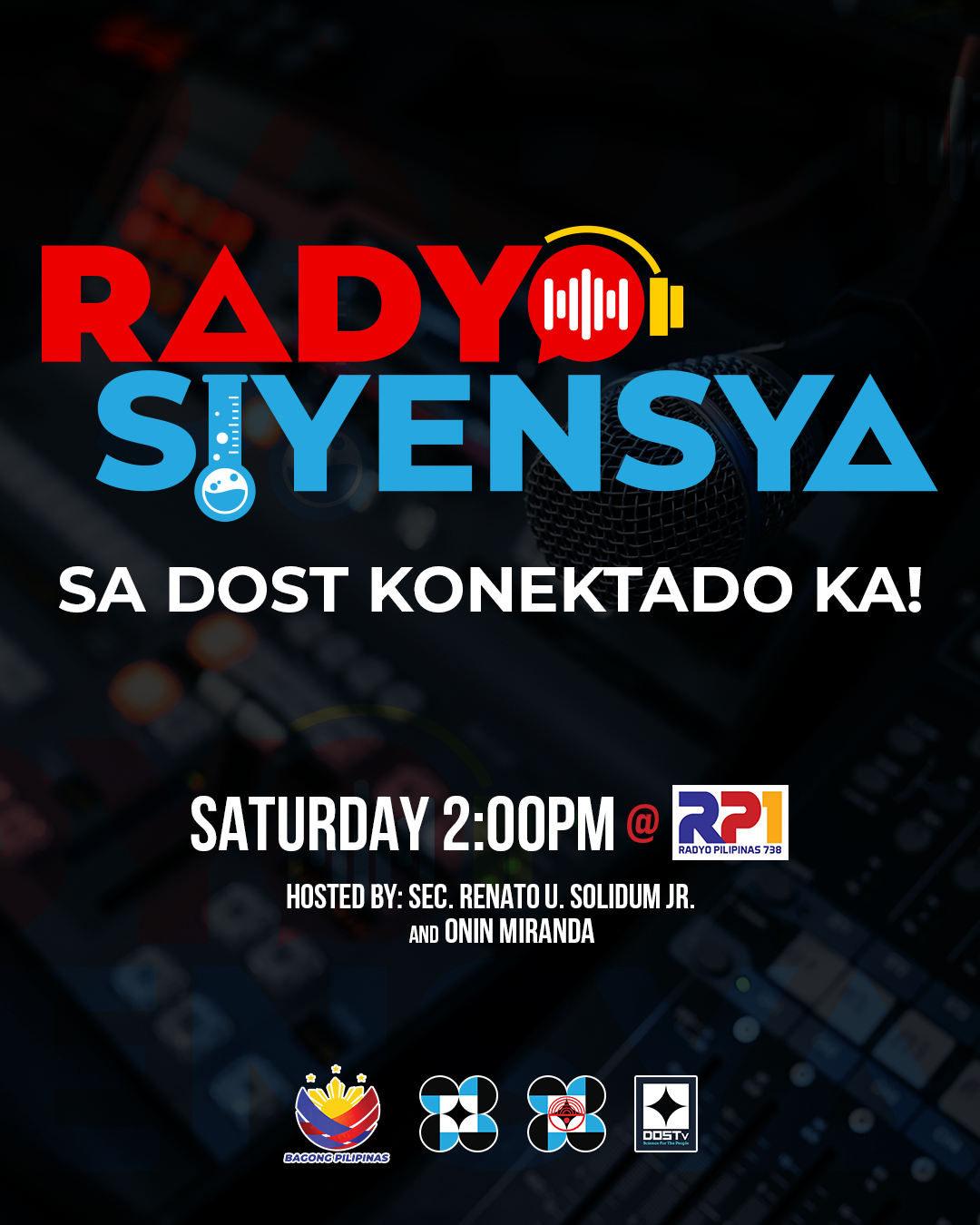
Radyo Siyenysa_pr photo.png
DOST

The program, titled "Radyo Siyensya: Sa DOST, konektado ka!," (Radio Science: Connected with DOST) aims to bring scientific solutions and provide opportunities through television, radio, and live broadcasts.

Part of the segment includes a phone patch and sit-down interview portion, where the audience has the opportunity to directly connect with the DOST to inquire about its products and services.

DOST Secretary Dr. Renato U. Solidum Jr. will then personally answer these questions, which he will be co-hosted by broadcaster Onin Miranda.

Miranda, meanwhile, will be providing timely updates on DOST's programs and services, covering a wide range of topics including research funding, startup grants, scholarships, business assistance, and more.

"Building connections with our listeners/viewers is one of the goals of our program... to provide knowledge and understanding about various initiatives, programs, and projects of the DOST to more people. Our program can help spread awareness about science, technology, and innovation," Miranda said in Filipino.

"This year, our radio program is back, and it feels great. Personally, as a radio broadcaster, I missed this," he added.

In addition, the program will also feature Solidum's perspective on pressing socio-economic issues, along with his commentary on how DOST plans to scientifically address these problems.

What to expect in the pilot episode?

On its pilot episode on Saturday, the program will focus its discussion on wealth creation, one of the major pillars that supports the majority of DOST programs.

It will feature discussions on job creation, technological interventions, and regional development through science, technology, and innovation.

"Through the one-hour weekly radio program, the entire DOST system is ONE in its mission to bring the benefits of science, technology, and innovation for U, as mirrored in its tagline, #OneDOST4U," DOST said.

"What is a new addition to the program is that individuals, companies, and institutions will have the chance to submit or send their inquiries, which will be addressed by the experts from DOST," DOST added.

Furthermore, the agency invites the public, whom it addressed as "DOSTvarkadas," to stay informed, entertained, and tune in to "DOSTv’s Radyo Siyensya: Sa DOST, konektado ka!"

This will be aired on Radyo Pilipinas (RP 1) every Saturday at 2:00 p.m.

Related Tags

DOST
ADVERTISEMENT
.most-popular .layout-ratio{ padding-bottom: 79.13%; } @media (min-width: 768px) and (max-width: 1024px) { .widget-title { font-size: 15px !important; } }

{{ articles_filter_1561_widget.title }}

.most-popular .layout-ratio{ padding-bottom: 79.13%; } @media (min-width: 768px) and (max-width: 1024px) { .widget-title { font-size: 15px !important; } }

{{ articles_filter_1562_widget.title }}

.most-popular .layout-ratio{ padding-bottom: 79.13%; } @media (min-width: 768px) and (max-width: 1024px) { .widget-title { font-size: 15px !important; } }

{{ articles_filter_1563_widget.title }}

{{ articles_filter_1564_widget.title }}

.mb-article-details { position: relative; } .mb-article-details .article-body-preview, .mb-article-details .article-body-summary{ font-size: 17px; line-height: 30px; font-family: "Libre Caslon Text", serif; color: #000; } .mb-article-details .article-body-preview iframe , .mb-article-details .article-body-summary iframe{ width: 100%; margin: auto; } .read-more-background { background: linear-gradient(180deg, color(display-p3 1.000 1.000 1.000 / 0) 13.75%, color(display-p3 1.000 1.000 1.000 / 0.8) 30.79%, color(display-p3 1.000 1.000 1.000) 72.5%); position: absolute; height: 200px; width: 100%; bottom: 0; display: flex; justify-content: center; align-items: center; padding: 0; } .read-more-background a{ color: #000; } .read-more-btn { padding: 17px 45px; font-family: Inter; font-weight: 700; font-size: 18px; line-height: 16px; text-align: center; vertical-align: middle; border: 1px solid black; background-color: white; } .hidden { display: none; }
function initializeAllSwipers() { // Get all hidden inputs with cms_article_id document.querySelectorAll('[id^="cms_article_id_"]').forEach(function (input) { const cmsArticleId = input.value; const articleSelector = '#article-' + cmsArticleId + ' .body_images'; const swiperElement = document.querySelector(articleSelector); if (swiperElement && !swiperElement.classList.contains('swiper-initialized')) { new Swiper(articleSelector, { loop: true, pagination: false, navigation: { nextEl: '#article-' + cmsArticleId + ' .swiper-button-next', prevEl: '#article-' + cmsArticleId + ' .swiper-button-prev', }, }); } }); } setTimeout(initializeAllSwipers, 3000); const intersectionObserver = new IntersectionObserver( (entries) => { entries.forEach((entry) => { if (entry.isIntersecting) { const newUrl = entry.target.getAttribute("data-url"); if (newUrl) { history.pushState(null, null, newUrl); let article = entry.target; // Extract metadata const author = article.querySelector('.author-section').textContent.replace('By', '').trim(); const section = article.querySelector('.section-info ').textContent.replace(' ', ' '); const title = article.querySelector('.article-title h1').textContent; // Parse URL for Chartbeat path format const parsedUrl = new URL(newUrl, window.location.origin); const cleanUrl = parsedUrl.host + parsedUrl.pathname; // Update Chartbeat configuration if (typeof window._sf_async_config !== 'undefined') { window._sf_async_config.path = cleanUrl; window._sf_async_config.sections = section; window._sf_async_config.authors = author; } // Track virtual page view with Chartbeat if (typeof pSUPERFLY !== 'undefined' && typeof pSUPERFLY.virtualPage === 'function') { try { pSUPERFLY.virtualPage({ path: cleanUrl, title: title, sections: section, authors: author }); } catch (error) { console.error('ping error', error); } } // Optional: Update document title if (title && title !== document.title) { document.title = title; } } } }); }, { threshold: 0.1 } ); function showArticleBody(button) { const article = button.closest("article"); const summary = article.querySelector(".article-body-summary"); const body = article.querySelector(".article-body-preview"); const readMoreSection = article.querySelector(".read-more-background"); // Hide summary and read-more section summary.style.display = "none"; readMoreSection.style.display = "none"; // Show the full article body body.classList.remove("hidden"); } document.addEventListener("DOMContentLoaded", () => { let loadCount = 0; // Track how many times articles are loaded const offset = [1, 2, 3, 4, 5, 6, 7, 8, 9, 10]; // Offset values const currentUrl = window.location.pathname.substring(1); let isLoading = false; // Prevent multiple calls if (!currentUrl) { console.log("Current URL is invalid."); return; } const sentinel = document.getElementById("load-more-sentinel"); if (!sentinel) { console.log("Sentinel element not found."); return; } function isSentinelVisible() { const rect = sentinel.getBoundingClientRect(); return ( rect.top < window.innerHeight && rect.bottom >= 0 ); } function onScroll() { if (isLoading) return; if (isSentinelVisible()) { if (loadCount >= offset.length) { console.log("Maximum load attempts reached."); window.removeEventListener("scroll", onScroll); return; } isLoading = true; const currentOffset = offset[loadCount]; window.loadMoreItems().then(() => { let article = document.querySelector('#widget_1690 > div:nth-last-of-type(2) article'); intersectionObserver.observe(article) loadCount++; }).catch(error => { console.error("Error loading more items:", error); }).finally(() => { isLoading = false; }); } } window.addEventListener("scroll", onScroll); });

Sign up by email to receive news.