






 Philippines
National
Gov't to pilot run new calamity-resilient energy system in typhoon-prone areas
Philippines
National
Gov't to pilot run new calamity-resilient energy system in typhoon-prone areas
Gov't to pilot run new calamity-resilient energy system in typhoon-prone areas


At A Glance
- Marcos said the pilot run will be in the municipalities of Sta. Ana and Lal-lo in Cagayan Province.
The government will pilot run the Mobile Energy System (MES) in the typhoon-prone municipalities in Cagayan Province to improve the country’s resiliency against disasters, President Marcos said.
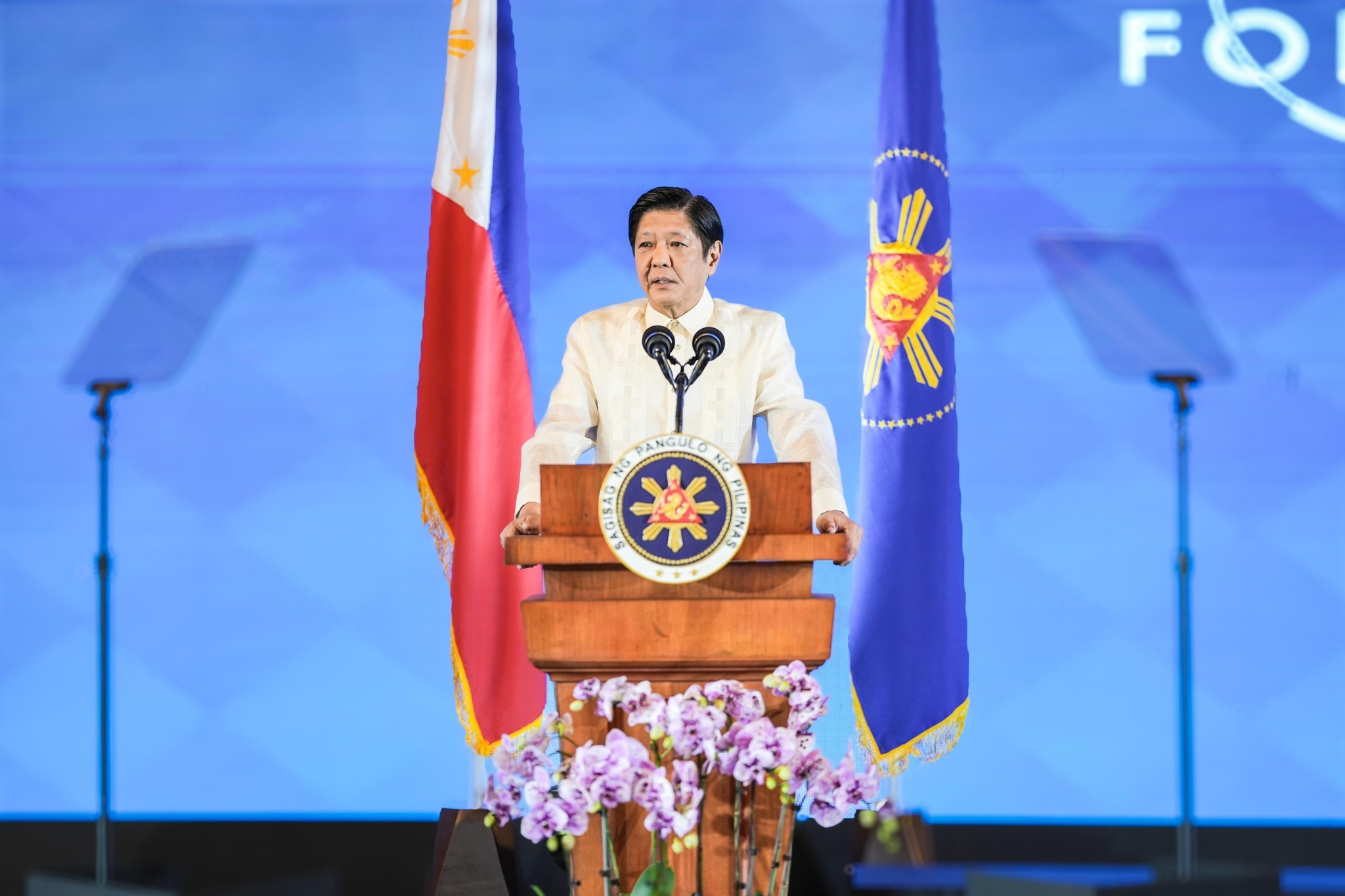
Marcos said this as the Department of Energy (DOE) launched the Energy Sector Emergency Operations Center (ESEOC) and the symbolic turnover of a miniature MES in Taguig City on Monday, April 15.
In his speech, delivered by Executive Secretary Lucas Bersamin, the President said the pilot run will be in the municipalities of Sta. Ana and Lal-lo in Cagayan Province.
He hoped that current energy challenges could be overcome through technology and innovation.
"MES units will also be distributed to various government agencies, showing our commitment to improving government services in times of crisis,” Marcos said.
“These remarkable undertakings of innovation demonstrate how we capitalize on technological advancements and how we can provide proactive solutions to the energy challenges that beset our country,” he added
Marcos expressed confidence that such technological innovations would help guarantee power supply during times of need, especially during calamities, as relief, response, and reconstruction are not possible without available power.
“Without electricity, hospitals cannot treat the injured, food is spoiled, and communication is cut off,” he said.
Meanwhile, President Marcos thanked the United States Agency for International Development (USAID) for sharing its resources and expertise for those projects, and the DOE for bringing those projects to fruition to improve the resilience of the Philippine energy systems.
The ESEOC, a centralized energy command hub equipped with the latest technological innovation from Europe and the US, will enable the DOE to spearhead a coordinated disaster response process and system, offering clear guidance on preventing and mitigating disruptions in delivering essential electricity services to affected areas.
On the other hand, the MES is designed to improve energy access in remote communities and strengthen resilience during natural disasters and cyber threats to power utilities.
It is tailored to users’ needs to create a wide base for use across various sectors, including health facilities, education, telecommunications, financial institutions, commercial and industrial enterprises, and off-grid particularly unserved remote communities.
The two new initiatives are designed to address the need for resilient energy infrastructure and response capabilities in times of crisis. It is part of the USAID $34 million Energy Secure Philippines activity with the Philippine government.
The USAID turned over eight solar-powered MES units to the DOE, which will be distributed to various government agencies and local government units (LGUs).
Each unit has 50kWh battery storage. When fully charged, it can power two television sets, two air-conditioning units, 10 light bulbs, two desktop computers, two laptops, five phone chargers, five electric fans, and one internet modem for almost 12 hours.
An average of 20 tropical cyclones enter the Philippine Area of Responsibility (PAR) each year, with five of them being the most destructive, according to the Philippine Atmospheric, Geophysical, and Astronomical Services Administration (Pagasa).