ADVERTISEMENT

Cyber criminals getting smarter; don't fall for scams disguised as legitimate ads

Published Apr 13, 2024 01:19 am

13cartoon.jpg

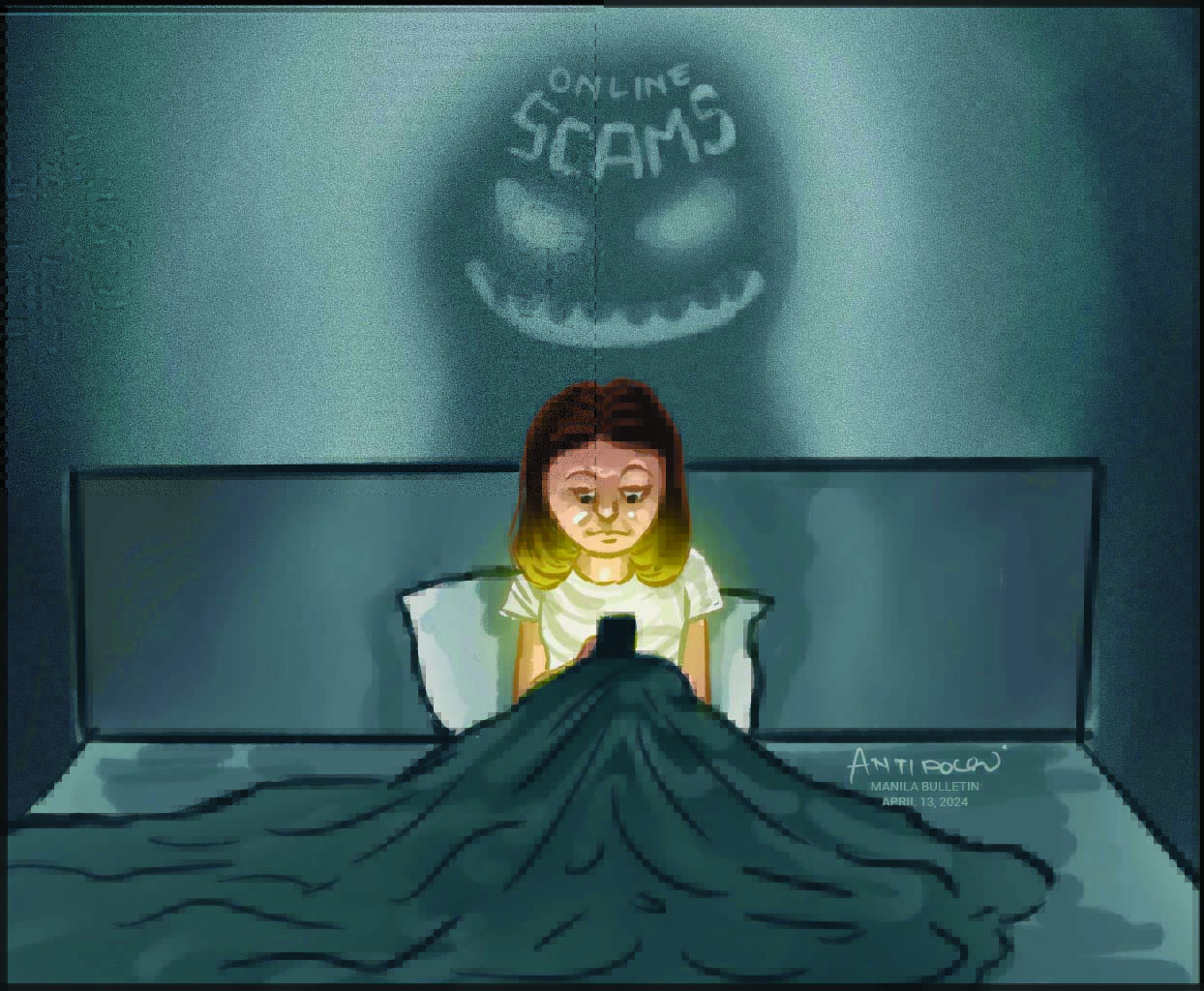
Cyber criminals are getting smarter and scams are now looking like legitimate ads in social media and mobile phone messages.

This warning can’t be said too many times and it’s best to keep them in your mind while you are scanning social media or replying to a text message.

In the past few days alone, several news stories reported on online scams caused much anxiety, financial losses, and even threats to national security.  The reason why these fraudulent messages still find victims is because cyber criminals have found ways to package them to look and sound like real messages or advertisements from legitimate sources.

How do they do it?  One, by using a website address that mimics a real domain’s name so that when a reader checks, it appears to be a legitimate address. Two, by the use of well-crafted words to entice and promise some reward, like a job that offers a big compensation package. And more recently, with the use of a device to deceive mobile phones into connecting to them instead of legitimate cell network towers, enabling attackers to intercept communications and then send fraudulent messages which will appear as coming from a well-known trade name.

The sophisticated ways of cybercrime to victimize people are not only worrisome but threatening to our way of life.  Here we are now deep into a digitized world where convenience and efficiency give more time for productive endeavors, and there they are, brilliant minds choosing to channel their creativity to scam people.

Recently, the Anti-Cybercrime Group of the Philippine National Police (ACG-PNP) arrested a man who tricked a minor into sending nude photos by offering a modeling job, and later used the photos to blackmail the sender. The authorities warned against social media users posing as modeling and fashion agents.

The Armed Forces of the Philippines is now investigating online platforms – recently deactivated –for recruiting former and active Filipino soldiers as military consultants. The domain cited in social media had mimicked a legitimate domain based in the US, whose official had already denied any links to the fraudulent address. According to AFP spokesperson Col. Francel Margareth Padilla, the investigation on the matter is ongoing.

There are also messages from known trademarks that appear on mobile phones.  Manila Bulletin’s Senior Technology Editor Art Samaniego, who also heads the MB component in the SmartWatchPh initiative to fight online crime, explained this sophisticated process.  “It involves tricking the mobile phones to connect to a fake mobile base station, instead of the legitimate network tower. This exploits the vulnerability in the 2G (second-generation cellular technology) network to impersonate legitimate message senders.”

The only way not to fall victim to these messages promising something – cheaper merchandise, high paying jobs or consultancy work, even travel – is to be very vigilant.  Before replying to a company in social media or through a mobile phone, do not only check the source.  Yes, it will likely look like a credible source because of the familiar trade name and the well-crafted message.  But trust the old saying – When it sounds too good to be true, then it is not true!

Related Tags

Editorial
ADVERTISEMENT
.most-popular .layout-ratio{ padding-bottom: 79.13%; } @media (min-width: 768px) and (max-width: 1024px) { .widget-title { font-size: 15px !important; } }

{{ articles_filter_1561_widget.title }}

.most-popular .layout-ratio{ padding-bottom: 79.13%; } @media (min-width: 768px) and (max-width: 1024px) { .widget-title { font-size: 15px !important; } }

{{ articles_filter_1562_widget.title }}

.most-popular .layout-ratio{ padding-bottom: 79.13%; } @media (min-width: 768px) and (max-width: 1024px) { .widget-title { font-size: 15px !important; } }

{{ articles_filter_1563_widget.title }}

{{ articles_filter_1564_widget.title }}

.mb-article-details { position: relative; } .mb-article-details .article-body-preview, .mb-article-details .article-body-summary{ font-size: 17px; line-height: 30px; font-family: "Libre Caslon Text", serif; color: #000; } .mb-article-details .article-body-preview iframe , .mb-article-details .article-body-summary iframe{ width: 100%; margin: auto; } .read-more-background { background: linear-gradient(180deg, color(display-p3 1.000 1.000 1.000 / 0) 13.75%, color(display-p3 1.000 1.000 1.000 / 0.8) 30.79%, color(display-p3 1.000 1.000 1.000) 72.5%); position: absolute; height: 200px; width: 100%; bottom: 0; display: flex; justify-content: center; align-items: center; padding: 0; } .read-more-background a{ color: #000; } .read-more-btn { padding: 17px 45px; font-family: Inter; font-weight: 700; font-size: 18px; line-height: 16px; text-align: center; vertical-align: middle; border: 1px solid black; background-color: white; } .hidden { display: none; }
function initializeAllSwipers() { // Get all hidden inputs with cms_article_id document.querySelectorAll('[id^="cms_article_id_"]').forEach(function (input) { const cmsArticleId = input.value; const articleSelector = '#article-' + cmsArticleId + ' .body_images'; const swiperElement = document.querySelector(articleSelector); if (swiperElement && !swiperElement.classList.contains('swiper-initialized')) { new Swiper(articleSelector, { loop: true, pagination: false, navigation: { nextEl: '#article-' + cmsArticleId + ' .swiper-button-next', prevEl: '#article-' + cmsArticleId + ' .swiper-button-prev', }, }); } }); } setTimeout(initializeAllSwipers, 3000); const intersectionObserver = new IntersectionObserver( (entries) => { entries.forEach((entry) => { if (entry.isIntersecting) { const newUrl = entry.target.getAttribute("data-url"); if (newUrl) { history.pushState(null, null, newUrl); let article = entry.target; // Extract metadata const author = article.querySelector('.author-section').textContent.replace('By', '').trim(); const section = article.querySelector('.section-info ').textContent.replace(' ', ' '); const title = article.querySelector('.article-title h1').textContent; // Parse URL for Chartbeat path format const parsedUrl = new URL(newUrl, window.location.origin); const cleanUrl = parsedUrl.host + parsedUrl.pathname; // Update Chartbeat configuration if (typeof window._sf_async_config !== 'undefined') { window._sf_async_config.path = cleanUrl; window._sf_async_config.sections = section; window._sf_async_config.authors = author; } // Track virtual page view with Chartbeat if (typeof pSUPERFLY !== 'undefined' && typeof pSUPERFLY.virtualPage === 'function') { try { pSUPERFLY.virtualPage({ path: cleanUrl, title: title, sections: section, authors: author }); } catch (error) { console.error('ping error', error); } } // Optional: Update document title if (title && title !== document.title) { document.title = title; } } } }); }, { threshold: 0.1 } ); function showArticleBody(button) { const article = button.closest("article"); const summary = article.querySelector(".article-body-summary"); const body = article.querySelector(".article-body-preview"); const readMoreSection = article.querySelector(".read-more-background"); // Hide summary and read-more section summary.style.display = "none"; readMoreSection.style.display = "none"; // Show the full article body body.classList.remove("hidden"); } document.addEventListener("DOMContentLoaded", () => { let loadCount = 0; // Track how many times articles are loaded const offset = [1, 2, 3, 4, 5, 6, 7, 8, 9, 10]; // Offset values const currentUrl = window.location.pathname.substring(1); let isLoading = false; // Prevent multiple calls if (!currentUrl) { console.log("Current URL is invalid."); return; } const sentinel = document.getElementById("load-more-sentinel"); if (!sentinel) { console.log("Sentinel element not found."); return; } function isSentinelVisible() { const rect = sentinel.getBoundingClientRect(); return ( rect.top < window.innerHeight && rect.bottom >= 0 ); } function onScroll() { if (isLoading) return; if (isSentinelVisible()) { if (loadCount >= offset.length) { console.log("Maximum load attempts reached."); window.removeEventListener("scroll", onScroll); return; } isLoading = true; const currentOffset = offset[loadCount]; window.loadMoreItems().then(() => { let article = document.querySelector('#widget_1690 > div:nth-last-of-type(2) article'); intersectionObserver.observe(article) loadCount++; }).catch(error => { console.error("Error loading more items:", error); }).finally(() => { isLoading = false; }); } } window.addEventListener("scroll", onScroll); });

Sign up by email to receive news.