






 Philippines
National
Marcos confident on sustained peace, stability in South China Sea
Philippines
National
Marcos confident on sustained peace, stability in South China Sea
Marcos confident on sustained peace, stability in South China Sea


At A Glance
- Marcos reiterated that the trilateral summit was not a response to any of the developments in the disputed waters.
President Marcos is optimistic that his trilateral meeting with US President Joseph Biden and Japanese Prime Minister Kishida Fumio will result in sustained peace and stability in the South China Sea.
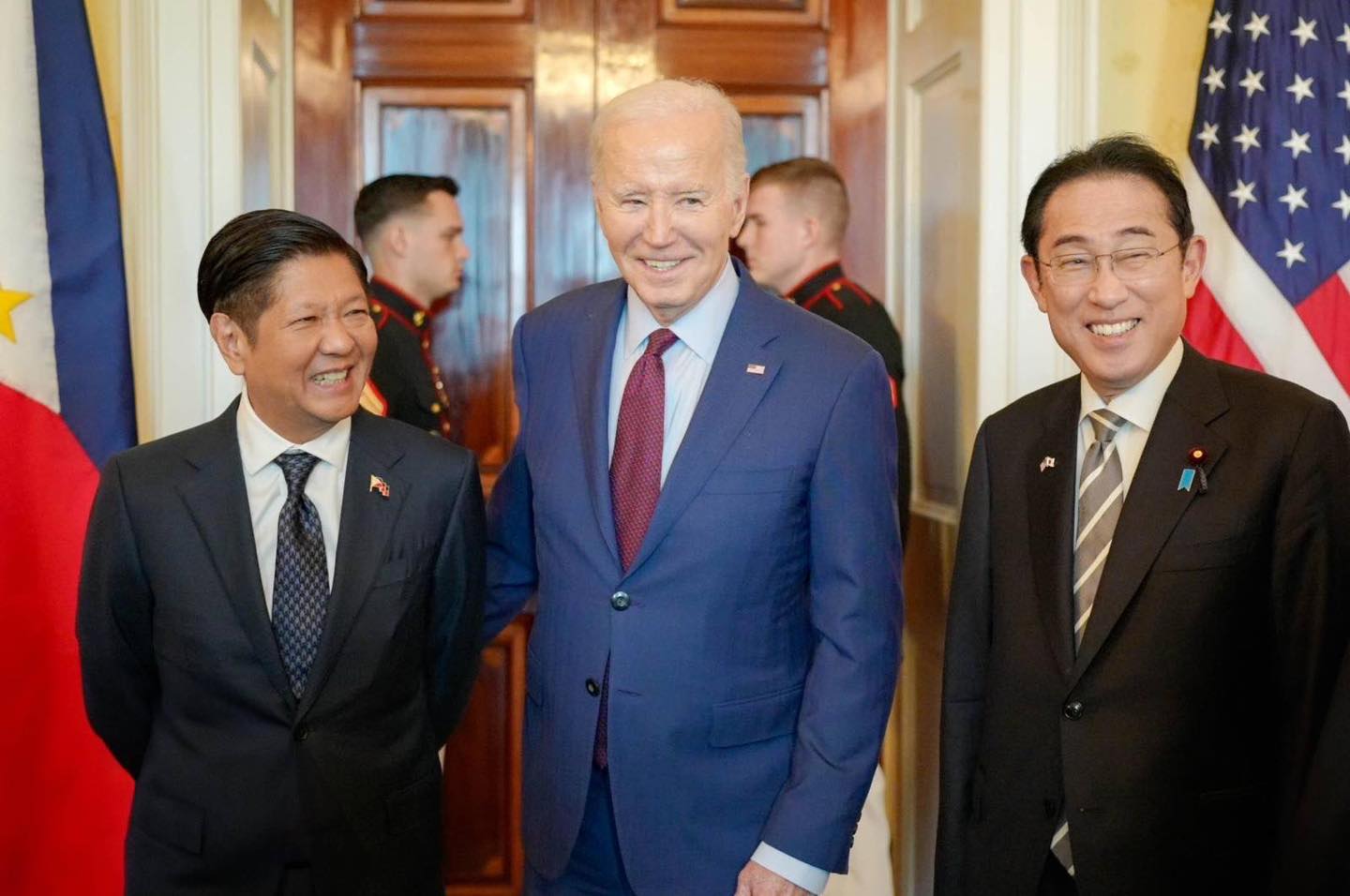
Marcos said this during his meeting with US Defense Secretary Lloyd Austin III at the Pentagon on Friday, April 12.
In his remarks, the President thanked the US government for its unwavering commitment and support to maintain peace and order in the South China Sea.
"This visit here to the Pentagon reaffirms once again the strength of the relationship between the United States and the Philippines in the face of all the threats and challenges that we have had to face together," he said.
"The Philippines is always enabled to look to the United States for support and we hope that this trilateral agreement will be a formalization of an added multilateral support and structure that will make the safety, the peace, and the stability of the South China a reality and continued to be a reality," he added.
Marcos noted how the Philippines and the US have done so much work together in addressing key issues and mutual concerns, and hoped that this would continue.
He reiterated that the trilateral summit was not a response to any of the developments in the disputed waters.
"I view the new agreements and the new partnerships, and alliances that we have forged including the trilateral agreement, not as a response to any particular challenge or threat but merely a continuing development and evolution of the relationship that we have been fostering over a hundred years," President Marcos said.
"I can only see that our two countries (will be) getting closer and working together, and in closer coordination, so as to be able to provide continuing defense of international law and international rule of–in the UNCLOS, especially in the differing claims that we are having to deal with in the South China Sea,” he added.
In their Joint Vision Statement, the leaders of the US and Japan have expressed their serious concerns regarding the situation in the South China Sea as well as in the East China Sea, in particular the repeated attempts by the Chinese against Philippine vessels in supplying their troops in the Second Thomas Shoal, locally known as Ayungin Shoal.
"We steadfastly oppose the dangerous and coercive use of Coast Guard and maritime militia vessels in the South China Sea, as well as efforts to disrupt other countries’ offshore resource exploitation," they said.
"We reiterate serious concern over the PRC’s repeated obstruction of Philippine vessels’ exercise of high seas freedom of navigation and the disruption of supply lines to Second Thomas Shoal, which constitute dangerous and destabilizing conduct," they added.
The three nations called on China to abide by the 2016 Arbitral ruling that determined that such regular activities are being conducted within the Philippines’ exclusive economic zone (EEZ).
Regarding the East China Sea, the three leaders expressed serious concerns regarding the situation and reiterated their strong opposition to any attempts by China to unilaterally change the status quo by force or coercion, including actions undermining Japan’s longstanding and peaceful administration of the Senkaku Islands.