






 Philippines
National
Private firms seek task force's guidance to aid El Niño-devastated farmers
Philippines
National
Private firms seek task force's guidance to aid El Niño-devastated farmers
Private firms seek task force's guidance to aid El Niño-devastated farmers
By Jel Santos


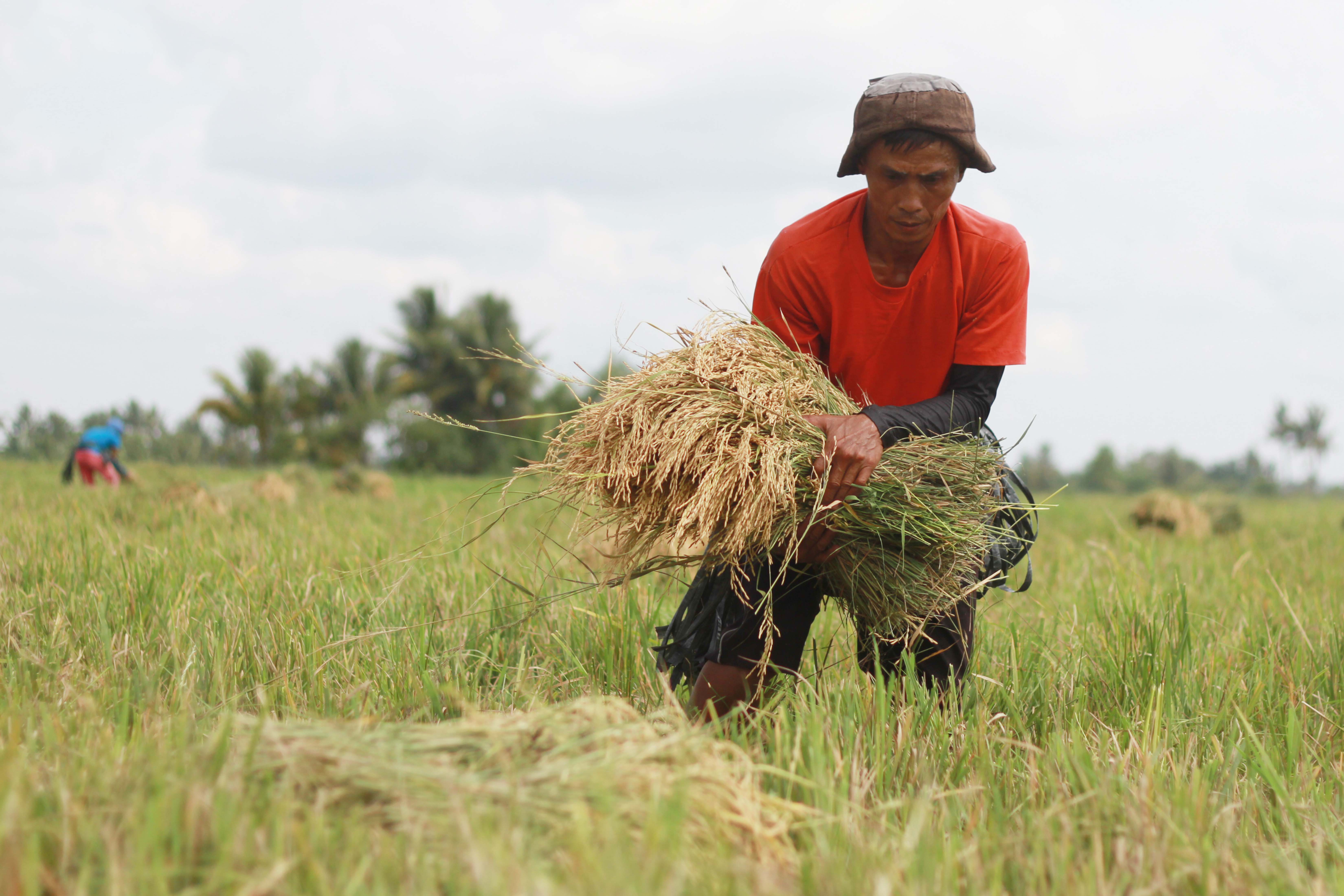
As Filipino farmers continue to endure the wrath of El Niño, several companies have come forward to seek the guidance of the Task Force El Niño on how they can help provide assistance to the agriculture sector.
Based on the most recent data from the Department of Agriculture (DA), the agricultural damage caused by El Niño has ballooned to P2.63 billion, affecting a total of 54,203 farmers.
“Two weeks ago, mayroong lumapit sa akin na group of companies, actually isa sa mga businesses ng private company na iyon ay nasa media, so mayroon silang initiative iyong corporate social responsibility. Nagtatanong sila kung paano pwedeng mag-organize ‘yung individual foundations nila sa bawat kumpanya. Gusto nilang makipag-ugnayan sa atin kung paano matutulungan ang mga magsasaka (Two weeks ago, a group of companies approached me, actually one of the businesses of that private company is in the media, so they have an initiative on corporate social responsibility. They asked how their individual foundations can organize in each company. They want to coordinate with us on how to help the farmers),” Presidential Communications Office (PCO) Assistant Secretary Joey Villarama, the spokesperson of Task Force El Niño, said during a radio interview on Thursday, April 11.
The assistance from the private sector is important to help farmers cope with the effects of El Niño.
Meanwhile, Villarama said the government has so far provided P1.1 billion in aid to farmers affected by the dry spell.
“Iyong tulong na naibigay sa mga apektado, hindi lang farm inputs, tulong sa irigasyon, kundi tulad nung pagkain sa araw-araw ng mga apektadong pamilya (The aid that has been given to those affected, it’s not just farm inputs, help with irrigation, but also the daily food of the affected families),” he added.
He noted that President Marcos’ directive to the Task Force El Niño was to help the affected farmers and their families.
‘Rice prices may not go down’
Agriculture Secretary Francisco “Kiko” Tiu Laurel Jr. earlier said that the prices of rice in the country may not go down despite the harvest season and price downswing in the global market.
He said such was because of the agricultural damage caused by the El Niño phenomenon.
Per Laurel, the world rice prices are currently going down but due to the “lingering effects” of the phenomenon, it is unlikely for rice prices to decrease in the Philippines.
He noted that the Philippines is now at the peak of the El Niño phenomenon so we could expect to monitor more agricultural damage.
“To be honest, pataas pa, we are at the height of the El Niño now. Hopefully, by end of May, patapos na 'yan, pababa na (To be honest, [the agricultural damnage] is still increasing, we are at the height of El Nino now),” he explained.
18 LGUs under state of calamity
On April 5, Villarama said a total of 18 local government units (LGUs) in the Philippines had already declared a state of calamity due to the worsening effects of El Niño.
These are: 11 municipalities in Occidental Mindoro; Bulalacao and Mansalay towns in Oriental Mindoro; San Vicente, Palawan; San Andres, Romblon; Mayoyao, Ifugao; Sibalom, Antique; and Zamboanga City.
According to Villarama, most of the LGUs that declared a state of calamity are from Luzon, as the island is where most of the areas with drought conditions are located based on the observation of the task force.
The number might further increase as four municipalities in Iloilo are also mulling to declare a state of calamity, but he noted that they should meet the criteria to do so, he added.
For an area to be declared under a state of calamity, the task force spokesperson said it must meet the criteria including: 15 percent of the population shall be affected, 30 percent of livelihoods shall be impacted, and there shall be damage to structures or vital installations.
10 regions devastated
Of the 16 regions in the country, DA spokesperson Assistant Secretary Arnel de Mesa said 10 have suffered the effects of El Niño.
The affected regions are Cordillera Administrative Region (CAR), Region 1, Region 2, Region 3, Calabarzon (Cavite, Laguna, Batangas, Rizal, Quezon), Mimaropa (Mindoro Occidental, Mindoro Oriental, Marinduque, Romblon, and Palawan), Region 5, Region 6, Region 9, and Region 12.
Mimaropa is the region that has incurred the highest damage to agriculture at P770 million; followed by Region VI at P739 million, he noted.
The DA spokesperson said the damage to rice fields was pegged at P1.7 billion; followed by corn with recorded damage of P591 million. Damage to livestock, on the other hand, was estimated at P59.6 million.
34,264 hectares
A total of 34,264 hectares (ha) of rice fields have been destroyed by the dry spell, according to the monitoring of the DA.
De Mesa stated that only about 10,000 ha were totally damaged by the drought, representing one percent of the total area planted with rice which is one million ha.
Meanwhile, he noted that 25,000 ha of rice fields were partially damaged but these can still recover.
El Niño is still expected to intensify, as forecasted by the state weather bureau, and it is forecasted to reach its peak this April, De Mesa said.
The phenomenon is expected to subside gradually by May, he added.