

ADVERTISEMENT

87% of Metro Manila teachers say classroom heat hinders effective teaching, learning — survey

Published Apr 1, 2024 08:33 am

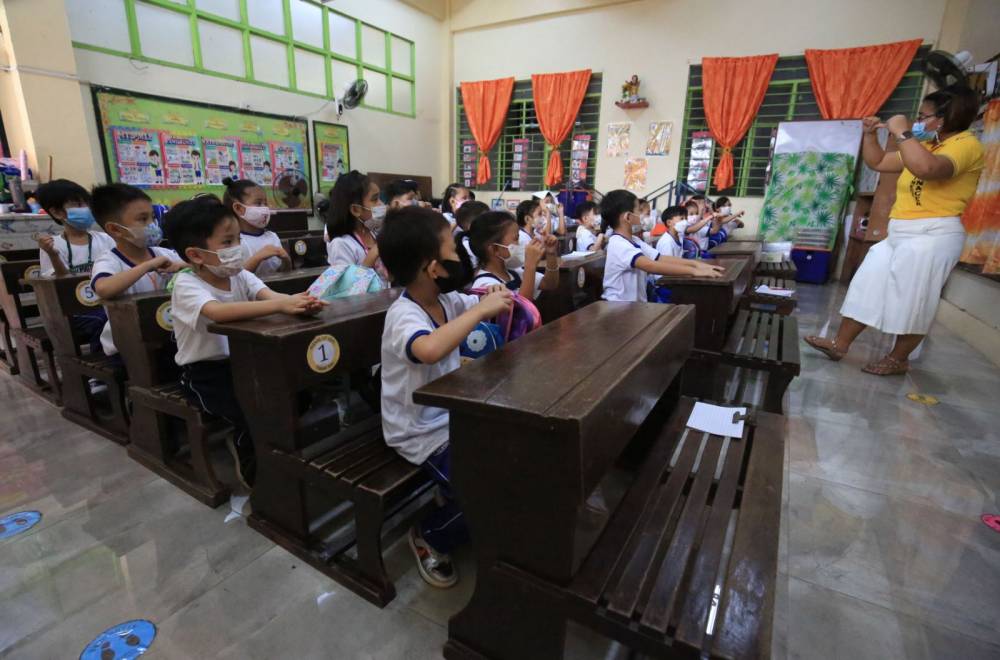
A survey conducted by the Alliance of Concerned Teachers-National Capital Region (ACT-NCR) found that 87 percent of teachers in Metro Manila believe that the intense heat in classrooms affects students’ ability to concentrate, which in turn, hampers the effectiveness of teaching and learning.
students.jpeg
MB FILE

The assessment was conducted from March 6 to 10, involving 8,605 teachers from all DepEd divisions in Metro Manila, using Google Form.

It aims to gauge the impact of the rising heat index in the region on both teachers and students, while also seeking to propose measures for their well-being to the Department of Education-NCR (DepEd-NCR).

READ:

https://mb.com.ph/2024/3/21/tag-init-na-pagasa-declares-end-of-amihan-season-start-of-warm-and-dry-season

"Marami rin sa mga guro at bata ang nakakaranas ng pagkahilo at sakit ng ulo dahil sa tindi ng init. Hindi na natin gustong maulit ang kalagayan noong nakaraang taon na marami ang itinakbo sa school clinics dahil nagdugo ang ilong o mas malala ay nawalan ng malay (Many teachers and students are experiencing dizziness and headaches due to the extreme heat. We do not want to repeat the situation of last year when many were rushed to school clinics due to nosebleeds or, worse, loss of consciousness)," ACT-NCR Union President Ruby Bernardo said in a statement on Monday, April 1.

"The shortage of health facilities and personnel in schools remains a big issue in addressing this situation, especially with poor ventilation in classrooms and overcrowding due to large class sizes," Bernardo added in Filipino.

ACT-NCR also found that 77 percent of respondents struggle with the stifling heat in classrooms.

Meanwhile, 46 percent said classrooms only have one to two electric fans, indicating insufficient ventilation to cope with the increasing temperatures.

Alarmingly, 87 percent of students reported having medical conditions like allergies and asthma, while 26 percent of teachers noted having hypertension, highlighting the significant health dangers posed by the unbearable heat.

"Survey respondents suggested a number of ways on how to urgently alleviate the intolerable conditions in classrooms, such as allowing teachers and students to wear light and comfortable attires suitable for hot weather conditions, providing free water to stay hydrated throughout the shift, and implementing asynchronous classes or other area-specific and flexible learning modalities to minimize exposure to extreme heat," ACT NCR pointed out.

On Monday, DepEd confirmed the suspension of classes in several areas due to severe heat.

READ:

https://mb.com.ph/2024/4/1/dep-ed-confirms-suspension-of-classes-in-several-areas-due-to-severe-heat

Furthermore, Bernardo reiterated that "while these suggestions can be useful as a quick and temporary response due to current conditions, it should not be abused by the agency and the government as the perennial solution."

"We need to build adequate classrooms, hire more teachers and education support personnel, and establish a climate crisis resilient environment to improve our learning conditions," she said.

"This requires [an] adequate budget allocated to education which we have long demanded from the government,” she added.

Heat indices

Additionally, in the most recent report, the Philippine Atmospheric, Geophysical and Astronomical Services Administration (PAGASA) noted "dangerous" heat indices in five areas across the country on March 31.

These areas include Northern Samar, Camarines Sur, Cagayan, Zamboanga City, and Camarines Norte, where the heat index ranged from 42 to 45°C.

The weather bureau indicated that areas with heat indices of 42 to 51°C are at a "danger" level, noting that heat cramps and heat exhaustion are possible, and prolonged activity could potentially result in heat stroke.

READ FULL STORY:

https://mb.com.ph/2024/3/31/pagasa-records-dangerous-heat-indices-in-5-areas-on-easter-sunday-1

Related Tags

Alliance of Concerned Teachers (ACT) DepEd El Nino
ADVERTISEMENT
.most-popular .layout-ratio{ padding-bottom: 79.13%; } @media (min-width: 768px) and (max-width: 1024px) { .widget-title { font-size: 15px !important; } }

{{ articles_filter_1561_widget.title }}

.most-popular .layout-ratio{ padding-bottom: 79.13%; } @media (min-width: 768px) and (max-width: 1024px) { .widget-title { font-size: 15px !important; } }

{{ articles_filter_1562_widget.title }}

.most-popular .layout-ratio{ padding-bottom: 79.13%; } @media (min-width: 768px) and (max-width: 1024px) { .widget-title { font-size: 15px !important; } }

{{ articles_filter_1563_widget.title }}

{{ articles_filter_1564_widget.title }}

.mb-article-details { position: relative; } .mb-article-details .article-body-preview, .mb-article-details .article-body-summary{ font-size: 17px; line-height: 30px; font-family: "Libre Caslon Text", serif; color: #000; } .mb-article-details .article-body-preview iframe , .mb-article-details .article-body-summary iframe{ width: 100%; margin: auto; } .read-more-background { background: linear-gradient(180deg, color(display-p3 1.000 1.000 1.000 / 0) 13.75%, color(display-p3 1.000 1.000 1.000 / 0.8) 30.79%, color(display-p3 1.000 1.000 1.000) 72.5%); position: absolute; height: 200px; width: 100%; bottom: 0; display: flex; justify-content: center; align-items: center; padding: 0; } .read-more-background a{ color: #000; } .read-more-btn { padding: 17px 45px; font-family: Inter; font-weight: 700; font-size: 18px; line-height: 16px; text-align: center; vertical-align: middle; border: 1px solid black; background-color: white; } .hidden { display: none; }
function initializeAllSwipers() { // Get all hidden inputs with cms_article_id document.querySelectorAll('[id^="cms_article_id_"]').forEach(function (input) { const cmsArticleId = input.value; const articleSelector = '#article-' + cmsArticleId + ' .body_images'; const swiperElement = document.querySelector(articleSelector); if (swiperElement && !swiperElement.classList.contains('swiper-initialized')) { new Swiper(articleSelector, { loop: true, pagination: false, navigation: { nextEl: '#article-' + cmsArticleId + ' .swiper-button-next', prevEl: '#article-' + cmsArticleId + ' .swiper-button-prev', }, }); } }); } setTimeout(initializeAllSwipers, 3000); const intersectionObserver = new IntersectionObserver( (entries) => { entries.forEach((entry) => { if (entry.isIntersecting) { const newUrl = entry.target.getAttribute("data-url"); if (newUrl) { history.pushState(null, null, newUrl); let article = entry.target; // Extract metadata const author = article.querySelector('.author-section').textContent.replace('By', '').trim(); const section = article.querySelector('.section-info ').textContent.replace(' ', ' '); const title = article.querySelector('.article-title h1').textContent; // Parse URL for Chartbeat path format const parsedUrl = new URL(newUrl, window.location.origin); const cleanUrl = parsedUrl.host + parsedUrl.pathname; // Update Chartbeat configuration if (typeof window._sf_async_config !== 'undefined') { window._sf_async_config.path = cleanUrl; window._sf_async_config.sections = section; window._sf_async_config.authors = author; } // Track virtual page view with Chartbeat if (typeof pSUPERFLY !== 'undefined' && typeof pSUPERFLY.virtualPage === 'function') { try { pSUPERFLY.virtualPage({ path: cleanUrl, title: title, sections: section, authors: author }); } catch (error) { console.error('ping error', error); } } // Optional: Update document title if (title && title !== document.title) { document.title = title; } } } }); }, { threshold: 0.1 } ); function showArticleBody(button) { const article = button.closest("article"); const summary = article.querySelector(".article-body-summary"); const body = article.querySelector(".article-body-preview"); const readMoreSection = article.querySelector(".read-more-background"); // Hide summary and read-more section summary.style.display = "none"; readMoreSection.style.display = "none"; // Show the full article body body.classList.remove("hidden"); } document.addEventListener("DOMContentLoaded", () => { let loadCount = 0; // Track how many times articles are loaded const offset = [1, 2, 3, 4, 5, 6, 7, 8, 9, 10]; // Offset values const currentUrl = window.location.pathname.substring(1); let isLoading = false; // Prevent multiple calls if (!currentUrl) { console.log("Current URL is invalid."); return; } const sentinel = document.getElementById("load-more-sentinel"); if (!sentinel) { console.log("Sentinel element not found."); return; } function isSentinelVisible() { const rect = sentinel.getBoundingClientRect(); return ( rect.top < window.innerHeight && rect.bottom >= 0 ); } function onScroll() { if (isLoading) return; if (isSentinelVisible()) { if (loadCount >= offset.length) { console.log("Maximum load attempts reached."); window.removeEventListener("scroll", onScroll); return; } isLoading = true; const currentOffset = offset[loadCount]; window.loadMoreItems().then(() => { let article = document.querySelector('#widget_1690 > div:nth-last-of-type(2) article'); intersectionObserver.observe(article) loadCount++; }).catch(error => { console.error("Error loading more items:", error); }).finally(() => { isLoading = false; }); } } window.addEventListener("scroll", onScroll); });

Sign up by email to receive news.