







Realizations during the Facebook outage
And how to communicate with each other just in case it happens again


At A Glance
- The inconvenience and the mad scramble to ensure I established more traditional/old school means of communications just presented this glaring fact of my dependency on social media to communicate with the outside world.
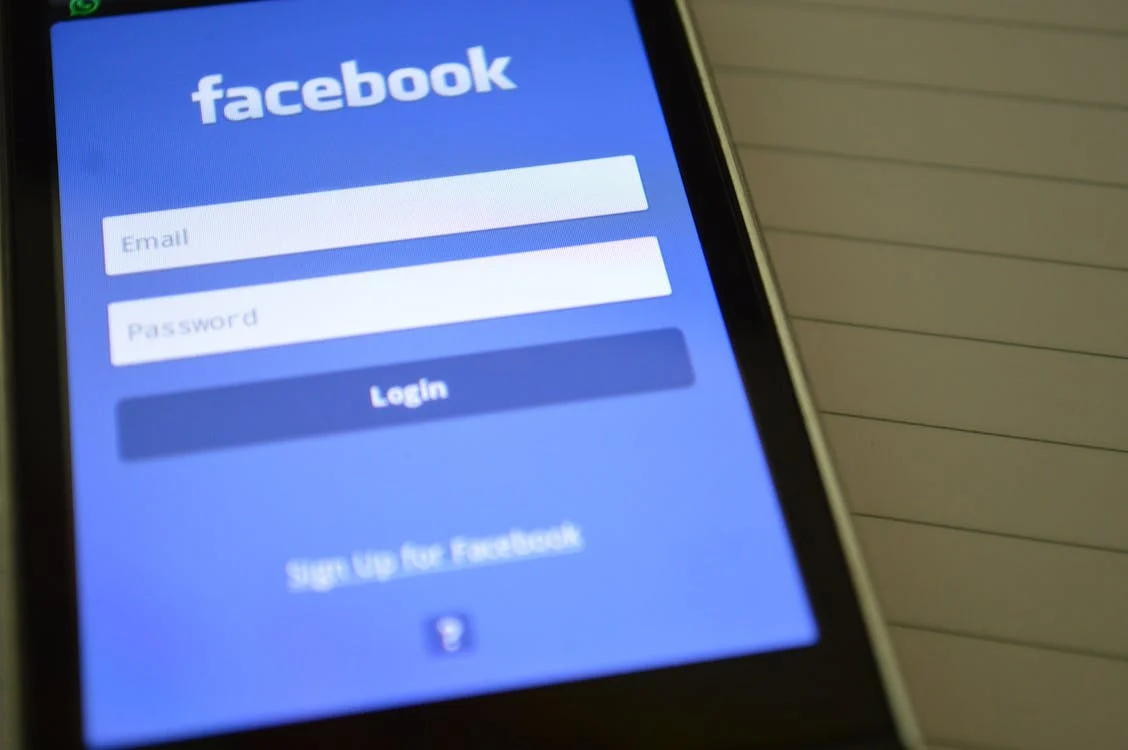
I was scrolling down my FB feed when it started to glitch. It was after midnight and I was on my phone. After a bit, I was able to gain access but only to be informed by Meta that I needed to log back in. Shoot! I scrambled to remember my password then looked for my hard copy of all my passwords. I input my password but was only advised to change it. I was given a code but every time I inputted the code, nothing happened. I was locked out.
Initially I feared I was being hacked and I found it imperative to change my password pronto. Then after my “failed” attempts, even trying FB messenger and IG accounts to message family that I might have been hacked, I had to accept that in the next few hours someone might start messaging family and friends or, worse, post a weird update. Then I realized, my FB and IG posts are so “vanilla” so any deviation in subject matter, and/or style, people will instantly know I had been hacked. This, however, did not alleviate the feeling of being violated and of the helplessness that comes with not being able to stop “someone” from invading your personal public space—which was quite vexing. I read that I could try to attempt to change my password in 24 hours and wondered—but not too intensely—what to do, how to entertain myself till then. Soon after that, it dawned on me that I would not be able to communicate with a lot of people without FB or IG. I didn’t have friends’ personal contact numbers! My goodness! I have become too dependent on these social media platforms for communication.
After taking stock of my predicament, I began to realize how this “down time” could be a very good thing. I could start really reading again. I could also have a 24-hour respite from the monitor screen glare that has somehow been straining my eyes of late. I know there is such a thing as snow-blindness, but can one get that too staring at the PC or mobile screen too much?
The next day, I found out that Meta’s FB and IG platforms suffered an outage affecting at its height over 500,000 Facebook users and close to 100,000 Instagram users. Most affected users were able to access their accounts a few hours later. Meta announced the outage was caused by “a technical issue."
This technical issue caused some conspiracy theorists to speculate the outage was an attack from external forces testing its abilities for some future nefarious act. After all, during President Ferdinand Marcos Jr.’s (PBBM) address before the Australian Parliament last week, he said the Philippines was “on the front line of battle for regional peace” and the country was already battling “actions that undermine regional peace, erode regional stability, and threaten regional success.” He even likening the country’s situation to 1942, just before the outbreak of WW2 in the Pacific. Despite PBBM’s assurance that the Philippines would be “firm in defending our sovereignty, our sovereign rights, our jurisdiction … and would not allow any attempt by any foreign power to take even one square inch of our sovereign territory,” the seed of who the antagonist in this story was planted, namely China.
PBBM was referring to escalating encounters between Chinese Coast Guard and Philippine vessels in the disputed territories in the Spratlys.
In the past, there have been news reports of cyber security experts and intelligence agencies suspecting various instances of “cyber attacks, cyber espionage, cyber operations, political intelligence gathering, and military objectives” linked to China. And perhaps this had led to some speculations, some light-hearted and some not. But the vexation caused by Meta’s recent outage is real. And for me, the inconvenience and the mad scramble to ensure I established more traditional/ old school means of communications just presented this glaring fact of my dependency on social media to communicate with the outside world.
I went on the web to shore up my list of possible ways to stay in touch with people without relying on social media. And yes! It is possible.
Here are some alternatives found on the web, “traditional and digital methods” one can use to stay in touch with friends and families and even colleagues—like my editors! Here is one list I found and would like to share with you:
1. Email is a reliable method for communication.
2. Phone calls. Schedule regular calls and write down the numbers of family, friends, and people you work with.
3. SMS/Text Messaging. Sometimes we forget that this feature still exists in our phones.
4. Video Calls. Platforms like Zoom, Skype, and Face Time.
5. Snail Mail. I still write letters by hand and deliver via tradition post.
6. Face-to- face Meetings. Schedule regular meetups.
7. Newsletters to let others know what has been going on in your life. This can be sent via email.
8. Group messaging apps. One can keep lines of communication open without the “distractions” of a social media platform.
9. Networking events and professional networking platforms. This will help you expand your social and professional circle as well as help maintain these connections in a more career-oriented way.
You can narrow down your groups to include family, friends, and coworkers or colleagues then choose the best traditional way to keep in touch. This is also good not only for celebrations and announcements, but for emergencies as well. It is good to be reminded that there are other communication platforms around—social and digital to choose from or even run to.
As Elon Musk pointed out in a post on X (which he owns) after Meta’s Outage, “If you are reading this post, it’s because our servers our working.” I for one completely forgot about my account on X until I started seeing memes—those involving a horde of Meta users suddenly turning to X for news, entertainment, and basically contact with the outside world.
Having said all this, it is always good to make a contingency plan with family, friends, and (even for work) officemates in the event we lose total access to social and even digital means of communication. Formulating a logistics plan, at the very least, can offer one some very good mental calisthenics. I know my generation will still remember, it hasn’t been too long for us “before the advent of the internet.”
And going back PBBM’s scenario of the country, likening it to 1943 being again “on the front line of battle for regional peace” just made me to look up the country’s contingency plan in the event of a war. Like most counties, contingency plans have been drawn up but for security reasons, they are classified and not made public. According to reports, the Philippines has “a defense policy that covers territorial defense, internal security, and international cooperation where the Armed Forces of the Philippines plays a crucial role in its implementation.”
And what areas will be mobilized in the event a threat is present? According to some reports, the following measures in government contingency plans will be activated:
1. Mobilization of the AFP.
2. Coordination with the allies.
3. Civil defense measures. This covers protecting civilians and infrastructure.
4. Emergency protocols for all sectors in the country to follow.
5. Public communications. Informing the public and keeping the public updated on the situation and what measures to take to ensure their safety.
But can the Philippines declare war on an enemy? Yes. The power to declare war falls on Congress—both the House of Representatives and the Senate voting jointly. The 1987 Constitution, Article VI, Section 23 states:
“Congress, by vote of two-thirds of both Houses in joint session assembled, voting separately, shall have the sole power to declare the existence of a state of war.” In addition, “the President of the Republic, as Commander-in-Chief of the Armed Forces can recommend but only Congress has the authority to make such a declaration.”
But with hope we are far away from that. And in situations like these involving territorial disputes and conflicts, we have diplomacy to fall back on and the help of our allies. In this case, the US.

This reliance on the US military today seems like a far jump from the late President Ferdinand E. Marcos’ time.
In a speech at the University of the Philippines Alumni Association Homecoming held on Dec. 11, 1976, PFEM stated:
“Our foreign policy, which once for the most part was entrusted or suited to the interests and outlook of another nation, has matured into a far-seeing appreciation of geopolitical and global realities, a closer identification of national realities and priorities, and an affirmation of sovereignty, independence and self-reliance.”
He added, “In the future—and this to me is the most important point— there will be instances when we will have to depend on our own resources for our own security. And the United States will be unable to protect us either because such aggression does not technically fall within the external type of aggression against which the Mutual Defense Pact is supposed to be utilized, or because of inclinations and policies of the United States government.
“It is therefore to the interest not only of the Philippines but to both parts, including the United States and Asia itself, that we, the Philippines, will be able to protect ourselves alone… In all these strands of our external relations, we cannot fail to see a unifying thread: the element of independence, the vision that we are masters of our own destiny.”
The world was much simpler then, I suppose, and the country has fallen so far behind in its military and financial capabilities to even envision ourselves being able to “protect ourselves alone.” But how did we come to this?