ADVERTISEMENT

'Invest in women: Accelerate progress'

Published Mar 8, 2024 04:23 pm

PAGBABAGO

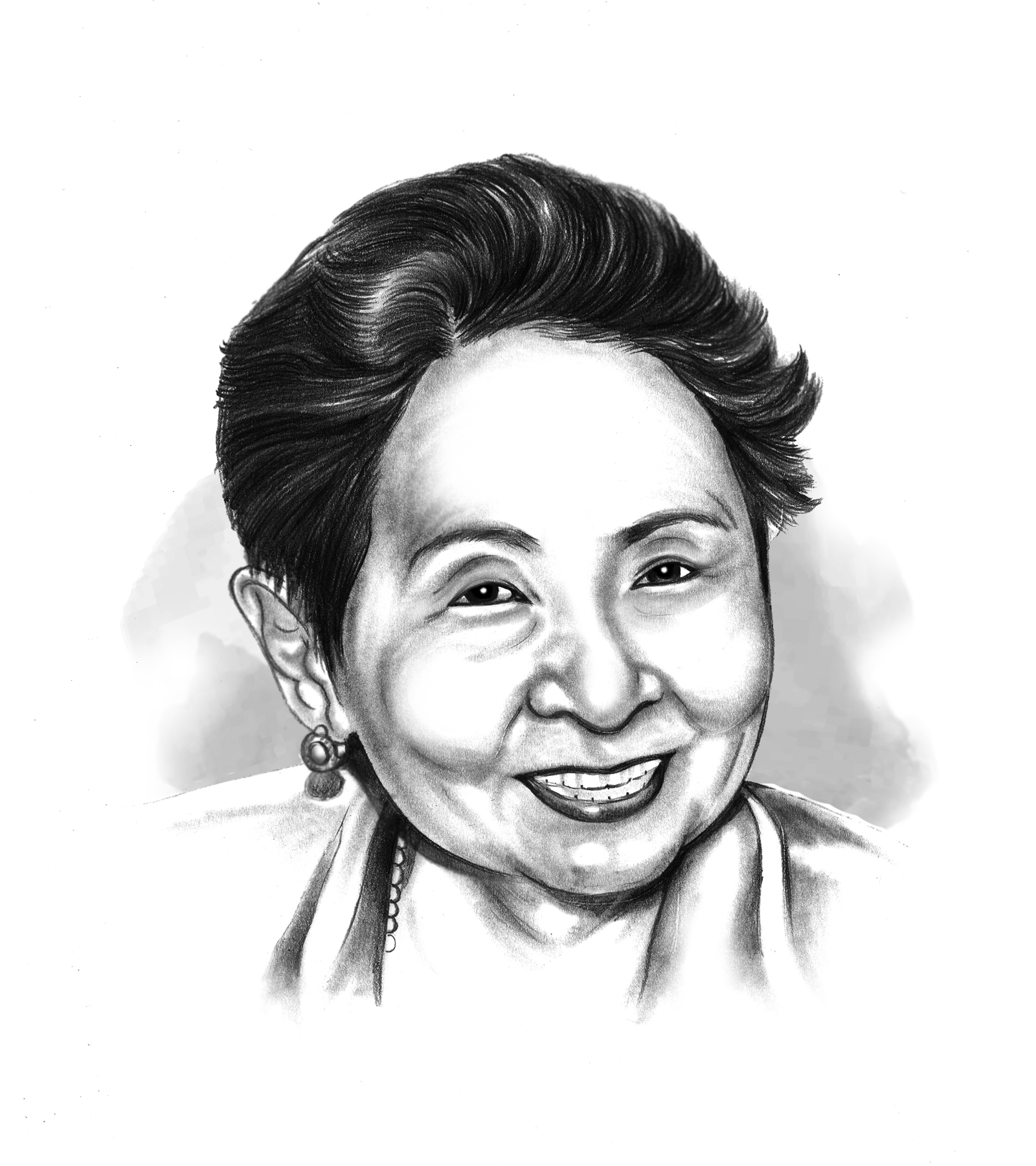
rosario braid final.jpg

On International Women’s Day which we celebrated yesterday, we were heartened to learn that the Philippines is still deemed the most gender-equal country in Asia, according to the World Economic Global Gender Gap Index. It is second best in educational attainment and worst in political empowerment. 
The theme of 2024 International Women’s Day is shown against the backdrop of a crisis, described as one “ranging from geopolitical conflict to soaring poverty level and the escalating impacts of climate change.” The campaign theme is “#Inspire inclusion,” while the official theme is “Invest in women: Accelerate progress.” 


The World Economic Forum’s Global Gender Gap Report 2023 which states that it will take 131 years to reach gender parity, also benchmarked the current state and evolution of gender parity across four key dimensions: Economic participation and opportunity, educational attainment, health and survival, and political empowerment. 


The 2023 survey results in 146 countries showed that we have closed the gender gap by 68.4 percent which is an improvement of 0.3 percent over the 2022 report. 


No country has yet achieved full gender parity although the top nine countries – Iceland (No. 1 in list as it has closed more than 90 percent of its gender gap. It is followed by Norway, Finland, New Zealand, Sweden, Germany, Nicaragua, Namibia, and Lithuania, all of which have closed at least 80 percent of their gap. 


New Zealand, the Philippines and Australia have the highest parity at the East Asia and Pacific region. 


Here are findings on gender parity in the workforce: In the labor market, women’s participation had slipped. Women account for 41.9 percent in workforce yet their share in senior leadership is only at 32.2 percent. They fare better in industries such as consumer services, retail, education, financial services and real estate. 


But they remain under-represented in the STEM (science, technology, engineering, and mathematics) occupations. Women do not have equal access to online platforms. Gender gaps in political leadership also continue to persist. 


With its ranking of 16th among the 146 countries, the Philippines is still considered the most gender-equal country in Asia. It is second highest in legal economic, gender equality in Southeast Asia. 


But the age-old issues continue to persist. Violence against women (VAW) is a pervasive social problem. Studies had shown that one in four women had experienced physical, emotional, and sexual violence by partner or husband. The culture of misogyny had hindered women’s empowerment. 


“Harmful social norms” likewise are known to exist in the country according to the World Values Survey figures from 2017 to 2022 which showed that 99.5 percent of the Filipino population has biases against women. 


The study found that three of four Filipinos or 75 percent of the population had political biases against women – that “men make better political leaders than women do.” Economic biases likewise exist. Four out of five Filipinos or 77.81 percent said that “men should have more rights to a job than women” and “men make better business executives than women.” 


Finally, despite our being one of the gender-equal countries, the Philippines continues to grapple with a patriarchal society according to the World Economic Forum Gender Report.


According to the Philippine Institute for Development Studies (PIDS), this culture of patriarchy is embedded into our social structures through colonization and Church indoctrination. ([email protected])
 

Related Tags

Dr. Florangel Rosario-Braid pagbabago
ADVERTISEMENT
.most-popular .layout-ratio{ padding-bottom: 79.13%; } @media (min-width: 768px) and (max-width: 1024px) { .widget-title { font-size: 15px !important; } }

{{ articles_filter_1561_widget.title }}

.most-popular .layout-ratio{ padding-bottom: 79.13%; } @media (min-width: 768px) and (max-width: 1024px) { .widget-title { font-size: 15px !important; } }

{{ articles_filter_1562_widget.title }}

.most-popular .layout-ratio{ padding-bottom: 79.13%; } @media (min-width: 768px) and (max-width: 1024px) { .widget-title { font-size: 15px !important; } }

{{ articles_filter_1563_widget.title }}

{{ articles_filter_1564_widget.title }}

.mb-article-details { position: relative; } .mb-article-details .article-body-preview, .mb-article-details .article-body-summary{ font-size: 17px; line-height: 30px; font-family: "Libre Caslon Text", serif; color: #000; } .mb-article-details .article-body-preview iframe , .mb-article-details .article-body-summary iframe{ width: 100%; margin: auto; } .read-more-background { background: linear-gradient(180deg, color(display-p3 1.000 1.000 1.000 / 0) 13.75%, color(display-p3 1.000 1.000 1.000 / 0.8) 30.79%, color(display-p3 1.000 1.000 1.000) 72.5%); position: absolute; height: 200px; width: 100%; bottom: 0; display: flex; justify-content: center; align-items: center; padding: 0; } .read-more-background a{ color: #000; } .read-more-btn { padding: 17px 45px; font-family: Inter; font-weight: 700; font-size: 18px; line-height: 16px; text-align: center; vertical-align: middle; border: 1px solid black; background-color: white; } .hidden { display: none; }
function initializeAllSwipers() { // Get all hidden inputs with cms_article_id document.querySelectorAll('[id^="cms_article_id_"]').forEach(function (input) { const cmsArticleId = input.value; const articleSelector = '#article-' + cmsArticleId + ' .body_images'; const swiperElement = document.querySelector(articleSelector); if (swiperElement && !swiperElement.classList.contains('swiper-initialized')) { new Swiper(articleSelector, { loop: true, pagination: false, navigation: { nextEl: '#article-' + cmsArticleId + ' .swiper-button-next', prevEl: '#article-' + cmsArticleId + ' .swiper-button-prev', }, }); } }); } setTimeout(initializeAllSwipers, 3000); const intersectionObserver = new IntersectionObserver( (entries) => { entries.forEach((entry) => { if (entry.isIntersecting) { const newUrl = entry.target.getAttribute("data-url"); if (newUrl) { history.pushState(null, null, newUrl); let article = entry.target; // Extract metadata const author = article.querySelector('.author-section').textContent.replace('By', '').trim(); const section = article.querySelector('.section-info ').textContent.replace(' ', ' '); const title = article.querySelector('.article-title h1').textContent; // Parse URL for Chartbeat path format const parsedUrl = new URL(newUrl, window.location.origin); const cleanUrl = parsedUrl.host + parsedUrl.pathname; // Update Chartbeat configuration if (typeof window._sf_async_config !== 'undefined') { window._sf_async_config.path = cleanUrl; window._sf_async_config.sections = section; window._sf_async_config.authors = author; } // Track virtual page view with Chartbeat if (typeof pSUPERFLY !== 'undefined' && typeof pSUPERFLY.virtualPage === 'function') { try { pSUPERFLY.virtualPage({ path: cleanUrl, title: title, sections: section, authors: author }); } catch (error) { console.error('ping error', error); } } // Optional: Update document title if (title && title !== document.title) { document.title = title; } } } }); }, { threshold: 0.1 } ); function showArticleBody(button) { const article = button.closest("article"); const summary = article.querySelector(".article-body-summary"); const body = article.querySelector(".article-body-preview"); const readMoreSection = article.querySelector(".read-more-background"); // Hide summary and read-more section summary.style.display = "none"; readMoreSection.style.display = "none"; // Show the full article body body.classList.remove("hidden"); } document.addEventListener("DOMContentLoaded", () => { let loadCount = 0; // Track how many times articles are loaded const offset = [1, 2, 3, 4, 5, 6, 7, 8, 9, 10]; // Offset values const currentUrl = window.location.pathname.substring(1); let isLoading = false; // Prevent multiple calls if (!currentUrl) { console.log("Current URL is invalid."); return; } const sentinel = document.getElementById("load-more-sentinel"); if (!sentinel) { console.log("Sentinel element not found."); return; } function isSentinelVisible() { const rect = sentinel.getBoundingClientRect(); return ( rect.top < window.innerHeight && rect.bottom >= 0 ); } function onScroll() { if (isLoading) return; if (isSentinelVisible()) { if (loadCount >= offset.length) { console.log("Maximum load attempts reached."); window.removeEventListener("scroll", onScroll); return; } isLoading = true; const currentOffset = offset[loadCount]; window.loadMoreItems().then(() => { let article = document.querySelector('#widget_1690 > div:nth-last-of-type(2) article'); intersectionObserver.observe(article) loadCount++; }).catch(error => { console.error("Error loading more items:", error); }).finally(() => { isLoading = false; }); } } window.addEventListener("scroll", onScroll); });

Sign up by email to receive news.