






 Philippines
National
Salceda revives hope for Marcos' P20 per kilo rice promise, says a 'clean' NFA can do it
Philippines
National
Salceda revives hope for Marcos' P20 per kilo rice promise, says a 'clean' NFA can do it
Salceda revives hope for Marcos' P20 per kilo rice promise, says a 'clean' NFA can do it


At A Glance
- Albay 2nd district Rep. Joey Salceda has given new hope for President Marcos' campaign promise of P20 per kilo rice, saying that the only way to achieve it is to "clean" the National Food Authority (NFA).
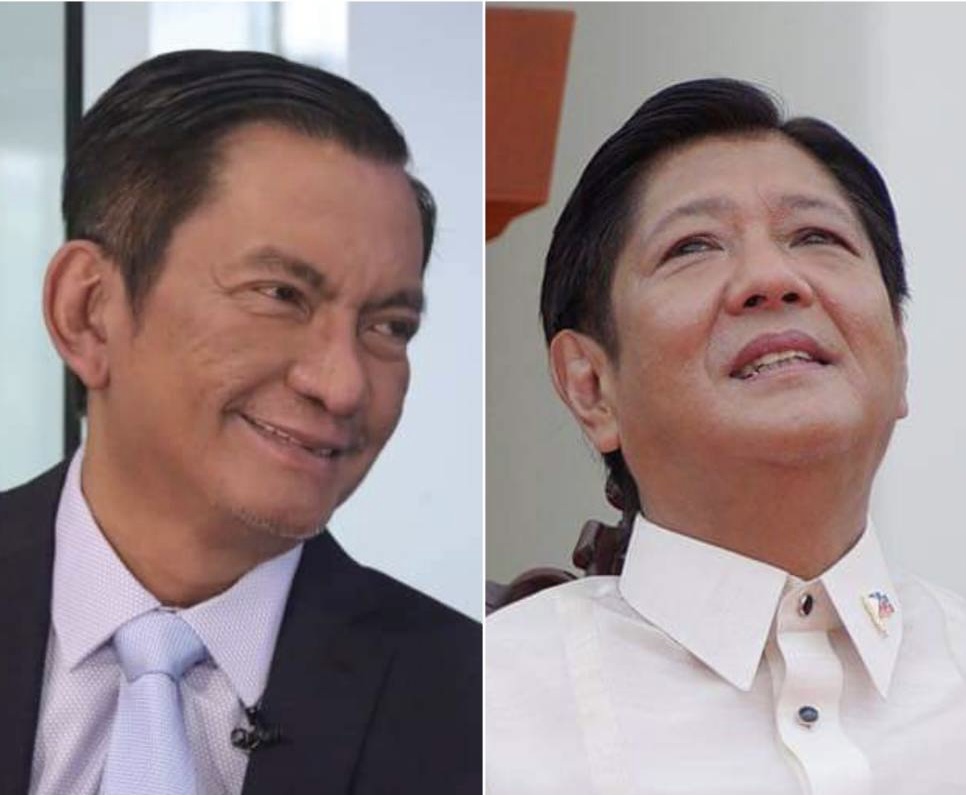 Albay 2nd District Rep. Joey Salceda (left) and President Ferdinand Marcos Jr. (Photo from Rep. Salceda's office, BBM Media Bureau)
Albay 2nd district Rep. Joey Salceda has given new hope for President Marcos' campaign promise of P20 per kilo rice, saying that the only way to achieve it is to "clean" the National Food Authority (NFA).
Salceda gave this assessment following the House Committee on Agriculture and Food's motu proprio investigation on the NFA Thursday, March 7, particularly on its alleged improper disposition of some 75,000 sacks of rice from the country’s buffer stock.
“I think [Department of Agriculture] Secretary [Francisco] Tiu-Laurel [Jr.] is in the right direction here of cleaning up the NFA and curing its longstanding defects. The only way to get P20 rice is through the NFA. And a clean NFA is the only way to get it done without compromising the country’s finances,” reckoned the economist-solon
With current retail prices of the staple grain reaching P50 per kilo this month, there really hasn't been much talk about measures to attain the P20 per kilo price tag.
Salceda joined the panel probe in his capacity as a vice chairman. Suffice it to say, he believes the NFA has a lot of explaining to do.
During the hearing, the Bicolano asked the NFA and the Commission on Audit (COA) to account for the P152 billion in total cash that it was supposed to have received as inflows from 2018 to 2022 through a management audit of the controversial government corporation.
This, as Salceda prodded the body “not to limit its investigation merely to the P93 million sale in question this year", but to include all sales of buffer stock since the Rice Tariffication Law took effect in 2019. The 75,000 sacks of buffer stock rice was sold to private traders for that amount, sans public bidding.
“The NFA is supposed to have received a total of P85.7 billion in national government subsidies and another P66.3 billion in sales of rice stocks from 2018 to 2022. That totals to P152 billion from those five years alone,” Salceda noted.
“That is additive. Even with a loss incurred of P20 billion–or the difference between the direct cost of rice and the sale of rice–that’s still P132 billion to account for,” he underscored.
“The effective buying price of palay is P23 per kilo for clean or dry palay. They sell at P25 per kilo. It can, of course, be better with auctions when you sell to the private sector," ranted Salceda.
He thus moved that the Committee probe not just the questionable sale of the 75,000 sacks of rice, but the management performance of the NFA from 2019 to 2023 as well.
The Rice Tariffication Law earlier limited the NFA’s role to buffer stocking from local farmers. However, Salceda says that “In theory, the NFA should sometimes make gains, rather than merely make consistent losses, if it can auction its rice stocks.”
Milling can be as low as P1.8 per kilo when you achieve economies of scale. So, sometimes, the NFA should really make money.”
“From selecting who mills the rice, to choosing who buys the rice, there are cracks for corruption and inefficiency. This should be subject of audit," he said.