ADVERTISEMENT

'Ang init'! MMDA reinstates 30-minute 'heat-stroke break' for traffic enforcers, street sweepers

Published Mar 7, 2024 08:23 am

bp monitoring.jpg

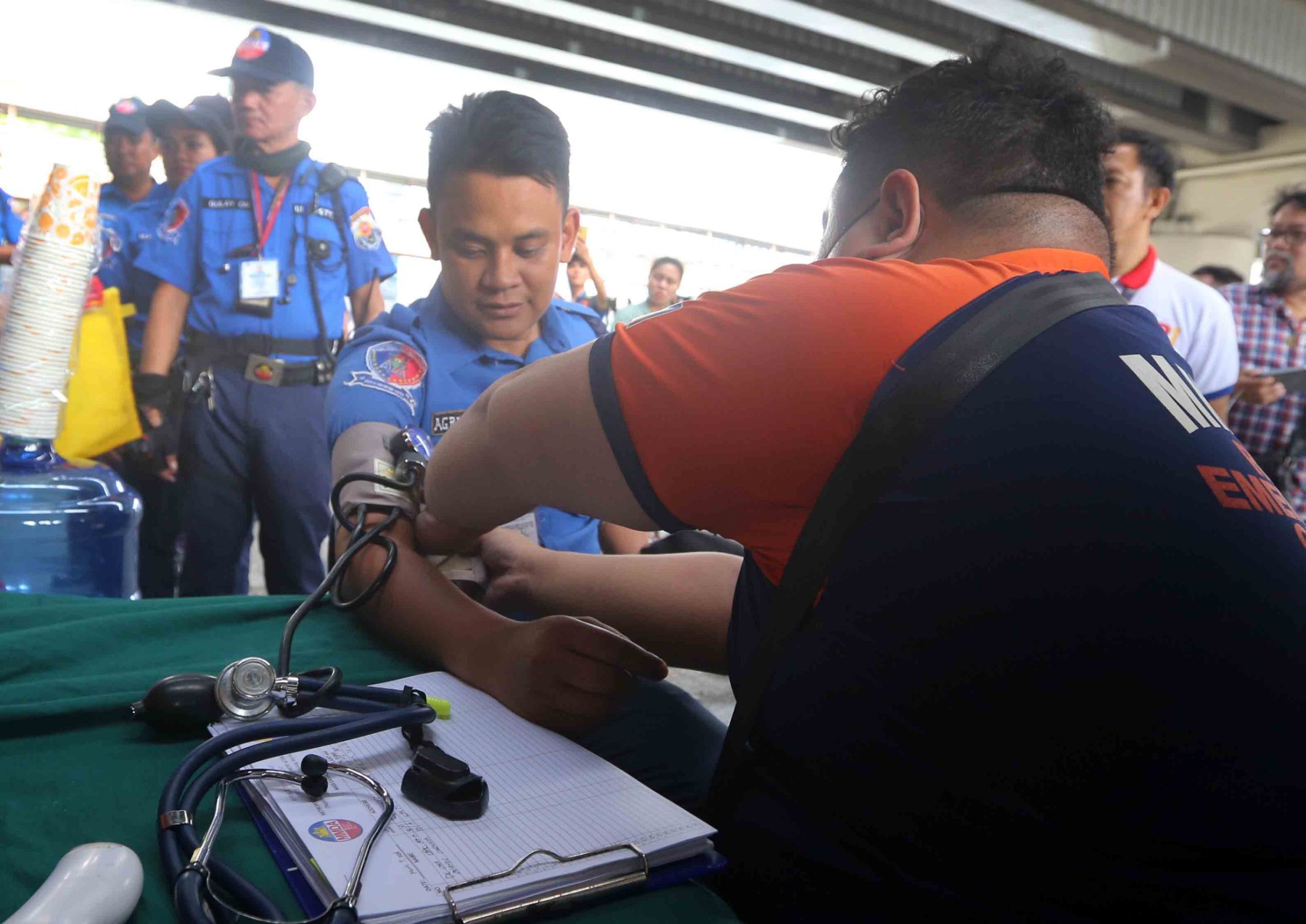
Metro Manila Development Authority (MMDA) traffic personnel undergo blood pressure monitoring as part of the anti-heatstroke program of the agency, at the MMDA Metro Base along EDSA-Timog in Quezon City on March 7, 2024. The agency also put up a  water station that will be used by traffic enforcers during breaks. (Mark Balmores)


Amid the scorching heat of the sun in the past days, traffic enforcers of the Metropolitan Manila Development Authority (MMDA) will be given a 30-minute break to protect its personnel from heat stroke and other heat-related illnesses.

The 30-minute heat stroke break policy has been a policy in the past and MMDA chairman Don Artes said they opted to reinstate especially for their traffic enforcers and street sweepers as weather experts warned of intense heat until May this year due to the El Niño phenomenon.

“We must understand the plight of these traffic enforcers and street sweepers who work under the scorching heat of the sun every day to fulfill their duties and responsibilities,” said Artes.

He said the policy will take effect from March 15 until May 31 and will be implemented daily through a rotation schedule.

This developed as traffic enforcers and other personnel of the MMDA underwent blood pressure monitoring and were provided with cold water to avoid dehydration on Thursday, March 7.

Artes explained the "heat stroke break" shall be done alternately by those who are assigned in a particular area to maintain visibility of traffic enforcers and street sweepers and to ensure field operations are not hampered.

Under the "heat stroke break policy", on-duty traffic enforcers and street sweepers are allowed to leave their posts in shifts so that they can rehydrate, seek shelter from the sun, and take a 30-minute break to avoid heat stroke.

For traffic enforcers who work from 5 a.m. to 1:00 p.m. shift, the prescribed “heat stroke break” is from 10 a.m. to 10:30 a.m. or 10:30 a.m. to 11 a.m.; for those working from 1 p.m. to 9 p.m. shift, the break time shall be observed from 2:30 p.m. to 3 p.m. or 3 p.m. to 3:30 p.m.; for those working from 6 a.m. to 2 p.m., the prescribed “heat stroke break” is from 11 a.m. to 11:30 a.m. or 11:30 a.m. to 12 noon; and for 2 p.m. to 10 p.m. shift, the break time shall be observed from 3 p.m. to 3:30 p.m. or 3:30 p.m. to 4 p.m.

Meanwhile, for street sweepers who work from 6 a.m. to 2 p.m. shift, the prescribed “heat stroke break” is from 11 a.m. to 11:30 a.m.. or 11:30 a.m. to 12 noon; for 7 a.m. to 4 p.m. shift, they shall observe 12 noon to 1 p.m. regular break time; and for those working from 11 a.m. to 7 p.m. shift, the break time shall be observed from 2:30 p.m. to 3:00 p.m.. or 3:00 p.m. to 3:30 p.m.

Field personnel could also take an additional 15-minute break time in case the heat index, or the “human discomfort index” in Metro Manila reaches 40 degrees Celsius and above.

Related Tags

El Niño phenomenon MMDA heat stroke
ADVERTISEMENT
.most-popular .layout-ratio{ padding-bottom: 79.13%; } @media (min-width: 768px) and (max-width: 1024px) { .widget-title { font-size: 15px !important; } }

{{ articles_filter_1561_widget.title }}

.most-popular .layout-ratio{ padding-bottom: 79.13%; } @media (min-width: 768px) and (max-width: 1024px) { .widget-title { font-size: 15px !important; } }

{{ articles_filter_1562_widget.title }}

.most-popular .layout-ratio{ padding-bottom: 79.13%; } @media (min-width: 768px) and (max-width: 1024px) { .widget-title { font-size: 15px !important; } }

{{ articles_filter_1563_widget.title }}

{{ articles_filter_1564_widget.title }}

.mb-article-details { position: relative; } .mb-article-details .article-body-preview, .mb-article-details .article-body-summary{ font-size: 17px; line-height: 30px; font-family: "Libre Caslon Text", serif; color: #000; } .mb-article-details .article-body-preview iframe , .mb-article-details .article-body-summary iframe{ width: 100%; margin: auto; } .read-more-background { background: linear-gradient(180deg, color(display-p3 1.000 1.000 1.000 / 0) 13.75%, color(display-p3 1.000 1.000 1.000 / 0.8) 30.79%, color(display-p3 1.000 1.000 1.000) 72.5%); position: absolute; height: 200px; width: 100%; bottom: 0; display: flex; justify-content: center; align-items: center; padding: 0; } .read-more-background a{ color: #000; } .read-more-btn { padding: 17px 45px; font-family: Inter; font-weight: 700; font-size: 18px; line-height: 16px; text-align: center; vertical-align: middle; border: 1px solid black; background-color: white; } .hidden { display: none; }
function initializeAllSwipers() { // Get all hidden inputs with cms_article_id document.querySelectorAll('[id^="cms_article_id_"]').forEach(function (input) { const cmsArticleId = input.value; const articleSelector = '#article-' + cmsArticleId + ' .body_images'; const swiperElement = document.querySelector(articleSelector); if (swiperElement && !swiperElement.classList.contains('swiper-initialized')) { new Swiper(articleSelector, { loop: true, pagination: false, navigation: { nextEl: '#article-' + cmsArticleId + ' .swiper-button-next', prevEl: '#article-' + cmsArticleId + ' .swiper-button-prev', }, }); } }); } setTimeout(initializeAllSwipers, 3000); const intersectionObserver = new IntersectionObserver( (entries) => { entries.forEach((entry) => { if (entry.isIntersecting) { const newUrl = entry.target.getAttribute("data-url"); if (newUrl) { history.pushState(null, null, newUrl); let article = entry.target; // Extract metadata const author = article.querySelector('.author-section').textContent.replace('By', '').trim(); const section = article.querySelector('.section-info ').textContent.replace(' ', ' '); const title = article.querySelector('.article-title h1').textContent; // Parse URL for Chartbeat path format const parsedUrl = new URL(newUrl, window.location.origin); const cleanUrl = parsedUrl.host + parsedUrl.pathname; // Update Chartbeat configuration if (typeof window._sf_async_config !== 'undefined') { window._sf_async_config.path = cleanUrl; window._sf_async_config.sections = section; window._sf_async_config.authors = author; } // Track virtual page view with Chartbeat if (typeof pSUPERFLY !== 'undefined' && typeof pSUPERFLY.virtualPage === 'function') { try { pSUPERFLY.virtualPage({ path: cleanUrl, title: title, sections: section, authors: author }); } catch (error) { console.error('ping error', error); } } // Optional: Update document title if (title && title !== document.title) { document.title = title; } } } }); }, { threshold: 0.1 } ); function showArticleBody(button) { const article = button.closest("article"); const summary = article.querySelector(".article-body-summary"); const body = article.querySelector(".article-body-preview"); const readMoreSection = article.querySelector(".read-more-background"); // Hide summary and read-more section summary.style.display = "none"; readMoreSection.style.display = "none"; // Show the full article body body.classList.remove("hidden"); } document.addEventListener("DOMContentLoaded", () => { let loadCount = 0; // Track how many times articles are loaded const offset = [1, 2, 3, 4, 5, 6, 7, 8, 9, 10]; // Offset values const currentUrl = window.location.pathname.substring(1); let isLoading = false; // Prevent multiple calls if (!currentUrl) { console.log("Current URL is invalid."); return; } const sentinel = document.getElementById("load-more-sentinel"); if (!sentinel) { console.log("Sentinel element not found."); return; } function isSentinelVisible() { const rect = sentinel.getBoundingClientRect(); return ( rect.top < window.innerHeight && rect.bottom >= 0 ); } function onScroll() { if (isLoading) return; if (isSentinelVisible()) { if (loadCount >= offset.length) { console.log("Maximum load attempts reached."); window.removeEventListener("scroll", onScroll); return; } isLoading = true; const currentOffset = offset[loadCount]; window.loadMoreItems().then(() => { let article = document.querySelector('#widget_1690 > div:nth-last-of-type(2) article'); intersectionObserver.observe(article) loadCount++; }).catch(error => { console.error("Error loading more items:", error); }).finally(() => { isLoading = false; }); } } window.addEventListener("scroll", onScroll); });

Sign up by email to receive news.