

ADVERTISEMENT

Swiss voters approve boost to pension payments

Published Mar 4, 2024 02:21 am

GENEVA, Switzerland—Swiss voters on Sunday overwhelmingly backed a proposal to increase pension payments, a move hailed as "historic" by backers at a time when the country's ageing population faces surging living expenses.
b9c4f5a4564c1985e2e5df10d0aa2580be4f2d01.webp
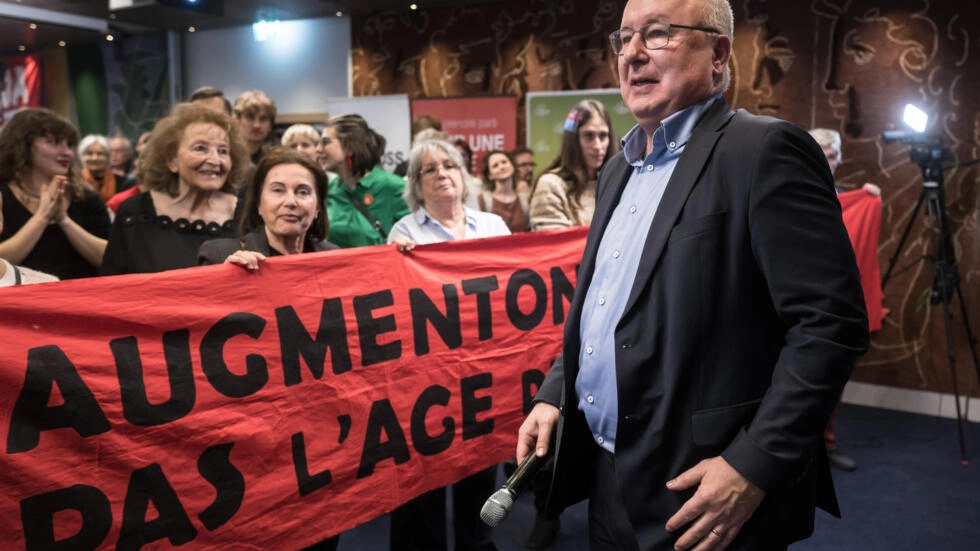
President Swiss Federation of Trade Unions (SGS USS) Pierre-Yves Maillard reacts in Bern on March 3, after the results of the vote of a national initiative to boost pension payments. Swiss voters appeared set to accept a proposal to boost pension payments while snubbing a push to hike the retirement age, at a time when the country's ageing population faces ever-swelling living expenses. (Photo by Fabrice COFFRINI / AFP)

A call by trade unions to add a 13th monthly pension payment each year secured nearly 60 percent backing, final results showed.

But a separate vote to raise Switzerland's retirement age to 66 from 65 was soundly rejected by three-quarters of voters.

"This is historic," Pierre-Yves Maillard, head of the Swiss Trade Union Federation (SGB), told AFP.

Switzerland's Greens Party celebrated a "significant victory... for the many retirees who will see their situations improve".

While opinion polls had indicated strong popular support for the "Better living in retirement" proposal, suspense had lingered on whether it would secure the necessary majorities in most of Switzerland's 26 cantons.

But in the end, the initiative won the double-majority needed to pass, with backing from 58.24 percent of voters and 16 cantons.

Support soared above 70 percent in six cantons, including over 82 percent in the western Jura region.

- 'Soaring' costs -


Sunday's vote marks the first time that Swiss voters have accepted a popular proposal to alter the country's social security system, according to the ATS-Keystone news agency.

It is also the first time Swiss trade unions have succeeded in pushing through an initiative at the polls under the country's direct democratic system.

The initiative calls for pensioners to receive an additional monthly payment, similar to the 13th monthly salary that many employees receive in Switzerland and other European countries.

Monthly state pension payments in Switzerland max out at 2,450 Swiss francs ($2,780) for individuals and 3,675 francs for married couples.

That does not go far in a country consistently ranked among the most expensive in the world.

Rent for a typical two-bedroom apartment in Swiss cities is at least 3,000 francs, and a coffee costs upwards of five francs ($5.66).

"The cost of living just keeps soaring," said Jakob Hauri, a retiree quoted by the initiative backers on their website.

- 'Price to pay' -


Left-leaning parties supported the initiative, which was fiercely fought by right-wing and centrist parties as well as the Swiss government and parliament.

The government said the pension increase would cost more than four billion Swiss francs a year, which would require tax increases and could threaten the financial stability of the social security system.

But Interior Minister Elisabeth Baume-Schneider took Sunday's loss in stride, saying that "democracy is alive and kicking in Switzerland".

"The government has provided all the elements and the arguments," she told the RTS public broadcaster.

But "there will be a price to pay," she said, adding that the government and parliament would work on a proposal to ensure pensioners could receive the extra payment starting in 2026.

The SGB union federation said that Sunday's vote results "clearly show that the government, a majority of the parliament and employers have for too long ignored the pension problem".

"We are lucky to have a direct democracy that allows us to correct that," Maillard said.

- Retirement age unchanged -


A second issue on the ballot Sunday seeking to raise the retirement age was soundly rejected.

A full 74.72 percent of voters turned down the proposal by the youth branch of the right-wing Liberal Party to gradually raise the retirement age from 65 to 66 over the next decade, a moved aimed at ensuring full financing of the pension system.

A majority of voters in every Swiss canton rejected the proposal, which came less than two years after voters narrowly opted to raise the retirement age for women to 65 from 64, to match the retirement age for men.

Voter participation is generally low in Switzerland's popular votes, which are held every few months, and rarely inches above 50 percent.

But Sunday's issues sparked heated debate and participation reached more than 58 percent.

Related Tags

WORLDNEWS
ADVERTISEMENT
.most-popular .layout-ratio{ padding-bottom: 79.13%; } @media (min-width: 768px) and (max-width: 1024px) { .widget-title { font-size: 15px !important; } }

{{ articles_filter_1561_widget.title }}

.most-popular .layout-ratio{ padding-bottom: 79.13%; } @media (min-width: 768px) and (max-width: 1024px) { .widget-title { font-size: 15px !important; } }

{{ articles_filter_1562_widget.title }}

.most-popular .layout-ratio{ padding-bottom: 79.13%; } @media (min-width: 768px) and (max-width: 1024px) { .widget-title { font-size: 15px !important; } }

{{ articles_filter_1563_widget.title }}

{{ articles_filter_1564_widget.title }}

.mb-article-details { position: relative; } .mb-article-details .article-body-preview, .mb-article-details .article-body-summary{ font-size: 17px; line-height: 30px; font-family: "Libre Caslon Text", serif; color: #000; } .mb-article-details .article-body-preview iframe , .mb-article-details .article-body-summary iframe{ width: 100%; margin: auto; } .read-more-background { background: linear-gradient(180deg, color(display-p3 1.000 1.000 1.000 / 0) 13.75%, color(display-p3 1.000 1.000 1.000 / 0.8) 30.79%, color(display-p3 1.000 1.000 1.000) 72.5%); position: absolute; height: 200px; width: 100%; bottom: 0; display: flex; justify-content: center; align-items: center; padding: 0; } .read-more-background a{ color: #000; } .read-more-btn { padding: 17px 45px; font-family: Inter; font-weight: 700; font-size: 18px; line-height: 16px; text-align: center; vertical-align: middle; border: 1px solid black; background-color: white; } .hidden { display: none; }
function initializeAllSwipers() { // Get all hidden inputs with cms_article_id document.querySelectorAll('[id^="cms_article_id_"]').forEach(function (input) { const cmsArticleId = input.value; const articleSelector = '#article-' + cmsArticleId + ' .body_images'; const swiperElement = document.querySelector(articleSelector); if (swiperElement && !swiperElement.classList.contains('swiper-initialized')) { new Swiper(articleSelector, { loop: true, pagination: false, navigation: { nextEl: '#article-' + cmsArticleId + ' .swiper-button-next', prevEl: '#article-' + cmsArticleId + ' .swiper-button-prev', }, }); } }); } setTimeout(initializeAllSwipers, 3000); const intersectionObserver = new IntersectionObserver( (entries) => { entries.forEach((entry) => { if (entry.isIntersecting) { const newUrl = entry.target.getAttribute("data-url"); if (newUrl) { history.pushState(null, null, newUrl); let article = entry.target; // Extract metadata const author = article.querySelector('.author-section').textContent.replace('By', '').trim(); const section = article.querySelector('.section-info ').textContent.replace(' ', ' '); const title = article.querySelector('.article-title h1').textContent; // Parse URL for Chartbeat path format const parsedUrl = new URL(newUrl, window.location.origin); const cleanUrl = parsedUrl.host + parsedUrl.pathname; // Update Chartbeat configuration if (typeof window._sf_async_config !== 'undefined') { window._sf_async_config.path = cleanUrl; window._sf_async_config.sections = section; window._sf_async_config.authors = author; } // Track virtual page view with Chartbeat if (typeof pSUPERFLY !== 'undefined' && typeof pSUPERFLY.virtualPage === 'function') { try { pSUPERFLY.virtualPage({ path: cleanUrl, title: title, sections: section, authors: author }); } catch (error) { console.error('ping error', error); } } // Optional: Update document title if (title && title !== document.title) { document.title = title; } } } }); }, { threshold: 0.1 } ); function showArticleBody(button) { const article = button.closest("article"); const summary = article.querySelector(".article-body-summary"); const body = article.querySelector(".article-body-preview"); const readMoreSection = article.querySelector(".read-more-background"); // Hide summary and read-more section summary.style.display = "none"; readMoreSection.style.display = "none"; // Show the full article body body.classList.remove("hidden"); } document.addEventListener("DOMContentLoaded", () => { let loadCount = 0; // Track how many times articles are loaded const offset = [1, 2, 3, 4, 5, 6, 7, 8, 9, 10]; // Offset values const currentUrl = window.location.pathname.substring(1); let isLoading = false; // Prevent multiple calls if (!currentUrl) { console.log("Current URL is invalid."); return; } const sentinel = document.getElementById("load-more-sentinel"); if (!sentinel) { console.log("Sentinel element not found."); return; } function isSentinelVisible() { const rect = sentinel.getBoundingClientRect(); return ( rect.top < window.innerHeight && rect.bottom >= 0 ); } function onScroll() { if (isLoading) return; if (isSentinelVisible()) { if (loadCount >= offset.length) { console.log("Maximum load attempts reached."); window.removeEventListener("scroll", onScroll); return; } isLoading = true; const currentOffset = offset[loadCount]; window.loadMoreItems().then(() => { let article = document.querySelector('#widget_1690 > div:nth-last-of-type(2) article'); intersectionObserver.observe(article) loadCount++; }).catch(error => { console.error("Error loading more items:", error); }).finally(() => { isLoading = false; }); } } window.addEventListener("scroll", onScroll); });

Sign up by email to receive news.