






 Philippines
National
Planned coconut sector revival hinges on LGUs' backing, says Villafuerte
Philippines
National
Planned coconut sector revival hinges on LGUs' backing, says Villafuerte
Planned coconut sector revival hinges on LGUs' backing, says Villafuerte


At A Glance
- Camarines Sur 2nd district Rep. LRay Villafuerte has underscored the need for local government unit (LGU) support in the Phlippine Coconut Authority's (PCA) plan to plant some 8.5 million seedlings this year.
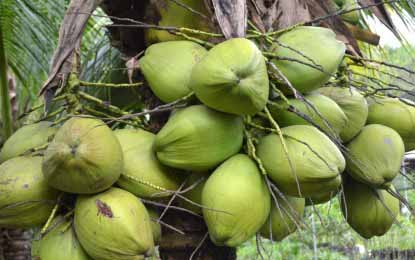 (MANILA BULLETIN)
Camarines Sur 2nd district Rep. LRay Villafuerte has underscored the need for local government unit (LGU) support in the Phlippine Coconut Authority's (PCA) plan to plant some 8.5 million seedlings this year.
The massive seedlings planting is intended to help the Marcos administration reach its goal of planting 100 million trees by 2028 as part of his rehabilitation program for this sector.
A former CamSur governor, Villafuerte expressed his support for the President’s goal for the Philippines to become the world’s biggest coconut exporter as he highlighted “the vital role that [LGUs] in coconut-producing provinces can perform" in helping achieve this goal.
“The all-out support of LGUs in coconut-producing localities behind the PCA’s development and rehabilitation plan is crucial to re-energizing this previously flourishing sector and lifting from poverty our coconut farmers," the Bicol solon said in a statement Sunday, March 3.
According to PCA administrator Bernie Cruz, at least 8.5 million coconut seedlings are to be planted this year under the agency’s Massive Coconut Planting and Replanting Project.
Cruz said the figure was based on the available stocks and seed nuts sown in nurseries, which the PCA had amassed in partnerships with various cooperatives, farmers’ organizations and LGUs like those in Camarines Sur, Eastern Samar and Leyte.
As of 2019, about 90 percent of coconut farmers lived below the annual poverty threshold of P125,775. A majority of these tillers listed in the National Coconut Farmers Registry are food insecure and without social protection.
Filipino coconut farmers are getting poorer, because the per-tree productivity has been on a downtrend from 46 nuts per tree per year in 2009 to 44 in 2019—as against 80 to 100 nuts in India and Indonesia.
Villafuerte said coconut productivity is even worse in his province, where, because of the big number of old or senile trees there, the current annual yield average is a just 34 nuts per tree.
To reverse the situation, President Marcos ordered the PCA to craft a rehabilitation plan for the coconut industry, including the planting of 100 million trees by 2028, so the Philippines could become anew the world’s biggest coconut exporter.
“There is no reason why the Philippines should not be the biggest producer of export in terms of coconut products,” he said.