ADVERTISEMENT

Japan helps Filipino farmers train to boost agri production

Published Mar 4, 2024 10:30 pm
IMG20240304150727.jpg
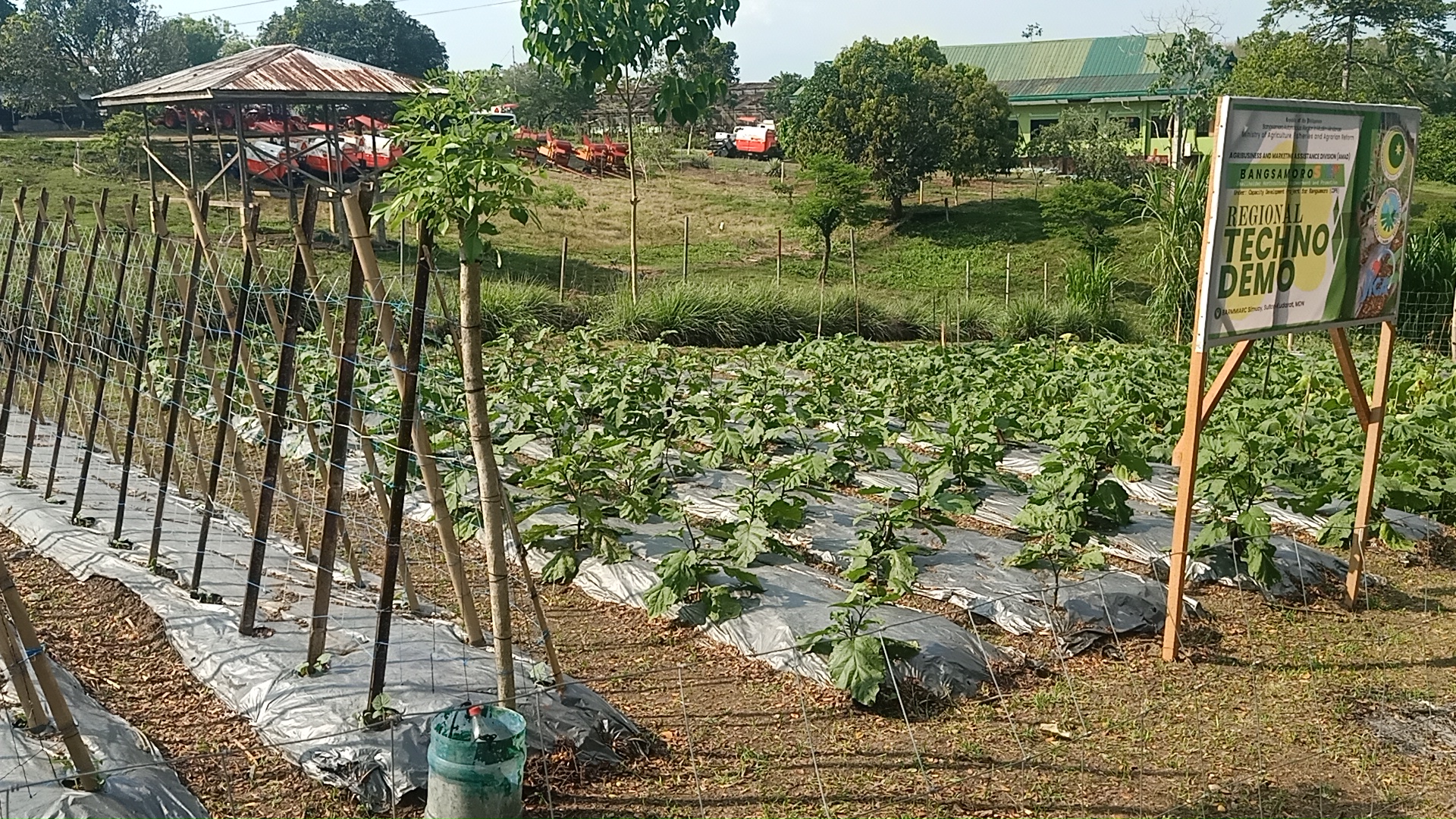
Crops develop at the regional technological demonstration field of the Ministry of Agriculture Fisheries and Agrarian Reform (MAFAR) of the Bangsamoro Autonomous Region in Muslim Mindanao (BARMM-MAFAR). (Photo by Martin Sadongdong / MANILA BULLETIN)

SULTAN KUDARAT, Maguindanao -- Filipino farmers here are being trained using a "ground-breaking" initiative developed by Japan in Kenya to boost the production of squash, cucumber, and eggplants.

The Smallholder Horticulture Empowerment and Promotion (SHEP) Approach was developed in 2006 through the cooperation of the Japan International Cooperation Agency (JICA) in Kenya to help smallholder farmers revolutionize their mindset by shifting their focus from mere cultivation to strategic market-oriented agriculture.

After SHEP proved its effectiveness in Kenya as their farmers doubled their income within two years from 2007 to 2009, the Japanese government decided to expand its implementation in the Bangsamoro Autonomous Region in Muslim Mindanao (BARMM) from 2023 to 2025.

“This is a demand-driven approach. This project recognizes what is in demand in the market, and that’s what we will plant,” said Tong Abas, Director for Research and Development and Extension Services in the Ministry of Agriculture Fisheries and Agrarian Reform (MAFAR) of the BARMM.

Implemented under the Capacity Development Project for Bangsamoro (CDPB), the SHEP Approach entails the provision of comprehensive training in horticulture management such as bookkeeping, pest management, and other essential skills to the farmers. This approach helped enhance the farmers’ income as they transformed their agricultural practices from focusing on product cultivation to strategic market-oriented agriculture.

On Monday, March 4, the BARMM-MAFAR conducted a comprehensive training dubbed as the “Training of Trainers (TOT) for Safe and Effective Use of Pesticides” to cooperative leaders in the municipalities of Barira and Matanong, both in Maguindanao del Norte as part of the SHEP-CDPB.

An MILF medic’s story

One of the participants in the training was Guialila Mistimed, 39, who served as a medical officer for the Bangsamoro Islamic Women Auxiliary Brigade (BIWAB), the all-female non-combatant supporting force of the Moro Islamic Liberation Front (MILF) during the national government’s all-out war against the Moro secessionist group in 2000.

Then 15-year-old Mistimed personally witnessed the destruction that the war had brought to her community as military airstrikes destroyed their farms.

Twenty-four years later, peace has finally settled in the Bangsamoro region and from curing wounded MILF fighters, Mistimed now cultivates farm as the leader of the Ipanasangan Agri-business Farmers Association in Barira town. Her cooperative has a total of 40 farm workers.

Screenshot_2024-03-04-17-58-57-24_99c04817c0de5652397fc8b56c3b3817.jpg
Guialila Mistimed, 39, leader of the Ipanasangan Agri-business Farmers Association based in Barira, Maguindanao del Norte (Photo by Martin Sadongdong / MANILA BULLETIN)

“Para po sa akin, napakimportante ng training na ito kasi kulang po kami sa kaalaman sa mga bagong technology, proseso, at kung paano ang mga paraan ng pagtatanim (For me, this training is really important because we really lack the knowledge on new technologies, farming processes, and the new ways of farming),” Mistimed said.

“Malaking babaunin namin dito ‘yung pagtraining namin sa market survey. Pumupunta kami sa market at nagtatanong-tanong kung anong produkto na mayroon sila, anong wala, ang presyo, ang demand nila. Kasi kung anong demand, dapat ‘yun ang tanim (The biggest takeaway for us is our training on market survey. We go to the market and ask what products the traders have, what they do not have, the pricing, and the demand. Because we learned that what we need to plant is what produce is in demand),” she continued.

“Dati tanim lang kami nang tanim tapos deliver. Nabebenta naman pero mababa ang presyo kasi stock na sila, nakakuha na sa iba. Wala kaming alam (Before, we only plant whatever we got and have it delivered. We were able to sell them but only for a cheap price because many are already stock produce as some traders have already obtained products in other areas. We did not know [how to market our products]),” she noted.

As part of the project, staff from the MAFAR have undergone comprehensive training in horticulture management which they taught to the cooperative leaders. The cooperative leaders will then go back to their communities and teach the farming techniques they have learned from the MAFAR.

Aside from Mistimed’s Ipanasangan Agri-business Farmers Association, other cooperatives that actively participate in the SHEP-CDPB include the Mapya su Iranun Farmers Cooperative (Barira), Iranun United Farmers Association of Bayanga Norte (Matanog), and Marinao Marayag fisherfolk Association (Matanog). The four cooperatives have over 100 members combined.

They transplanted selected crops such as squash, cucumber and eggplants as these are the most in demand vegetables based on the market survey they conducted in Parang, Maguindanao. The first harvest is expected around this month or in April, and farmers are anticipating better yield and more income despite the threat of El Niño.

“Nagpapasalamat kami sa JICA, sa Japanese government kasi nakita namin ‘yung tulong nila sa Bangsamoro. Hindi sila tumitigil. Isa lang ang goal namin sa MAFAR, magkaroon ng isang Bangsamoro region na economically stable, resilient, and competitive ang farmers (We thank JICA and the Japanese government because we really saw how they helped the Bangsamoro region. They did not stop. In MAFAR, we only have one goal and that is to have a Bangsamoro region that is economically stable, resilient, and with competitive farmers),” said Ramil Musa Timpolok, senior agriculturist at the BARMM-MAFAR.

Related Tags

farming technology BARMM Maguindanao del Norte Japan-PH relations
ADVERTISEMENT
.most-popular .layout-ratio{ padding-bottom: 79.13%; } @media (min-width: 768px) and (max-width: 1024px) { .widget-title { font-size: 15px !important; } }

{{ articles_filter_1561_widget.title }}

.most-popular .layout-ratio{ padding-bottom: 79.13%; } @media (min-width: 768px) and (max-width: 1024px) { .widget-title { font-size: 15px !important; } }

{{ articles_filter_1562_widget.title }}

.most-popular .layout-ratio{ padding-bottom: 79.13%; } @media (min-width: 768px) and (max-width: 1024px) { .widget-title { font-size: 15px !important; } }

{{ articles_filter_1563_widget.title }}

{{ articles_filter_1564_widget.title }}

.mb-article-details { position: relative; } .mb-article-details .article-body-preview, .mb-article-details .article-body-summary{ font-size: 17px; line-height: 30px; font-family: "Libre Caslon Text", serif; color: #000; } .mb-article-details .article-body-preview iframe , .mb-article-details .article-body-summary iframe{ width: 100%; margin: auto; } .read-more-background { background: linear-gradient(180deg, color(display-p3 1.000 1.000 1.000 / 0) 13.75%, color(display-p3 1.000 1.000 1.000 / 0.8) 30.79%, color(display-p3 1.000 1.000 1.000) 72.5%); position: absolute; height: 200px; width: 100%; bottom: 0; display: flex; justify-content: center; align-items: center; padding: 0; } .read-more-background a{ color: #000; } .read-more-btn { padding: 17px 45px; font-family: Inter; font-weight: 700; font-size: 18px; line-height: 16px; text-align: center; vertical-align: middle; border: 1px solid black; background-color: white; } .hidden { display: none; }
function initializeAllSwipers() { // Get all hidden inputs with cms_article_id document.querySelectorAll('[id^="cms_article_id_"]').forEach(function (input) { const cmsArticleId = input.value; const articleSelector = '#article-' + cmsArticleId + ' .body_images'; const swiperElement = document.querySelector(articleSelector); if (swiperElement && !swiperElement.classList.contains('swiper-initialized')) { new Swiper(articleSelector, { loop: true, pagination: false, navigation: { nextEl: '#article-' + cmsArticleId + ' .swiper-button-next', prevEl: '#article-' + cmsArticleId + ' .swiper-button-prev', }, }); } }); } setTimeout(initializeAllSwipers, 3000); const intersectionObserver = new IntersectionObserver( (entries) => { entries.forEach((entry) => { if (entry.isIntersecting) { const newUrl = entry.target.getAttribute("data-url"); if (newUrl) { history.pushState(null, null, newUrl); let article = entry.target; // Extract metadata const author = article.querySelector('.author-section').textContent.replace('By', '').trim(); const section = article.querySelector('.section-info ').textContent.replace(' ', ' '); const title = article.querySelector('.article-title h1').textContent; // Parse URL for Chartbeat path format const parsedUrl = new URL(newUrl, window.location.origin); const cleanUrl = parsedUrl.host + parsedUrl.pathname; // Update Chartbeat configuration if (typeof window._sf_async_config !== 'undefined') { window._sf_async_config.path = cleanUrl; window._sf_async_config.sections = section; window._sf_async_config.authors = author; } // Track virtual page view with Chartbeat if (typeof pSUPERFLY !== 'undefined' && typeof pSUPERFLY.virtualPage === 'function') { try { pSUPERFLY.virtualPage({ path: cleanUrl, title: title, sections: section, authors: author }); } catch (error) { console.error('ping error', error); } } // Optional: Update document title if (title && title !== document.title) { document.title = title; } } } }); }, { threshold: 0.1 } ); function showArticleBody(button) { const article = button.closest("article"); const summary = article.querySelector(".article-body-summary"); const body = article.querySelector(".article-body-preview"); const readMoreSection = article.querySelector(".read-more-background"); // Hide summary and read-more section summary.style.display = "none"; readMoreSection.style.display = "none"; // Show the full article body body.classList.remove("hidden"); } document.addEventListener("DOMContentLoaded", () => { let loadCount = 0; // Track how many times articles are loaded const offset = [1, 2, 3, 4, 5, 6, 7, 8, 9, 10]; // Offset values const currentUrl = window.location.pathname.substring(1); let isLoading = false; // Prevent multiple calls if (!currentUrl) { console.log("Current URL is invalid."); return; } const sentinel = document.getElementById("load-more-sentinel"); if (!sentinel) { console.log("Sentinel element not found."); return; } function isSentinelVisible() { const rect = sentinel.getBoundingClientRect(); return ( rect.top < window.innerHeight && rect.bottom >= 0 ); } function onScroll() { if (isLoading) return; if (isSentinelVisible()) { if (loadCount >= offset.length) { console.log("Maximum load attempts reached."); window.removeEventListener("scroll", onScroll); return; } isLoading = true; const currentOffset = offset[loadCount]; window.loadMoreItems().then(() => { let article = document.querySelector('#widget_1690 > div:nth-last-of-type(2) article'); intersectionObserver.observe(article) loadCount++; }).catch(error => { console.error("Error loading more items:", error); }).finally(() => { isLoading = false; }); } } window.addEventListener("scroll", onScroll); });

Sign up by email to receive news.