






 Philippines
National
Bangsamoro children mold dreams at Japan-aided academy in Sultan Kudarat
Philippines
National
Bangsamoro children mold dreams at Japan-aided academy in Sultan Kudarat
Bangsamoro children mold dreams at Japan-aided academy in Sultan Kudarat


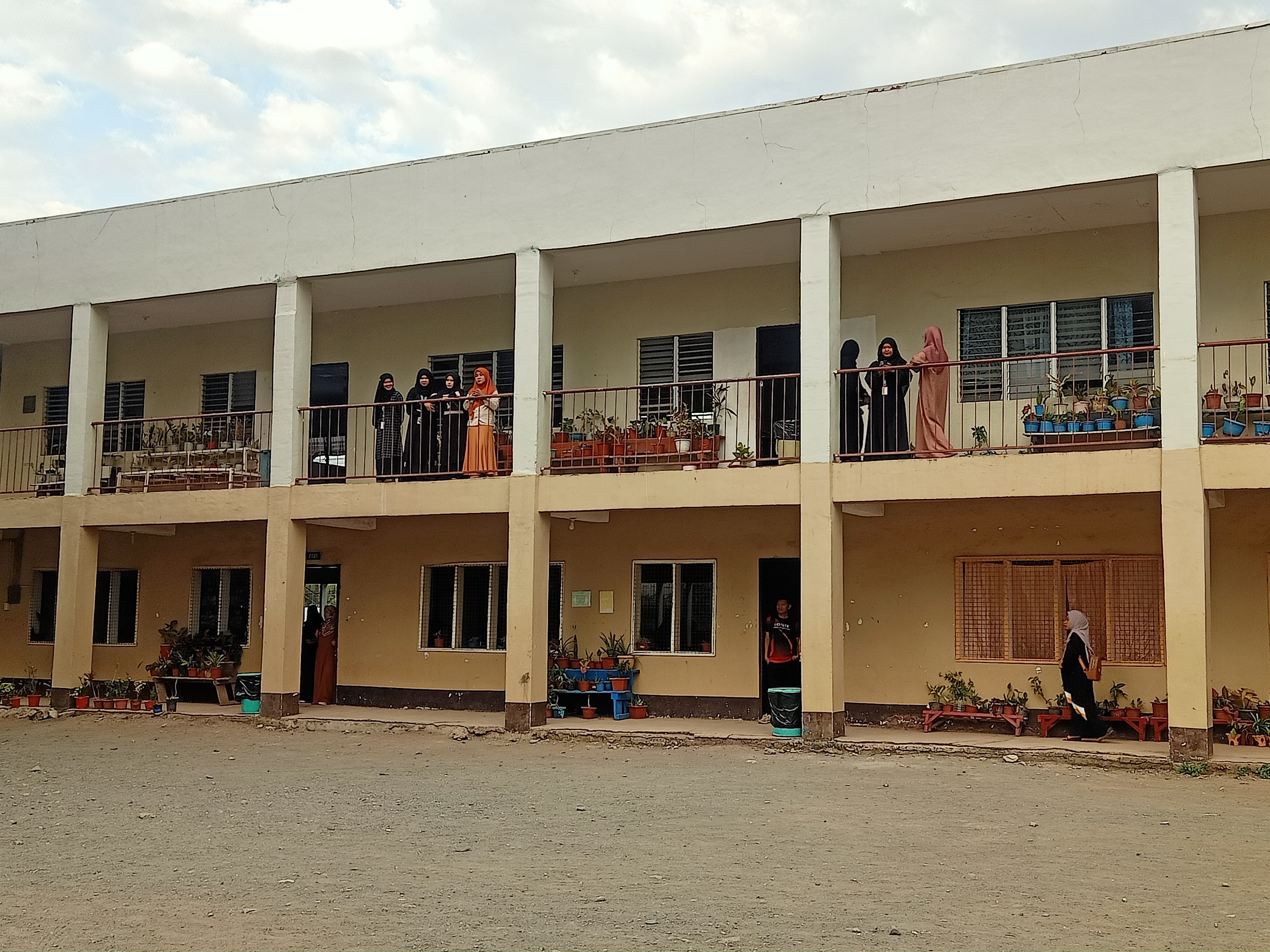
SULTAN KUDARAT, Maguindanao del Norte – Thousands of learners here, including children of former Moro Islamic Liberation Front (MILF) rebels, are now getting quality education from a “madrasah” or school that is being assisted by the Japanese government, offering them a chance to have a better future.
The Ibn Taimiyah Foundation Academy (ITFA) was founded in 2002 and the first formal classroom established in the institution was built in 2010 with funding from the Embassy of Japan.
“It's historic because it was actually the first structure that was put up in this campus. That’s the start of our engagement with the government of Japan. That really provided opportunity for our learners to learn in a classroom which is conducive to learning,” ITFA Director for Research and Extension Omra Imam told visiting Manila-based and native reporters on Monday, March 4.
ITFA used to be a traditional madrasah, offering only religious education. But the demands of the time prompted the school leadership to adapt to changes, so they started offering a curriculum prescribed by the Department of Education (DepEd).
“In traditional madrasah, the classrooms are not actually standard in terms of size and quality of construction. The building donated by [Japan] was the first [acceptable] structure based on [the] standard of the government for a classroom. That invited a lot of students,” Imam said.
“Now, we offer DepEd curriculum and integrated Islamic subjects in Arabic,” he added.
The establishment of the classroom also convinced the national and Bangsamoro governments that the academy was “serious in providing quality education” to the Bangsamoro children, even those whose parents are former MILF fighters, the ITFA director noted.
“Religious tolerance, this is one thing that we embrace at ITFA. Of course, among the students, it’s 100-percent Muslim. Teachers are also 100 percent Muslim. But there are students coming from different background. There are Maranao, Balik Islam, and those coming from marginalized communities. We embrace them without looking at what tribe or culture you belong,” stressed Imam, who is among the Filipino and Malaysian Islamic teachers invited by the Japanese government to visit Japan last year for an exchange program.
“We were exposed on inter-religious understanding between different religions in Japan. It was really amazing,” he noted. “Their religious tolerance, that’s one thing that I think I can say, that they are one of the models of religious tolerance, accepting all kinds of belief [that] the people embrace in their country.”
One of the learners at ITFA is Eman Kamsali, a Grade 11 student, who expressed gratitude to the Japanese government for providing funding for the construction of the first school building in the academy.
“Isa po akong campus journalist at ang paborito kong subject ay English. Malaking tulong po ‘yung classrooms na pinondohan ng Japan kasi kung wala itong mga rooms, wala kaming mapapasukan (I am a campus journalist here in our school and my favorite subject is English. The classrooms funded by Japan really help us a lot because without these rooms, we have no place to study),” he told the Manila Bulletin.
“Pangarap ko po maging fireman o teacher na English major (I dream of becoming a fireman or English teacher someday),” he added.
Challenges, opportunities
With the quality education offered by ITFA to Muslim children, the national government started giving subsidy to their junior and senior high school students while the Bangsamoro government provided support for the elementary pupils.
The assistance, coupled with the money that the academy obtains from collecting the tuition of the learners, managed to keep ITFA afloat even during the pandemic when many madrasah ceased their operations.

“The problem of madrasah in the Philippines is sustainability and maybe our school can be a model for sustainability,” Imam said.
According to Imam, about 80 percent of all the madrasah in the Bangsamoro region only relied from the subsidy of the government.
“If the BARMM stops providing subsidy, what will happen to these private madrasah?”
At present, ITFA provides a mix of secular education in English based on the curriculum of DepEd and Islamic education in Arabic to 1,694 students: 319 are elementary students, 706 junior high, and 669 senior high. They also offer technical-vocational education such as computer system servicing, driving, carpentry, and agricultural crops production.
There are a total of five school buildings at ITFA with 33 classrooms, including the Japan-funded building which has five classrooms.
Further, a three-storey under-construction school building that can house 12 classrooms and accommodate more than 500 students is now nearing completion. The construction of the new building started in January 2023 and is expected to be finished by July 2024.