

ADVERTISEMENT

ASEAN-Australia summit to decry 'threat or use of force' in region

Published Mar 4, 2024 02:29 am

MELBOURNE, Australia—Leaders from Southeast Asian nations and Australia gathered in Melbourne on Monday are expected to denounce the "threat or use of force" to settle disputes in the region, a collective swipe at China.
AFP__20240304__34KM2ZA__v1__Preview__AustraliaAseanDiplomacyTrade.jpg
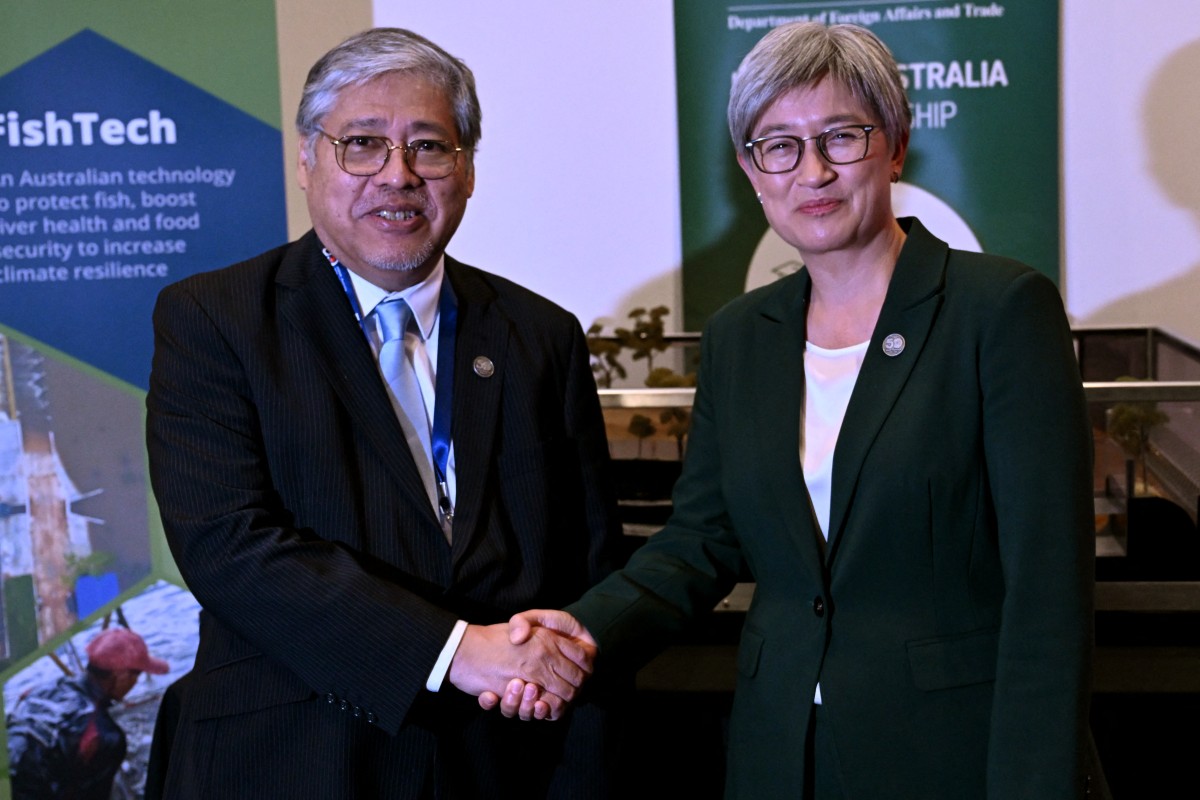
Australia's Foreign Minister Penny Wong (R) and Philippines' Foreign Secretary Enrique Manalo shake hands before the opening of the Australia-ASEAN (Association of Southeast Asian Nations) summit in Melbourne on March 4, 2024. (Photo by William WEST / AFP)

"We strive for a region where sovereignty and territorial integrity is respected," a draft joint ASEAN-Australia statement obtained by AFP read.

"We strive for a region where differences are managed through respectful dialogue, not the threat or use of force."

Beijing's aggressive stance in the South China Sea is tipped to feature prominently in three days of discussions.

Territorial disputes in the vital trade corridor have escalated in recent months, with China baring its teeth in areas also claimed by ASEAN members such as the Philippines and Vietnam.

"We all have a responsibility to shape the region we want to share: peaceful, stable and prosperous," said Australia's Penny Wong, the host foreign minister.

"This is more important than ever with the region's character under challenge," she said.

"We face destabilising, provocative and coercive actions, including unsafe conduct at sea and in the air and militarisation of disputed features."

Talks are also expected to focus on economic cooperation, as countries like the Philippines and Australia look to insulate their economy against retaliation from China.

- Trade, security -


Philippines Foreign Minister Enrique Manalo told AFP that economic resilience was a crucial part of ensuring security and sovereignty are upheld.

As part of that effort, he said the Philippines hopes to launch formal free trade agreement negotiations with the European Union "very soon".

The Philippines is focused on creating "greater economic security and economic resiliency, which in turn contributes to your own national security", Manalo said.

"What we're really aiming for is the notion of greater economic resilience," the minister said, underscoring the importance of being able to adapt to "sudden changes", whether human-made or natural.

Climate change also looms large.

Southeast Asia's hunger for energy is largely sated by fossil fuels, while Australia remains one of the world's biggest exporters of gas and polluting thermal coal.

Both are increasingly eager to pivot toward renewable energy, making the most of natural blessings, such as bulging deposits of critical minerals.

"ASEAN countries need more energy if they are going to continue developing their economies," said Rahman Yaacob, a regional analyst with Australia's Lowy Institute.

"Australia could be a source of that energy."

Indonesia and the Philippines are two of the world's largest producers of nickel, a key ingredient in the production of batteries for electric cars.

Another key battery metal, lithium, is found in vast quantities scattered throughout Australia.

Jakarta and Canberra have already started exploring how they could mesh these advantages to boost electric vehicle manufacturing.

Related Tags

WORLDNEWS
ADVERTISEMENT
.most-popular .layout-ratio{ padding-bottom: 79.13%; } @media (min-width: 768px) and (max-width: 1024px) { .widget-title { font-size: 15px !important; } }

{{ articles_filter_1561_widget.title }}

.most-popular .layout-ratio{ padding-bottom: 79.13%; } @media (min-width: 768px) and (max-width: 1024px) { .widget-title { font-size: 15px !important; } }

{{ articles_filter_1562_widget.title }}

.most-popular .layout-ratio{ padding-bottom: 79.13%; } @media (min-width: 768px) and (max-width: 1024px) { .widget-title { font-size: 15px !important; } }

{{ articles_filter_1563_widget.title }}

{{ articles_filter_1564_widget.title }}

.mb-article-details { position: relative; } .mb-article-details .article-body-preview, .mb-article-details .article-body-summary{ font-size: 17px; line-height: 30px; font-family: "Libre Caslon Text", serif; color: #000; } .mb-article-details .article-body-preview iframe , .mb-article-details .article-body-summary iframe{ width: 100%; margin: auto; } .read-more-background { background: linear-gradient(180deg, color(display-p3 1.000 1.000 1.000 / 0) 13.75%, color(display-p3 1.000 1.000 1.000 / 0.8) 30.79%, color(display-p3 1.000 1.000 1.000) 72.5%); position: absolute; height: 200px; width: 100%; bottom: 0; display: flex; justify-content: center; align-items: center; padding: 0; } .read-more-background a{ color: #000; } .read-more-btn { padding: 17px 45px; font-family: Inter; font-weight: 700; font-size: 18px; line-height: 16px; text-align: center; vertical-align: middle; border: 1px solid black; background-color: white; } .hidden { display: none; }
function initializeAllSwipers() { // Get all hidden inputs with cms_article_id document.querySelectorAll('[id^="cms_article_id_"]').forEach(function (input) { const cmsArticleId = input.value; const articleSelector = '#article-' + cmsArticleId + ' .body_images'; const swiperElement = document.querySelector(articleSelector); if (swiperElement && !swiperElement.classList.contains('swiper-initialized')) { new Swiper(articleSelector, { loop: true, pagination: false, navigation: { nextEl: '#article-' + cmsArticleId + ' .swiper-button-next', prevEl: '#article-' + cmsArticleId + ' .swiper-button-prev', }, }); } }); } setTimeout(initializeAllSwipers, 3000); const intersectionObserver = new IntersectionObserver( (entries) => { entries.forEach((entry) => { if (entry.isIntersecting) { const newUrl = entry.target.getAttribute("data-url"); if (newUrl) { history.pushState(null, null, newUrl); let article = entry.target; // Extract metadata const author = article.querySelector('.author-section').textContent.replace('By', '').trim(); const section = article.querySelector('.section-info ').textContent.replace(' ', ' '); const title = article.querySelector('.article-title h1').textContent; // Parse URL for Chartbeat path format const parsedUrl = new URL(newUrl, window.location.origin); const cleanUrl = parsedUrl.host + parsedUrl.pathname; // Update Chartbeat configuration if (typeof window._sf_async_config !== 'undefined') { window._sf_async_config.path = cleanUrl; window._sf_async_config.sections = section; window._sf_async_config.authors = author; } // Track virtual page view with Chartbeat if (typeof pSUPERFLY !== 'undefined' && typeof pSUPERFLY.virtualPage === 'function') { try { pSUPERFLY.virtualPage({ path: cleanUrl, title: title, sections: section, authors: author }); } catch (error) { console.error('ping error', error); } } // Optional: Update document title if (title && title !== document.title) { document.title = title; } } } }); }, { threshold: 0.1 } ); function showArticleBody(button) { const article = button.closest("article"); const summary = article.querySelector(".article-body-summary"); const body = article.querySelector(".article-body-preview"); const readMoreSection = article.querySelector(".read-more-background"); // Hide summary and read-more section summary.style.display = "none"; readMoreSection.style.display = "none"; // Show the full article body body.classList.remove("hidden"); } document.addEventListener("DOMContentLoaded", () => { let loadCount = 0; // Track how many times articles are loaded const offset = [1, 2, 3, 4, 5, 6, 7, 8, 9, 10]; // Offset values const currentUrl = window.location.pathname.substring(1); let isLoading = false; // Prevent multiple calls if (!currentUrl) { console.log("Current URL is invalid."); return; } const sentinel = document.getElementById("load-more-sentinel"); if (!sentinel) { console.log("Sentinel element not found."); return; } function isSentinelVisible() { const rect = sentinel.getBoundingClientRect(); return ( rect.top < window.innerHeight && rect.bottom >= 0 ); } function onScroll() { if (isLoading) return; if (isSentinelVisible()) { if (loadCount >= offset.length) { console.log("Maximum load attempts reached."); window.removeEventListener("scroll", onScroll); return; } isLoading = true; const currentOffset = offset[loadCount]; window.loadMoreItems().then(() => { let article = document.querySelector('#widget_1690 > div:nth-last-of-type(2) article'); intersectionObserver.observe(article) loadCount++; }).catch(error => { console.error("Error loading more items:", error); }).finally(() => { isLoading = false; }); } } window.addEventListener("scroll", onScroll); });

Sign up by email to receive news.