






 Philippines
Metro Manila
Flagellants leave trail of blood in Caloocan, Navotas streets on Maundy Thursday
Philippines
Metro Manila
Flagellants leave trail of blood in Caloocan, Navotas streets on Maundy Thursday
Flagellants leave trail of blood in Caloocan, Navotas streets on Maundy Thursday
By Hannah Nicol


A number of flagellants in the cities of Caloocan and Navotas drew a path marked with their drops of blood as a form of penitence on Maundy Thursday, March 28.
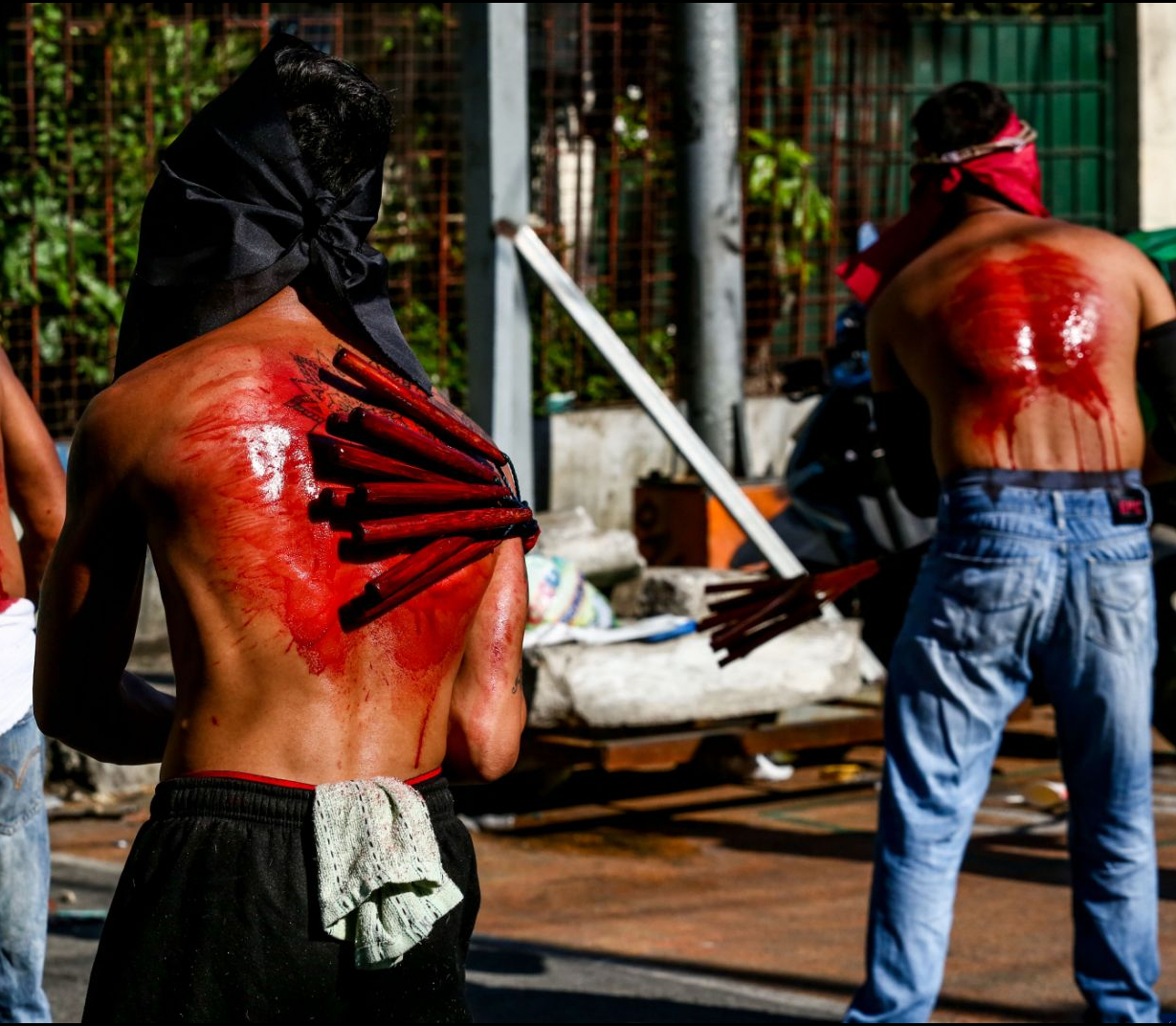
Self-flagellation is a religious practice that symbolizes the sufferings of Jesus Christ.
Catholic devotees often participate in physical penance to seek forgiveness for their sins.
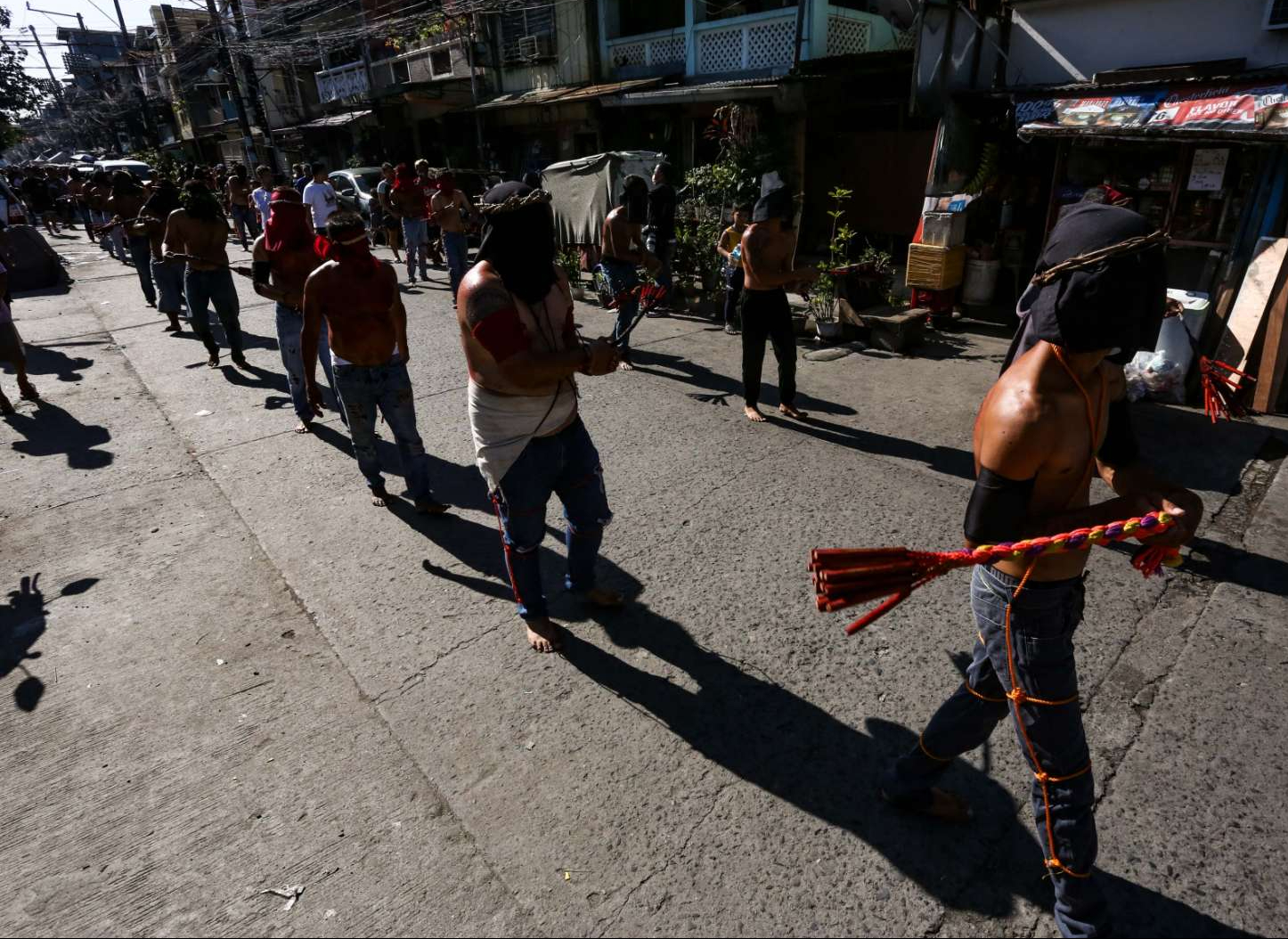
A group of self-flagellants, armed with ropes with wooden sticks at the end, was seen in Barrio San Jose, Caloocan City, flogging themselves at the back until they are bleeding.
Caloocan City’s public information office said that the city’s Disaster Risk Reduction and Management Office (DRRMO), deployed medics and ambulances along the routes of the penitents.
“May mga naka-standby na medics and ambulance sa mga strategic locations lalo na yung nadaraanan ng mga nagpepenetensya (there are standby medics and ambulances in strategic locations, especially along the routes of the penitents),” the PIO said.
The City's Tourism and Cultural Affairs Office said barangays Bangkulasi and Tanza in Navotas City are known for being sites of penitential practices.
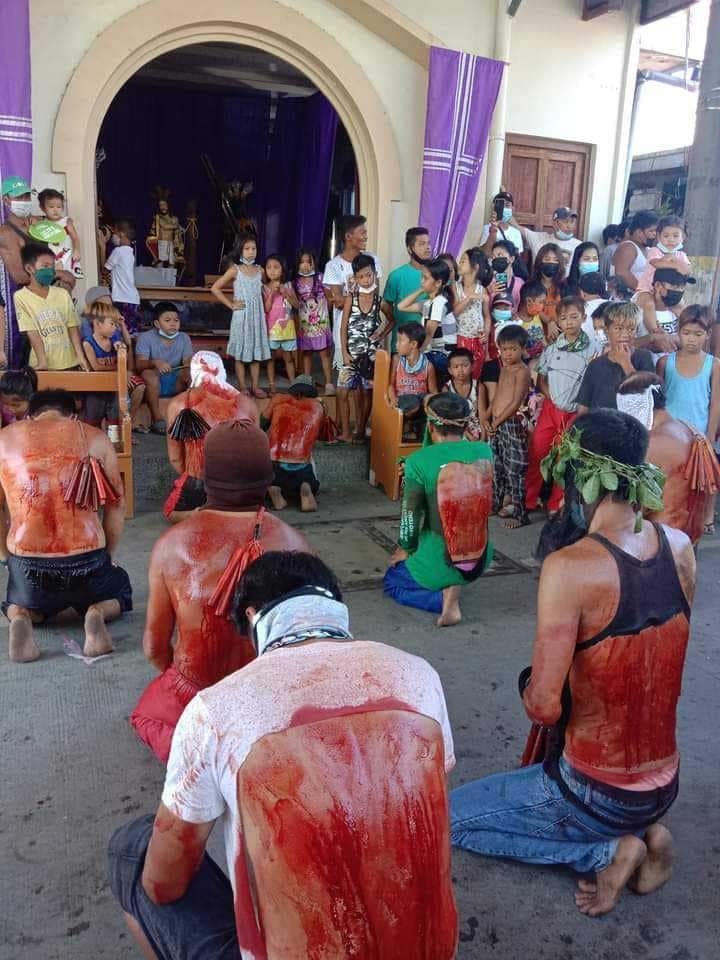
On Maundy Thursday and Good Friday, the flagellants gather to begin their penitence, some with their heads covered.
Most of them are barefoot and shirtless, while some cover their faces with a red cloth while others wear a crown of thorns on their heads.
Devotees use a whip made of several pieces of bamboo tied together called a "bulyos" to whip themselves.
They normally perform the self-flagellation while kneeling while others do it while walking. Some of them even crawl on the road and whip their fellow flagellants.
The number of strikes and the intensity with which they do every blow are part of their vow to seek penance.
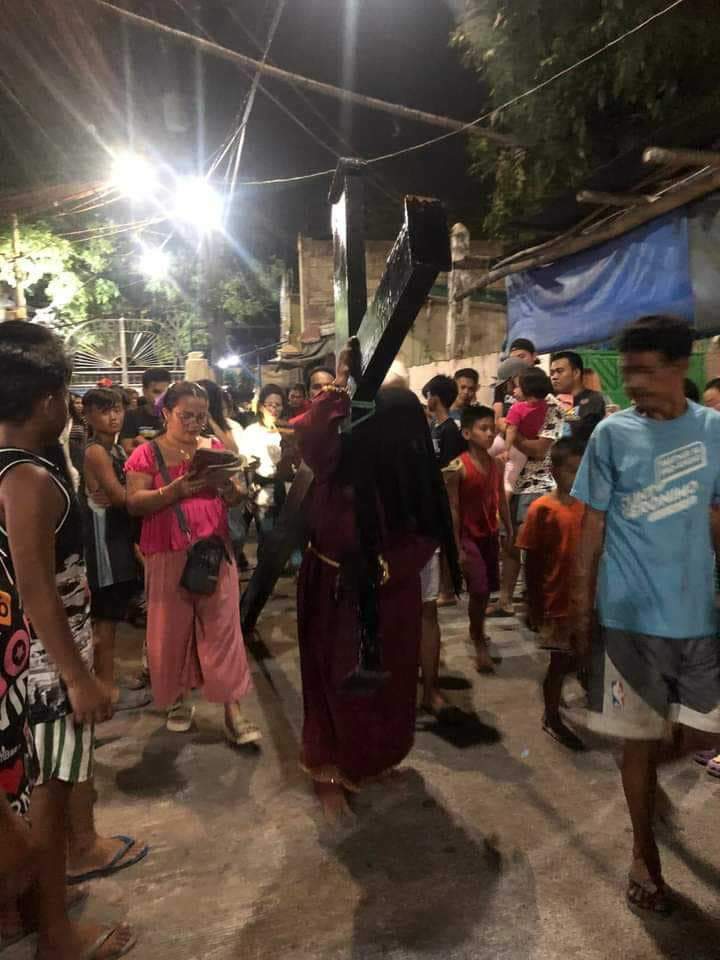
Some devotees were seen carrying crosses on their shoulders, with wounds on their thighs, legs, back, and arms.