







UN urges Gambia to keep female genital mutilation ban


UNITED NATIONS, United States - Plans to reverse a ban on female genital mutilation (FGM) in The Gambia, which outlawed the practice in 2015, risks setting a "dangerous precedent," UN representatives warned Friday.
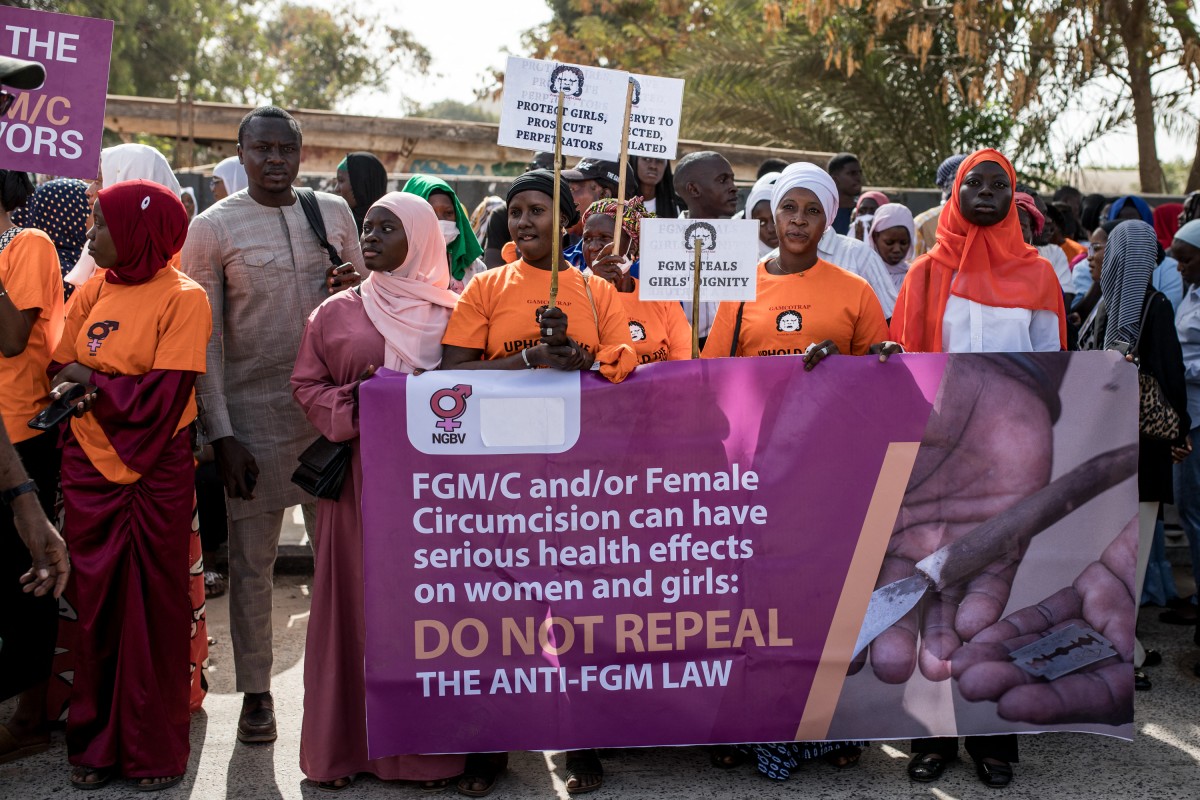
Anti Female Genital Mutilation (FGM) protesters hold placards outside the National Assembly in Banjul on march 18, 2024, during the debate between lawmakers on a highly controversial bill seeking to lift the ban on FGM. Gambian lawmakers voted on March 18, 2024 to advance to the next parliamentary stage a highly controversial bill that seeks to lift a ban on female genital mutilation (FGM), which has been in place since 2015. The issue has divided the tiny West African nation for months, with hundreds gathering to protest outside parliament. (Photo by MUHAMADOU BITTAYE / AFP)
Legislators in The Gambia, in west Africa, began considering the reversal earlier this month, before this week agreeing to send it for committee consideration before a final vote.
Adopting the law would "set a dangerous precedent and make The Gambia the first country in the world to have stepped back from such commitments," said Nafisa Binte Shafique, the country's representative for children's agency UNICEF, and Ndeye Rose Sarr, representative for sexual and reproductive health agency United Nations Population Fund.
"It sends a message that the rights and dignity of girls and women are expendable, perpetuating a cycle of discrimination and violence that has no place in a just and equitable society," they said in a joint statement.
The Gambia's ban on FGM in 2015 has served as "a beacon of hope for countless girls," the UN officials said, adding a call for the country to uphold its existing legislation.
A UNICEF report this month found that more than 230 million women and girls around the world are survivors of FGM practices, sometimes referred to as "female circumcision."
According to the report, 73 percent of Gambian girls and women aged 15 to 49 have undergone genital mutilation -- a figure that has largely stayed the same for the last 30 years.
UNICEF defines the practice as "the partial or total removal of the female external genitalia or other injury to the female genital organs for non-medical reasons."
It can lead to serious health problems including infections, bleeding, infertility and childbirth complications, while also impairing sexual pleasure.