






 Philippines
National
Bridging the gap: Empowering women and girls through equality, opportunity
Philippines
National
Bridging the gap: Empowering women and girls through equality, opportunity
Bridging the gap: Empowering women and girls through equality, opportunity


Women are incredible forces for innovation and leadership, yet they often face barriers to reaching their full potential.

To address these barriers, the Department of Science and Technology (DOST), the Philippine Commission on Women (PCW), and the United Nations (UN) Women Philippines recently collaborated for the "Mind the GAP" forum.
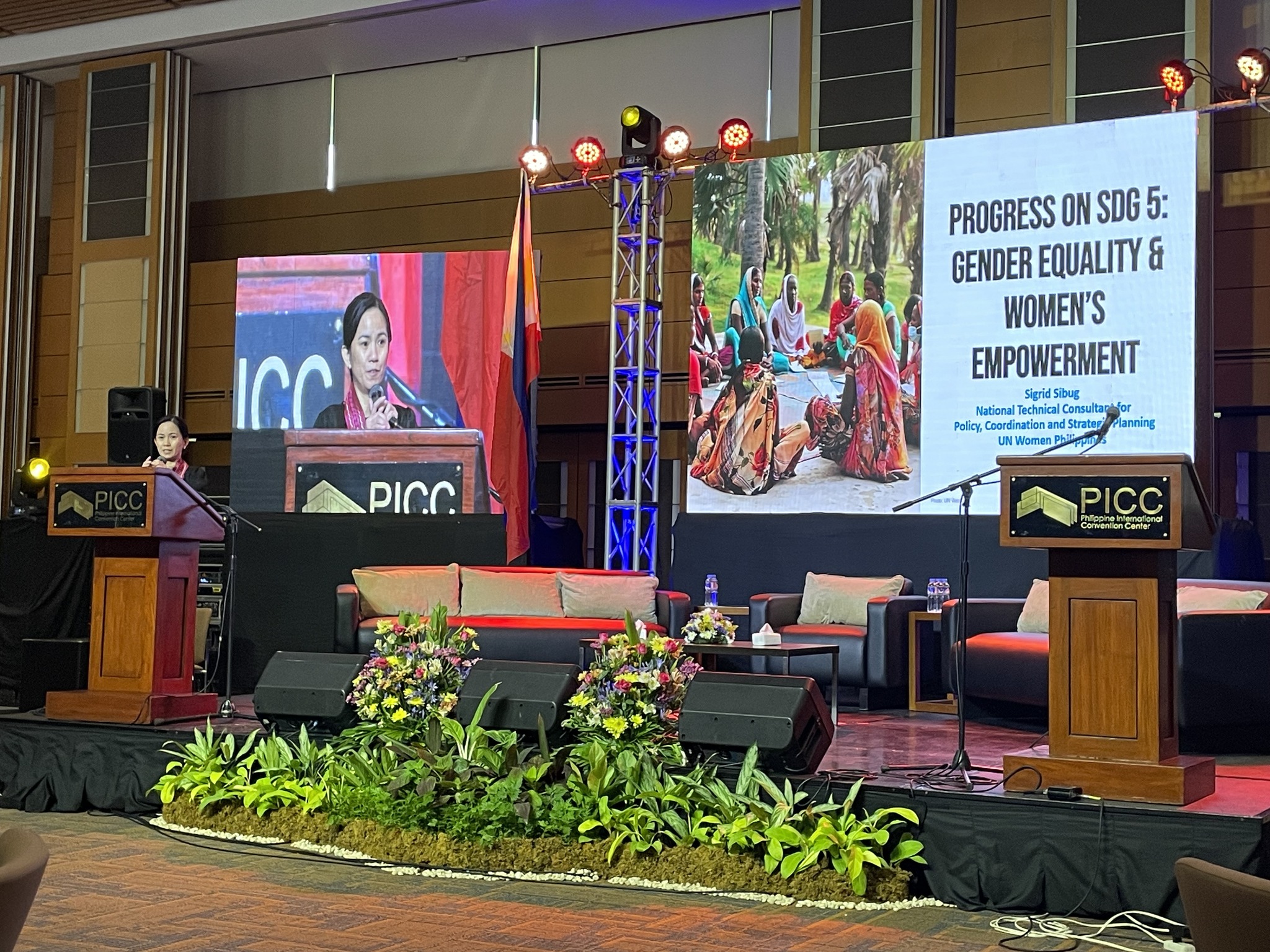
This forum aimed to discuss strategies for closing the gap between men and women, particularly in areas such as poverty and opportunities in STEM fields.
One of the speakers at the forum, held on March 22, was Sigrid Jan Sibug, a National Technical Consultant for Policy, Coordination, and Strategic Planning at UN Women Philippines.
Sibug, renowned for advocating human rights, gender equality, and women's empowerment, highlighted the challenges women face, including low political participation, violence, and the disproportionate impact of poverty and disasters.
To tackle these challenges, Sibug stressed the importance of creating "safe spaces" such as schools, training programs, and workplaces where women feel supported to explore STEM careers.
Although Sibug acknowledged the Philippines as a model for women, peace, and security in its national action plan, she noted that poverty remains a significant obstacle for them.
Sibug also stressed the necessity of providing accessible, affordable, and high-quality education linked to real-world job opportunities for women.
She advocated for the development of gender-responsive mentoring and coaching programs for young women in STEM fields, equipping them with the tools they need to succeed.
Citing a study, Sibug highlighted the potential for job creation by investing in care services by 2035. This investment would alleviate the burden of unpaid care work predominantly shouldered by women and girls, enabling them to pursue careers.
Moreover, Sibug explained that supporting women and girls is not solely their concern but requires a collective effort.
She urged investment in policies and programs addressing inequality and empowering women to lead, thereby lifting millions out of poverty.
Sibug stressed that gender equality benefits not only women but also men and society as a whole.
She also underscored the potential economic impact, stating that closing the gender gap in employment could boost global gross domestic product (GDP) per capita by 20 percent.
Lastly, Sibug highlighted the urgency of raising public awareness about the opportunities for women in STEM to inspire the next generation of female innovators.