







Ready for a 'warmer, potentially drier' future?
DOST-PAGASA unveils updated climate change projections for the Philippines


The Philippine Atmospheric, Geophysical, and Astronomical Services Administration (PAGASA) presented the updated projections for climate change in the Philippines on Friday, March 22.
To align with the United Nations' Sustainable Development Goal 13: Climate Action, Assistant Chief of Weather Services and Scientist in the Impact Assessment and Application sections of DOST-PAGASA, Dr. Marcelino Villafuerte II, shared the recently updated version called the Coupled Model Intercomparison Project Phase 6 climate projection dataset (CMIP6).
Villafuerte said the CMIP6 was completed in late 2023 and considers shared socioeconomic pathways (SSPs) that explore potential global social and economic changes over the coming decades, including extreme humid heat and drought conditions over the recent past and in the near future.
"We initially develop high-resolution climate data that combine station data with satellite data and then come up with merge or bias-corrected satellite data," he said.
Villafuerte stressed PAGASA's commitment to providing climate data since 2011 with the initial release of "Climate Change in the Philippines." Since then, it has continuously improved its climate information.
In addition, he said that with the support of the DOST, PAGASA has also developed the Clean Grid PH project, which provides high-resolution daily rainfall and temperature datasets across the country.
Higher temperatures expected
Meanwhile, tackling projected changes in monthly temperatures, Villafuerte stressed that under a low mitigation scenario, global temperatures could rise by about 4.5 degrees Celsius — this scenario would result in significantly warmer conditions for the Philippines.
From there, looking at the monthly projections from 2021 to 2050 compared to the 1981 to 2010 baseline, he said PAGASA is expecting about 0.8 degrees Celsius in all months. However, some areas, particularly in northern Luzon, central Mindanao, and mountainous regions, specifically in the Cordillera Administrative Region, Bukidnon Province, Davao Region, and Cotabato, could see an increase of 1 degree Celsius or more, especially during the hottest months, particularly in April, May, June, and even September.
Rainfall patterns may change
Analysis of past data shows drying trends in some parts of Luzon while other areas in Luzon and Visayas have seen increasing rainfall during specific months, according to the chief meteorologist.
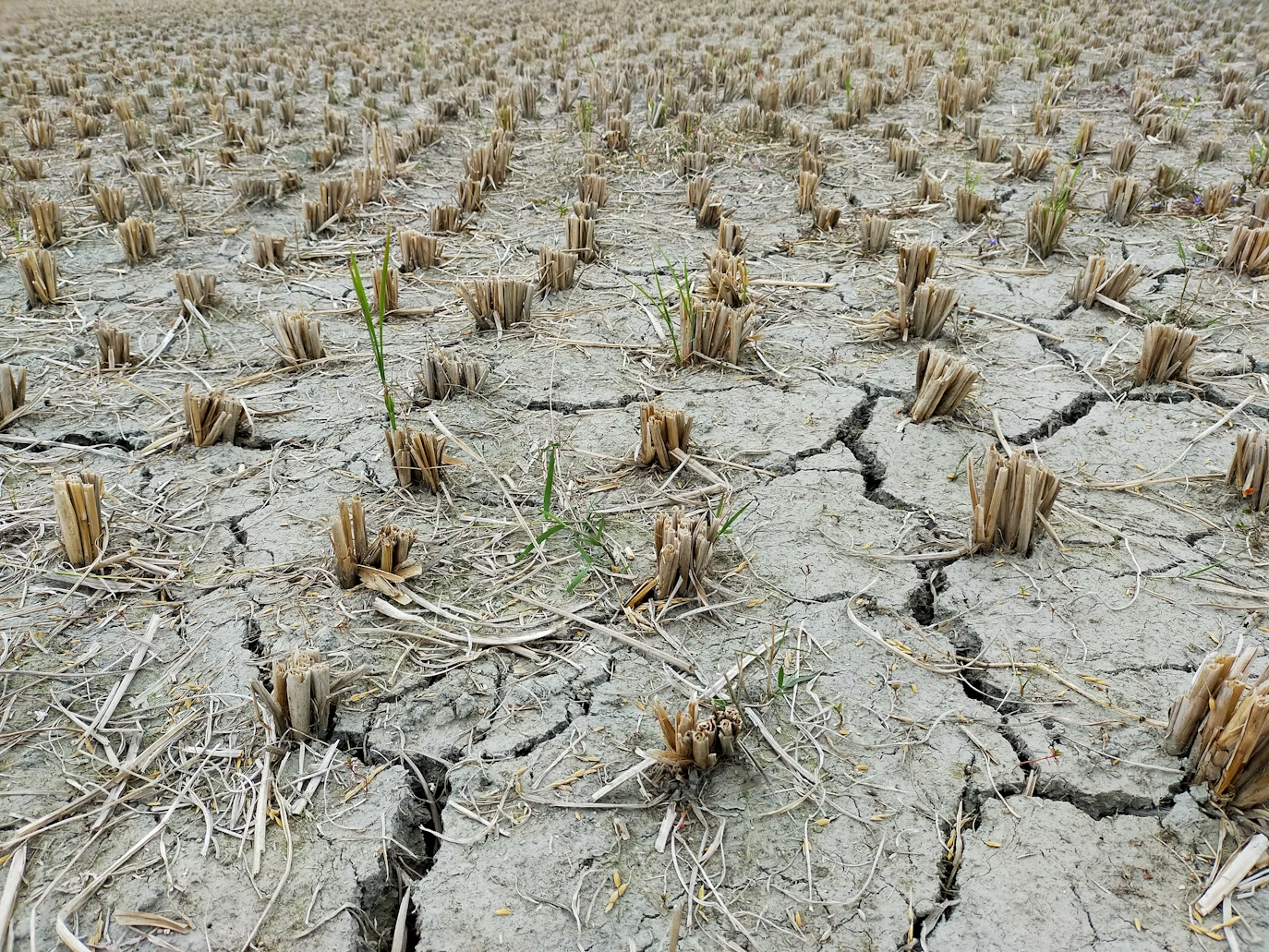
Future projections, Villafuerte said, indicate a range of possibilities for rainfall where some areas, particularly in Luzon, may experience drier conditions while others may see wetter seasons.
He then emphasized the range of potential futures due to the use of multiple climate models. This also highlights the need for national and local governments to consider both drier and wetter scenarios in their planning efforts.
"Our national government or local governments should consider either a drier future or a wetter future in the upper bound. But about 50% of the models indicate the possibility of this condition," he said.