







Free trade talks: Foster economic growth, safeguard Filipinos' welfare


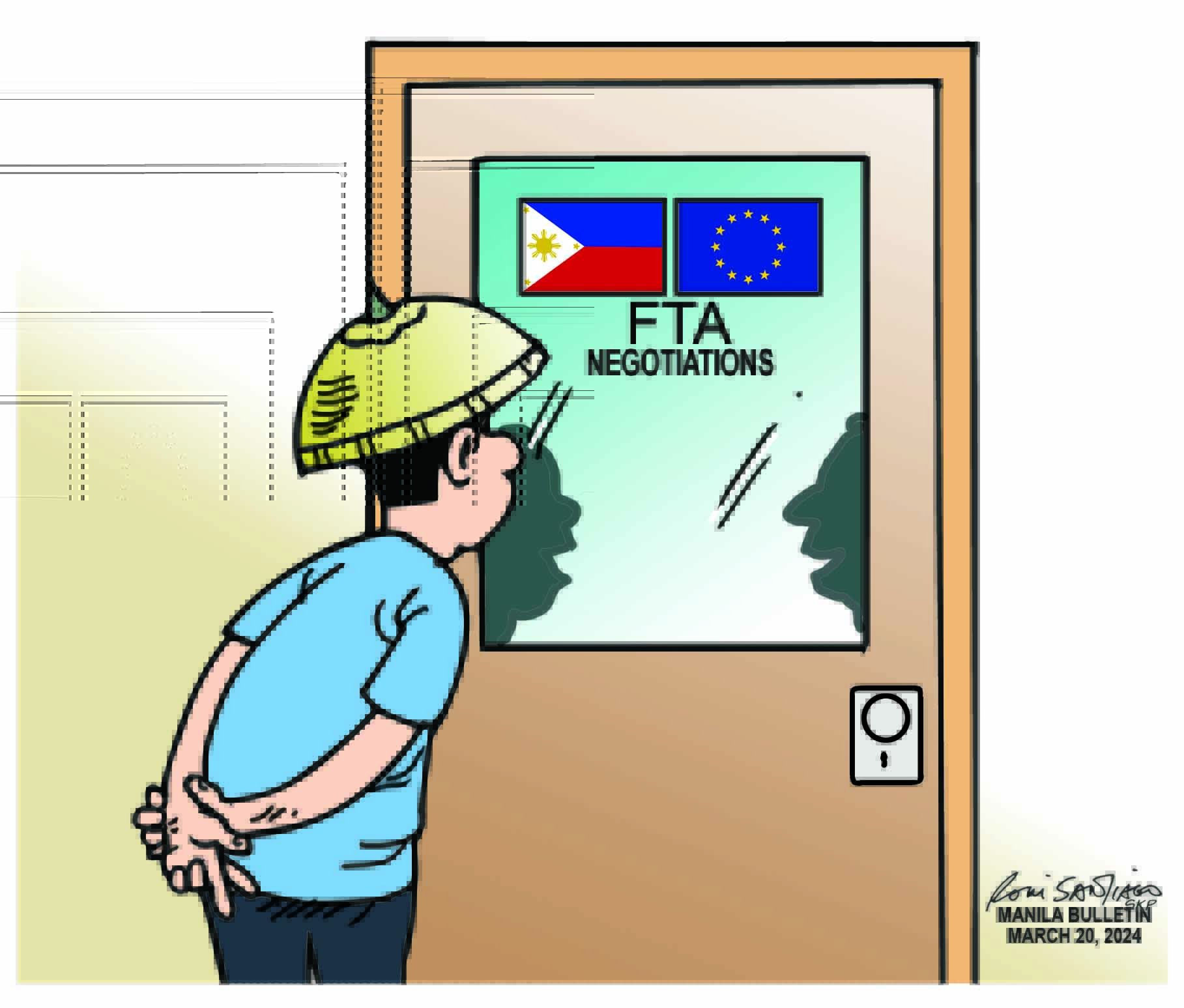
The Philippines and the European Union have just announced the resumption of their free trade agreement (FTA) negotiations, marking a significant step in enhancing economic ties between these two economies.
“An FTA with the EU is anticipated to expand market access in goods, services, and investments significantly. It aims to enhance commercial interactions between our business sectors, create valuable opportunities for our service providers, especially our professionals, and establish reciprocal rules and standards,” Trade Secretary Alfredo Pascual said during a press briefing in Brussels, Belgium on March 18 (Philippine time), where the resumption of the FTA negotiations was announced.
“We are one step closer to a prosperous new partnership thanks to the EU and the Philippines resuming trade negotiations. A modern, comprehensive and values-based free trade agreement with this fast-growing economy would open new opportunities for both sides, strengthen our supply chains, and promote sustainable trade. It would also deepen ties with a key partner in the burgeoning Indo-Pacific region,” said European Commission Executive Vice President and Commissioner for Trade Valdis Dombrovskis in the same briefing,
The resumption of free trade negotiations is a welcome development for the Philippines, which has grown to become among the fastest growing economies in Asia.
An FTA would open up new markets for Philippine exporters, allowing them to tap into the vast EU consumer base.
This free trade agreement, once sealed, would also enhance the country’s economic resilience as it would diversify trade partners and reduce dependence on specific countries.
It also aims to reduce or eliminate tariffs on goods traded between the EU and the Philippines. This would make Philippine products more competitive in the EU market, potentially boosting exports and the country’s economy in general.
According to the European Commission, the Philippines enjoys enhanced trade preferences with the EU under the Generalized Scheme of Preferences plus (GSP+) since December 2014. The special incentive arrangement for Sustainable Development and Good Governance GSP+ grants full removal of tariffs on two thirds of all product categories, aiming to support sustainable development and good governance
Another potential advantage of an FTA is the facilitation of foreign direct investment (FDI) from EU member states into the Philippines.
It would also give the Philippines access to advanced technologies and managerial expertise which are certain to enhance local industries.
But what could be the adverse consequences of an FTA?
An FTA could increase competition from EU products which may challenge some local industries. Vulnerable sectors, such as agriculture, may face difficulties if they cannot compete effectively.
Labor rights and social standards could be affected by the influx of foreign investment. This is why it is crucial to balance economic growth with worker protection.
If not managed carefully, an FTA could lead to trade imbalances. This is why the Philippines should focus on diversifying its export basket to mitigate this risk.
Let’s face it. The possible free trade agreement between the Philippine and the EU presents both opportunities and challenges.
As negotiations resume, policymakers must consider the interests of various stakeholders. A well-crafted agreement can foster economic growth, but it must also safeguard the welfare of Filipinos.
Let us tread this path cautiously, ensuring that the benefits outweigh the risks.