






 Philippines
National
Experts emphasize safety, efficacy of vaccines amid persistent hesitancy
Philippines
National
Experts emphasize safety, efficacy of vaccines amid persistent hesitancy
Experts emphasize safety, efficacy of vaccines amid persistent hesitancy


An infectious disease specialist reiterated the safety and effectiveness of vaccines used today.
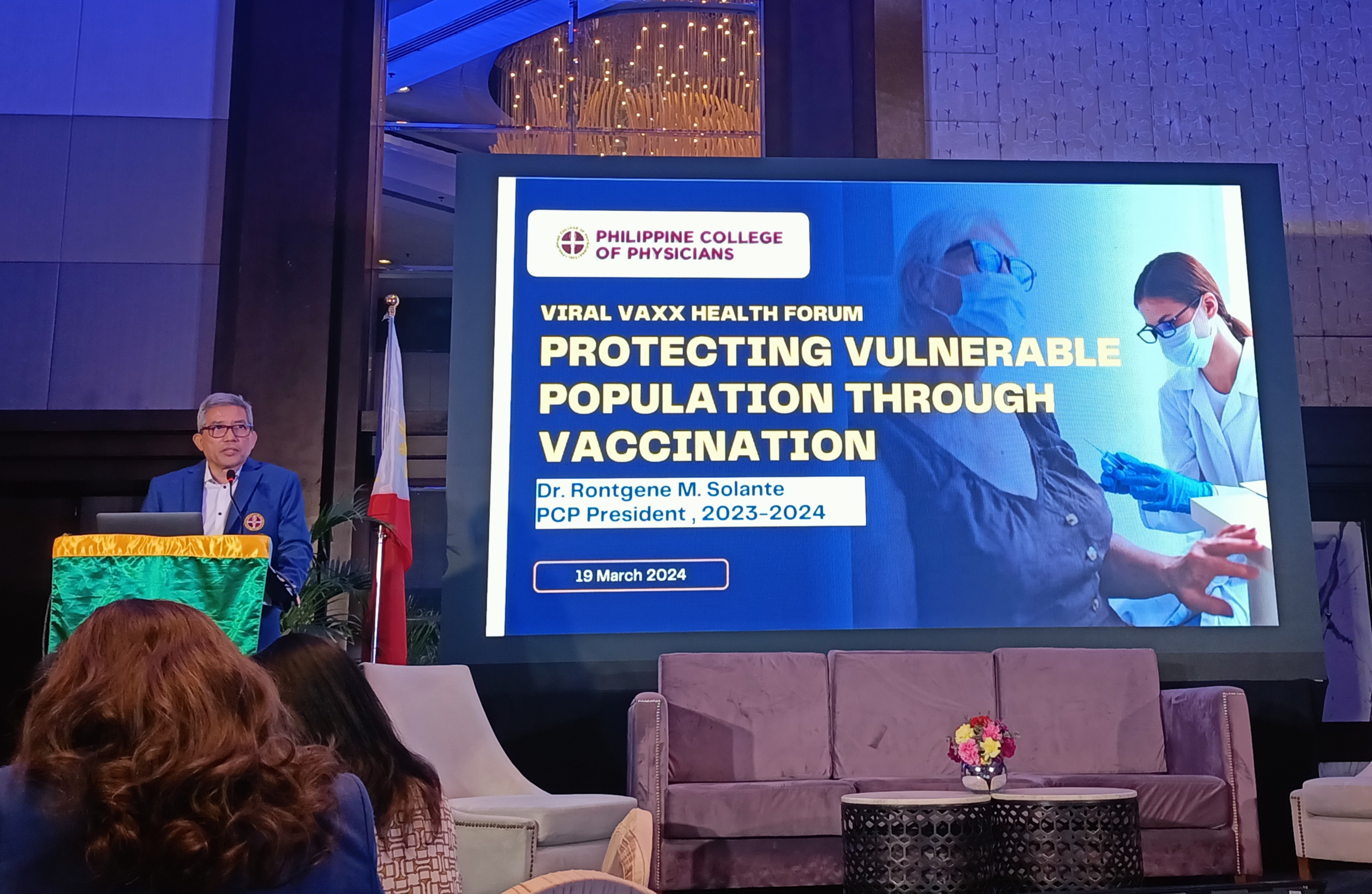
"If you look at the data on most vaccines today, they are highly effective in protecting us against severe infection," Dr. Rontgene Solante said during the Philippine College of Physicians' pre-vaccine summit press conference on Tuesday, March 19.
He added that vaccines are promoted primarily because it is safe and protects people against infection.
However, he acknowledged the persistence of "vaccine hesitancy" among certain individuals, attributing it not solely to concerns about adverse effects but also to a lack of understanding regarding their safety and tolerability.
"Vaccine hesitancy is not just about the belief that vaccines have adverse effects," he said. "But we have to provide a better understanding that vaccines are safe and tolerable."
In light of this, Solante urged policymakers to allocate increased budgets to ensure widespread vaccination coverage, particularly among the elderly population.
He stressed the importance of considering various factors beyond just influenza and pneumococcal vaccines when addressing the healthcare needs of older adults.
Furthermore, Solante emphasized the crucial role of providing "accurate information" from reputable sources in combating vaccine hesitancy.
"It should come from experts, from highly reputable organizations, and not just from random sources," he added.
He also urged media outlets to prioritize conveying the "importance and benefits" of vaccination to the public.
Vaccination as investment
Echoing Solante's sentiments, Philippine Society for Microbiology and infectious disease specialist Arthur Dessi Roman highlighted the significance of viewing vaccines as "investments" rather than mere expenses.
He urged the public to recognize the preventive value of vaccines, citing their ability to mitigate the severity of illnesses such as the flu.
In addressing vaccine hesitancy, Dessi emphasized the importance of constructive engagement with hesitant individuals rather than engaging in debates about vaccine safety.
"When you invest around a thousand pesos for your flu vaccine, it's not just about paying, it's actually protecting you from the flu," he stressed.
Roman also added: "Not just the flu, because we often think of the flu as a respiratory infection, but in fact, there are many non-respiratory illness complications associated with the flu."
Roman emphasized not to waste the opportunity to prevent the illness from becoming severe through early vaccination.
Regarding vaccine hesitancy, instead of debating whether vaccines have negative effects or not, he said: "there's really a way on how to interact with the anti-vaxxers and the vaccine-hesitant."
He called upon the media to aid in disseminating accurate information about vaccines, emphasizing the importance of reliable sources in shaping public perception.