






 Philippines
National
Personal interaction among world leaders is king, Romualdez says amid Duterte's 'pasyal' allegation
Philippines
National
Personal interaction among world leaders is king, Romualdez says amid Duterte's 'pasyal' allegation
Personal interaction among world leaders is king, Romualdez says amid Duterte's 'pasyal' allegation


At A Glance
- House Speaker Martin Romualdez says the "immensely beneficial" European swing of President Marcos demonstrates the importance of personal or face-to-face interactions among world leaders.
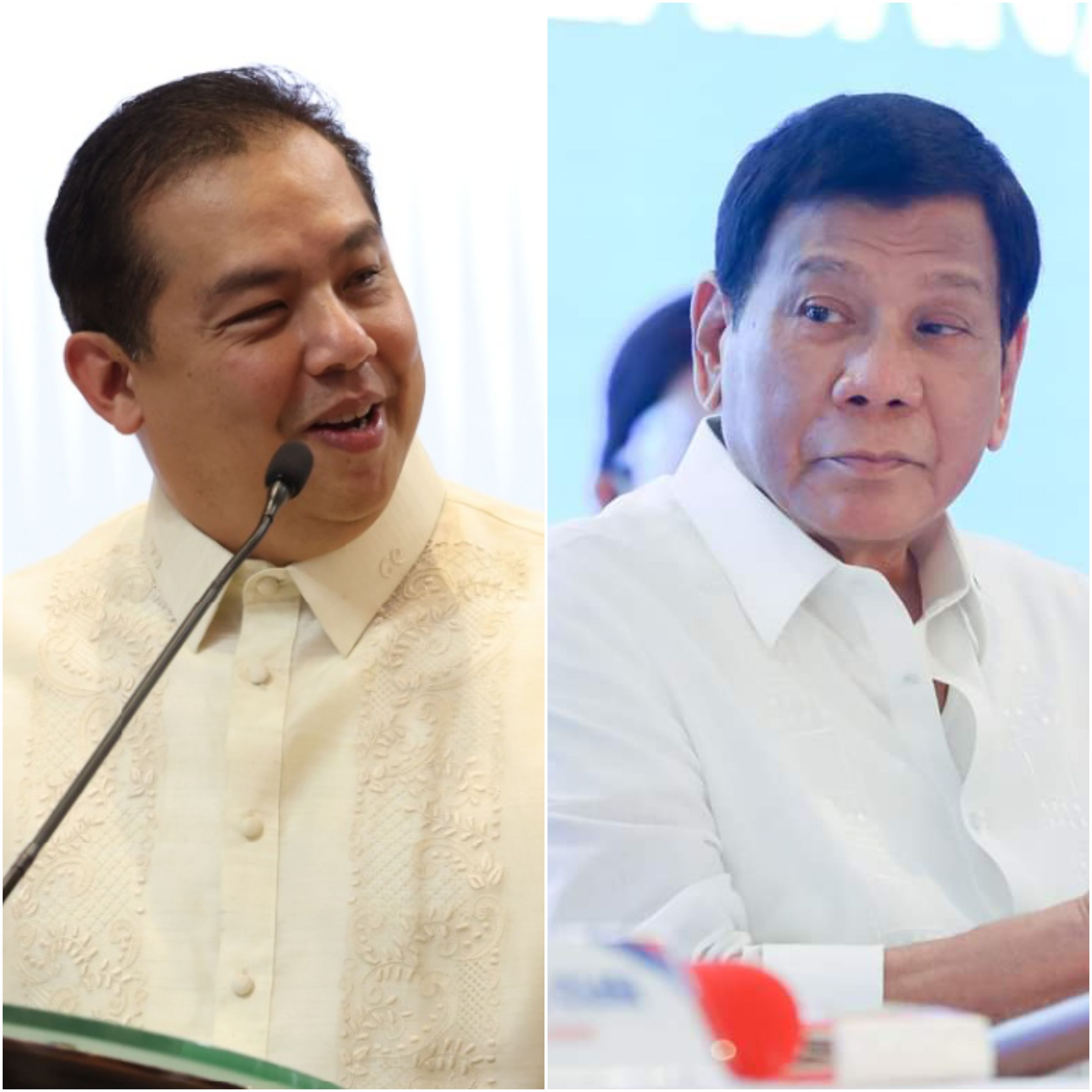 House Speaker Martin Romualdez (left), former president Rodrigo Duterte (Speaker’s office, Malacañang photo)
The "immensely beneficial" European swing of President Marcos demonstrates the importance of personal or face-to-face interactions among world leaders.
Thus, said House Speaker Martin Romualdez as he arrived back in the Philippines after accompanying the Chief Executive from back-to-back trips to Germany and the Czech Republic.
“The immensely beneficial outcomes of President Marcos’ trip to Germany and the Czech Republic starkly demonstrates the crucial rule of personal interaction between leaders of nations in enhancing bilateral relations and advancing national interest,” Romualdez, said in a statement Saturday afternoon, March 16.
“Face-to-face interactions allow leaders to develop personal relationships and build trust with each other. Trust is a fundamental component of international relations, and personal interactions can help leaders understand each other's perspectives, intentions, and concerns better," he explained.
It was only a few days ago when Marcos' direct predecessor, former president Rodrigo Duterte, criticized the incumbent official for allegedly indulging in leisurely travels abroad, or "pasyal nang pasyal".
Romaualdez had responded to this by saying that Marcos was actually very busy with work, as the results of the trips showed.
He noted that both German Chancellor Olaf Scholz and Czech Republic President Petr Pavel stressed their country’s support for the Philippines stance on the observance of rules-based order, particularly under the United Nations Convention on the Law of the Sea (UNCLOS), in the West Philippine Sea (WPS).
“Aside from the official statements issued, these personal meetings between leaders serve as powerful symbols of cooperation and goodwill, sending a strong and unmistakable signal to domestic audiences and the international community alike their solid commitment to advance the common interests of their countries,” Romualdez pointed out.
“In statecraft, as well as in business, successful personal interactions between leaders can create momentum for further engagement and cooperation between their respective countries, leading to sustained progress in bilateral relations,” he added.
In the meeting with Chancellor Scholz, Marcos also discussed with the German leader matters on enhancing cooperation in peace and development, maritime, climate change, labor, trade and investment--especially in green energy initiatives—and the protection of the rights and welfare of Filipinos in the European country.
From his three-day working visit to Germany trip alone, the Philippine leader bagged at least $4 billion or P220 billion worth of investment deals from eight different types of agreements.
While in the Czech Republic, Marcos met with the heads of the government, namely President Pavel and Prime Minister Petr Fiala, and the heads of the Czech Parliament, Senate President Miloš Vystrčil and Speaker of the Chamber of Deputies Markéta Pekarová Adamová.
Apart from the WPS issue, Marcos' discussion with the Czech leaders focused on further enhancing bilateral cooperation in the areas of trade and investment, defense, agriculture, renewable energy, transport, and people-to-people exchanges.
Romualdez said Marcos also made a compelling pitch to Czech businesses to invest in the areas of IT-BPM, electronics, manufacturing, food and agriculture, and automotive/EV manufacturing, among others.