







PEZA to US firms: PH is ideal business hub in ASEAN


Recognizing the strong economic ties between the Philippines and United States, the Philippine Economic Zone Authority (PEZA) reiterated to US firms the strategic opportunities the country can offer as their ideal business hub in the Southeast Asian region.
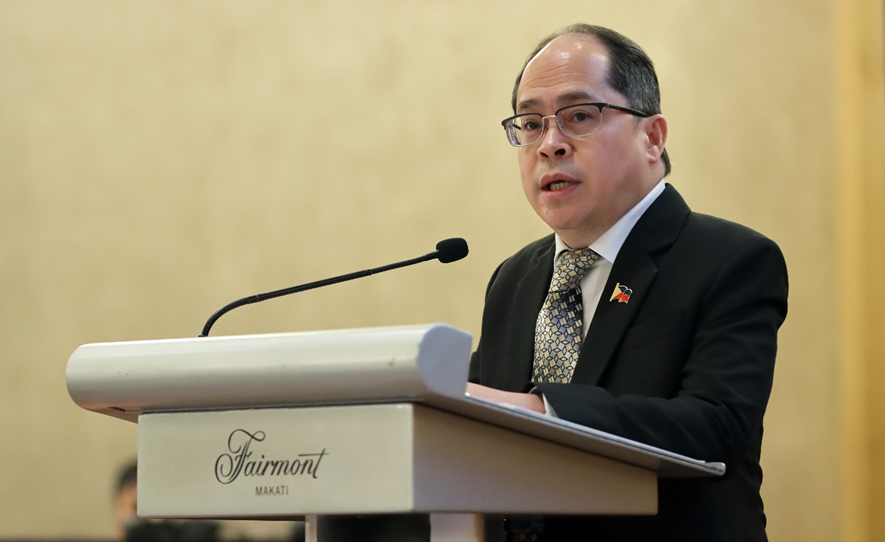
In a speech during the PH-US Trade and Investment Mission Forum in Fairmont, Makati on March 12, PEZA Director General Tereso Panga shared that the agency has been lauded by the US Department of State and US Trade Administration for facilitating a "better business environment" in the special economic zones.
He added that PEZA has been recognized for its "regulatory transparency, no red-tape policy, and one-stop shop services for investors.”
"This partnership can strategically de-risk and diversify global value chains, positioning the Philippines as your +1 in Asia. With the Philippines as your ideal hub in the region, the ASEAN and Asia-Pacific could serve as your manufacturing and distribution gateway,” said Panga.
There are 355 US companies operating under PEZA zones, which have cumulatively contributed P404.368 billion in US investments to the Philippines. Their operations have yielded $10.352 billion exports and generated 368,511 direct jobs.
This has made the US the second largest foreign investor in the ecozones, but Panga emphasized the agency's eagernes to host more businesses from the US.
"The Philippines is not only prepared but eager to continue and expand our business ventures with the United States... We are ready to roll out the red carpet and are fully equipped to offer the optimal business environment, ecosystem, and a nurturing home for your business in Southeast Asia, throughout Asia, and across the Indo-Pacific," he said.
Last March 11 to 12, a US government-led delegation, comprising 22 US firms and led by US Commerce Secretary Gina Raimondo, visited the Philippines to enhance bilateral trade and invesment relations.
Notably, Raimondo announced that 12 out of 22 US firms have indicated over $1 billion in investments to Philippines across varying sectors.
She also highlighted the Philippines' potential in developing its semiconductor industry via the CHIPS an and Science Act, stating that she's in favor of expanding facilities in the country.
Panga said he is interested in partnerships with US investors on the semconducto manufacturing service, which is one of PEZA's largest investments and exports.
"This collaboration is expected to enhance our nation's capabilities in assembly, packaging, and testing, and propel us into sophisticated integrated circuit design and, eventually, wafer fabrication," he said.
"We are also eyeing leading American companies in the areas of regenerative agriculture, alternative and renewable energy, e-mobility, green ores processing, drug and medical equipment manufacturing, tourism, agriculture, and digital and frontier technology to locate their facilities in the Philippines,” he added.
The US Presidential Trade Mission also highlighted the Philippines' participation in the US' Indo-Pacific Economic Framework (IPEF) that aims establish strategic economic alliances between the US and countries in the Indo-Pacific region.
Even though the Trade Mission centered on US partnerships, Panga emphasized that the Philippines is open and welcome to investments from all countries.
“Other countries should not see the US Trade Mission as a threat, but rather see it in a positive light as it strengthens the resiliency of general trade in the region,” said Panga.