

ADVERTISEMENT

House bill taps LGUs in a big way toward mangrove protection 

Published Mar 15, 2024 03:43 am

At A Glance

  • Camarines Sur 2nd district Rep. LRay Villafuerte is leading efforts to give officials of local government units (LGU) from the country's coastline areas to assume a major part in the establishment and sustainable development of mangrove resources. 
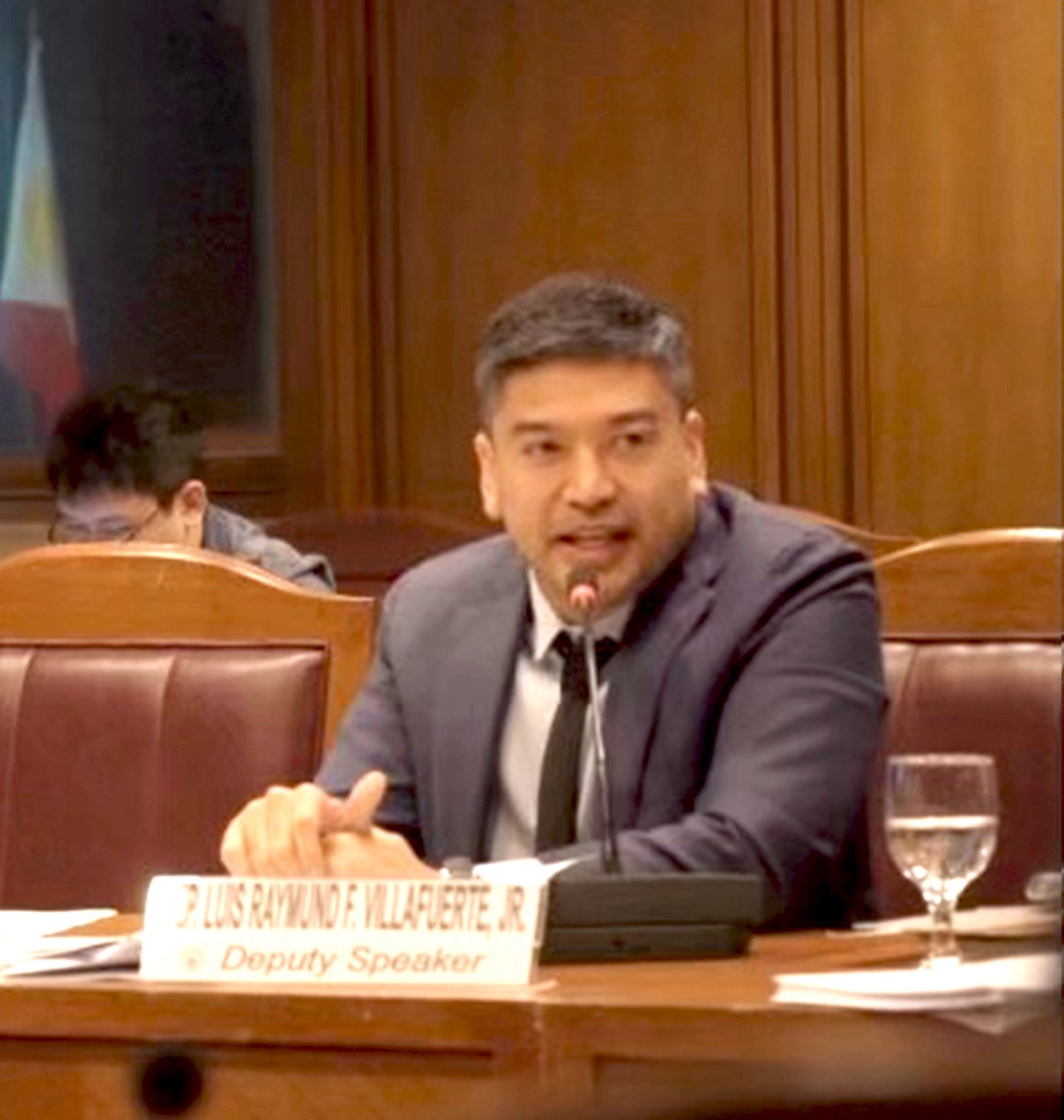
LRayFoto1.jpgCamarines Sur 2nd district Rep. LRay Villafuerte (Rep. Villafuerte's office)


Camarines Sur 2nd district Rep. LRay Villafuerte is leading efforts to give officials of local government units (LGU) from the country's coastline areas to assume a major part in the establishment and sustainable development of mangrove resources. 

Villafuerte filed for this purpose House Bill (HB) No.2275, also known as the “Mangrove Forest Protection and Reservation Act". 

A mangrove forest, as the bill defines it, is a type of forest occurring on a tidal flat along the sea coast. It extends along streams where a river meets the sea, such that the water is more saline than fresh water but less saline than marine water. 

Villafuerte, president of the National Unity Party (NUP), noted that the Philippines--archipelago of over 7,000 islands--has the 10th widest mangrove forest cover in the world. 

“Congressional approval of this measure is timely as the Marcos administration has just sealed a blue carbon action partnership accord with the WEF (World Economic Forum) Center for Nature and Climate on the sustainable management of our coastal ecosystems,”  he said. 

Villafuerte was referring to the partnership agreement on the National Blue Carbon Action Partnership (NBCAP) on strengthening coastal ecosystems and boosting blue carbon conservation that Secretary Maria Antonia Yulo-Loyzaga of the Department of Environment and Natural Resources (DENR) recently signed with Neo Gim Huay, managing director of the WEF Center for Nature and Climate. 

According to the Bicolano, HB No.2275 proposes the establishment of a National Council for the Preservation of Mangrove Forests (National Council) as a DENR-attached agency. It is tasked to prepare a comprehensive program on developing, preserving, reforesting and protecting mangrove forests. 

This proposed National Council shall also identify the boundaries of coastal communities that are to form part of mangrove reservation areas nationwide. 

This bill provides for the creation of Local Councils for the Preservation of Mangrove Forests (Local Councils) to implement at the local level the comprehensive plan to be developed by the National Council, and take charge of the day-to-day administration of the program. 

The bill proposes that DENR regional directors chair the Local Councils, which are to secure the mangrove reservations from illegal and destructive activities;  engage the services of, and train,  forest guards to police the protected areas and arrest violators; conduct periodic consultations with LGUs and appropriate non-government organizations (NGOs) and People’s Organizations (POs) in their localities on issues and programs affecting the mangrove reservations. 

“Mangroves are salt-tolerant trees or small shrubs that grow in coastal saline or brackish waters. By establishing protected mangrove zones and imposing strict penalties on those that bastardize these areas by cutting, uprooting, destroying or gathering any mangrove tree or its products, dumping of wastes or fishing illegally therein, among other destructive and disruptive practices, our country is posed to enjoy the benefits of a healthy and thriving mangrove forest cover," explained Villafuerte.  

He said that HB No.2275 recognizes “the invaluable contribution of these ingenious plants to the world’s natural ecology. The Philippines is fortunate to have the 10th widest cover of mangrove forests in the world". 

Reinforcing the major role of local executives in the protection and preservation of mangrove forests, the bill provides for the mandatory prior consultation with the concerned LGUs in the implementation of this proposed Act.  

“No project or program that may cause pollution, deduction or loss of mangrove forests or extinction of marine and estuarine plant and animal species shall be implemented by the National or Local Council without prior consultations with the LGU concerned, NGOs or POs and other affected sectors to explain the objectives of the project or program, its impact on the people and the community in terms of ecological balance, and the measures that will be undertaken to prevent the adverse effects thereof,” says the bill.


Related Tags

mangrove lray villafuerte
ADVERTISEMENT
.most-popular .layout-ratio{ padding-bottom: 79.13%; } @media (min-width: 768px) and (max-width: 1024px) { .widget-title { font-size: 15px !important; } }

{{ articles_filter_1561_widget.title }}

.most-popular .layout-ratio{ padding-bottom: 79.13%; } @media (min-width: 768px) and (max-width: 1024px) { .widget-title { font-size: 15px !important; } }

{{ articles_filter_1562_widget.title }}

.most-popular .layout-ratio{ padding-bottom: 79.13%; } @media (min-width: 768px) and (max-width: 1024px) { .widget-title { font-size: 15px !important; } }

{{ articles_filter_1563_widget.title }}

{{ articles_filter_1564_widget.title }}

.mb-article-details { position: relative; } .mb-article-details .article-body-preview, .mb-article-details .article-body-summary{ font-size: 17px; line-height: 30px; font-family: "Libre Caslon Text", serif; color: #000; } .mb-article-details .article-body-preview iframe , .mb-article-details .article-body-summary iframe{ width: 100%; margin: auto; } .read-more-background { background: linear-gradient(180deg, color(display-p3 1.000 1.000 1.000 / 0) 13.75%, color(display-p3 1.000 1.000 1.000 / 0.8) 30.79%, color(display-p3 1.000 1.000 1.000) 72.5%); position: absolute; height: 200px; width: 100%; bottom: 0; display: flex; justify-content: center; align-items: center; padding: 0; } .read-more-background a{ color: #000; } .read-more-btn { padding: 17px 45px; font-family: Inter; font-weight: 700; font-size: 18px; line-height: 16px; text-align: center; vertical-align: middle; border: 1px solid black; background-color: white; } .hidden { display: none; }
function initializeAllSwipers() { // Get all hidden inputs with cms_article_id document.querySelectorAll('[id^="cms_article_id_"]').forEach(function (input) { const cmsArticleId = input.value; const articleSelector = '#article-' + cmsArticleId + ' .body_images'; const swiperElement = document.querySelector(articleSelector); if (swiperElement && !swiperElement.classList.contains('swiper-initialized')) { new Swiper(articleSelector, { loop: true, pagination: false, navigation: { nextEl: '#article-' + cmsArticleId + ' .swiper-button-next', prevEl: '#article-' + cmsArticleId + ' .swiper-button-prev', }, }); } }); } setTimeout(initializeAllSwipers, 3000); const intersectionObserver = new IntersectionObserver( (entries) => { entries.forEach((entry) => { if (entry.isIntersecting) { const newUrl = entry.target.getAttribute("data-url"); if (newUrl) { history.pushState(null, null, newUrl); let article = entry.target; // Extract metadata const author = article.querySelector('.author-section').textContent.replace('By', '').trim(); const section = article.querySelector('.section-info ').textContent.replace(' ', ' '); const title = article.querySelector('.article-title h1').textContent; // Parse URL for Chartbeat path format const parsedUrl = new URL(newUrl, window.location.origin); const cleanUrl = parsedUrl.host + parsedUrl.pathname; // Update Chartbeat configuration if (typeof window._sf_async_config !== 'undefined') { window._sf_async_config.path = cleanUrl; window._sf_async_config.sections = section; window._sf_async_config.authors = author; } // Track virtual page view with Chartbeat if (typeof pSUPERFLY !== 'undefined' && typeof pSUPERFLY.virtualPage === 'function') { try { pSUPERFLY.virtualPage({ path: cleanUrl, title: title, sections: section, authors: author }); } catch (error) { console.error('ping error', error); } } // Optional: Update document title if (title && title !== document.title) { document.title = title; } } } }); }, { threshold: 0.1 } ); function showArticleBody(button) { const article = button.closest("article"); const summary = article.querySelector(".article-body-summary"); const body = article.querySelector(".article-body-preview"); const readMoreSection = article.querySelector(".read-more-background"); // Hide summary and read-more section summary.style.display = "none"; readMoreSection.style.display = "none"; // Show the full article body body.classList.remove("hidden"); } document.addEventListener("DOMContentLoaded", () => { let loadCount = 0; // Track how many times articles are loaded const offset = [1, 2, 3, 4, 5, 6, 7, 8, 9, 10]; // Offset values const currentUrl = window.location.pathname.substring(1); let isLoading = false; // Prevent multiple calls if (!currentUrl) { console.log("Current URL is invalid."); return; } const sentinel = document.getElementById("load-more-sentinel"); if (!sentinel) { console.log("Sentinel element not found."); return; } function isSentinelVisible() { const rect = sentinel.getBoundingClientRect(); return ( rect.top < window.innerHeight && rect.bottom >= 0 ); } function onScroll() { if (isLoading) return; if (isSentinelVisible()) { if (loadCount >= offset.length) { console.log("Maximum load attempts reached."); window.removeEventListener("scroll", onScroll); return; } isLoading = true; const currentOffset = offset[loadCount]; window.loadMoreItems().then(() => { let article = document.querySelector('#widget_1690 > div:nth-last-of-type(2) article'); intersectionObserver.observe(article) loadCount++; }).catch(error => { console.error("Error loading more items:", error); }).finally(() => { isLoading = false; }); } } window.addEventListener("scroll", onScroll); });

Sign up by email to receive news.