







FSCC weighs impact of 'fresh uncertainties' overseas


The Financial Stability Coordination Council (FSCC) sees substantial refinancing of maturing corporate bonds and loans this year as it weighs the impact of 'fresh uncertainties' overseas on the domestic economy.
FSCC is an inter-agency council where the principals from the Bangko Sentral ng Pilipinas, the Department of Finance, the Securities and Exchange Commission, the Insurance Commission, and the Philippine Deposit Insurance Corporation convene quarterly.
FSCC Chairman and BSP Governor Eli M. Remolona, Jr. acknowledged that there were fresh rounds of uncertainties in advanced economies since the end of last year.
Remolona said this at FSCC's 38th Executive Committee meeting soon after the launch of the 2023 Financial Stability Report (FSR) and assessed the development in the early part of 2024 against the trends of the full year of 2023 as reported in the FSR.
These meetings provide the venue to assess possible systemic risks and to decide on appropriate macroprudential policy interventions. The National Treasurer is likewise an active participant in the discussions of the FSCC and is a Special Member of the Executive Committee.
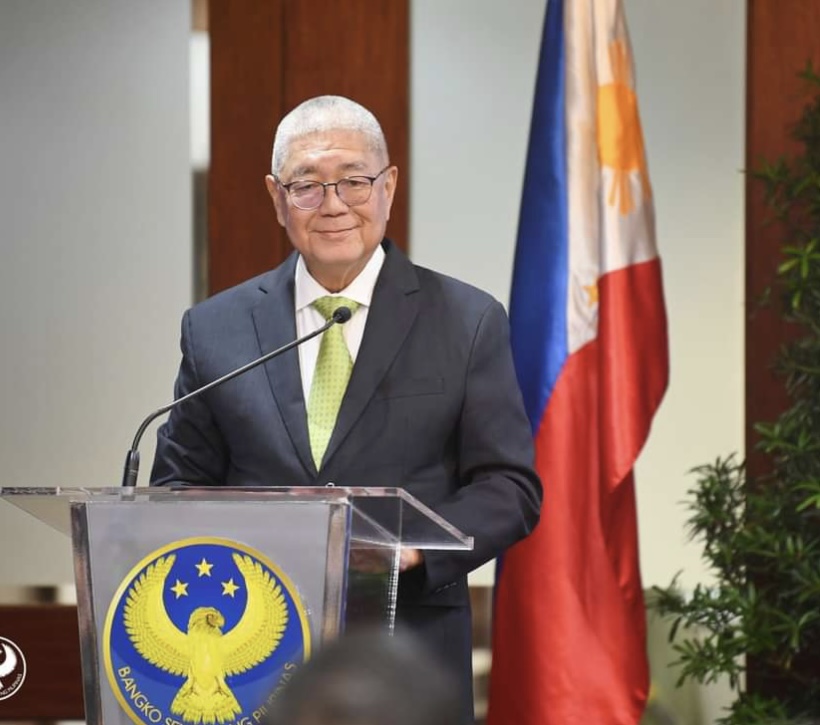
Remolona said developments in various countries are likely to affect the Philippines in different ways. Notably, the US inflation numbers dim hopes for early rate cuts by the US Federal Reserve.
“While global markets have been very fluid, the Philippines has shown its resilience by expanding at a pace that exceeds that of most other economies in the world," said Remolona.
As expectations at the end of 2023 of early rate cuts have been tempered by recent US data, he said the Council weighs the potential spillovers coming from abroad versus the resilience that the local market continues to exhibit.
During the meeting, the Council assessed the funding needs of the corporate sector. Estimates suggest that there is sizable portion of corporate bonds and loans maturing in 2024.
Given the nature of these debts, the FSCC expects a significant amount to be refinanced. The Council recognizes that the banking sector has been able to provide much of the corporate funding through the years.
However, the FSCC also looks to a stronger capital market to complement the banking sector and to better manage various risks.
Over the medium-term, the FSCC looks forward to seeing concrete developments in the fixed income market leading to more access by Philippine corporations to the bond market.
“Enhancing the capital market is an issue that is shared by all members of the FSCC. We recognize that regulators must take a more proactive role in market development and encourage deliberate collaboration among stakeholders,” Remolona noted.
While keeping its focus over medium term goals, the FSCC will continue to assess the funding requirements of corporations. This is a core function in its continuing objective to further economic growth while avoiding possible surprises that can have adverse consequences on the economy.
The FSCC was first convened in October 2011 as a voluntary initiative of the BSP, in partnership with the Department of Finance, Insurance Commission, Philippine Deposit Insurance Corporation, and Securities and Exchange Commission.
In July 2021, Executive Order No. 144 was signed and has since institutionalized the role of the Council in managing systemic risks in the Philippines.