






 Philippines
National
US military command in Indo-Pacific vows sustained ties with AFP
Philippines
National
US military command in Indo-Pacific vows sustained ties with AFP
US military command in Indo-Pacific vows sustained ties with AFP


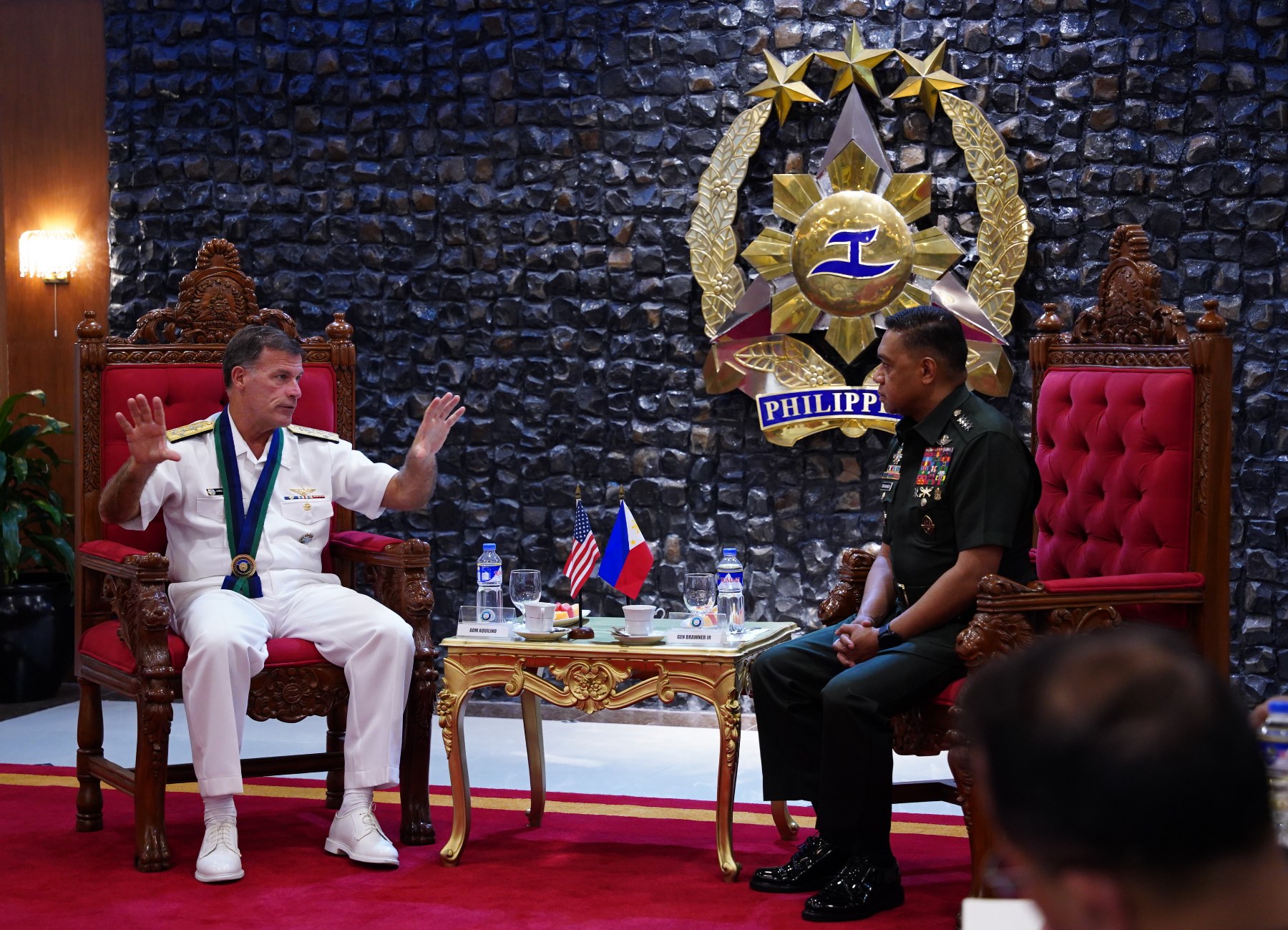
The Armed Forces of the Philippines (AFP) got a solid backing from the United States' military command in the Indo-Pacific as the two forces assured each other of continued cooperation to address emerging security challenges in the region.
This was revealed during the meeting of General Romeo Brawner Jr., AFP Chief of Staff, and Admiral John Aquilino, commander of the US Indo-Pacific Command (INDO-PACOM), at Camp Aguinaldo in Quezon City on Tuesday, March 12.
"It's more of continued cooperation between our two military and we will be pursuing our planned activities set forth and most likely doon tumatakbo (the discussion went that way)," Col. Xerxes Trinidad, AFP public affairs office chief, said on Wednesday, March 13.
During their meeting, Brawner and Aquilino discussed the programs and activities that were lined up between the AFP and US INDO-PACOM, the oldest and largest of the unified combatant commands of the United States Armed Forces.
These include the Balikatan Exercises next month, the maritime cooperative activities (MCAs) which were established just last year and featured joint naval and aerial patrols in the West Philippine Sea, and the ongoing developments of Enhanced Defense Cooperation Agreement (EDCA) sites.
The two officials also agreed to strengthen their coordination with other militaries from "like-minded" nations "to advance the rules-based international order and secure a free and open Indo-Pacific region."
Trinidad said the officials also discussed the West Philippine Sea issue, including the recent resupply mission to the BRP Sierra Madre outpost in Ayungin (Second Thomas) Shoal last March 5.
"They have expressed their support to us through their embassy," he stated.
The said mission was marred by the collision of Philippines and Chinese vessels, and the use of water cannon by Beijing which ended up injuring four Filipino personnel.
The US Embassy had condemned China's "repeated obstruction of Philippine vessels’ exercise of high seas freedom of navigation and its disruption of supply lines" to the outpost.
The US Embassy had also reaffirmed Washington's commitment to the 1951 US-Philippines Mutual Defense Treaty (MDT) which states that both countries should support each other in case of an armed attack from a third-party country.
"Their meeting manifests the commitment of the AFP to its treaty ally to ensure high-level coordination and sustained implementation of programs aimed at enhancing interoperability between the two militaries," Trinidad concluded.