






 Philippines
National
Solon files bill granting maternity cash benefits for informal sector workers
Philippines
National
Solon files bill granting maternity cash benefits for informal sector workers
Solon files bill granting maternity cash benefits for informal sector workers


At A Glance
- Bicol Saro Party-list Rep. Brian Raymund Yamsuan has filed a bill seeking to grant maternity cash benefits to working mothers in the informal sector.
 (MANILA BULLETIN)
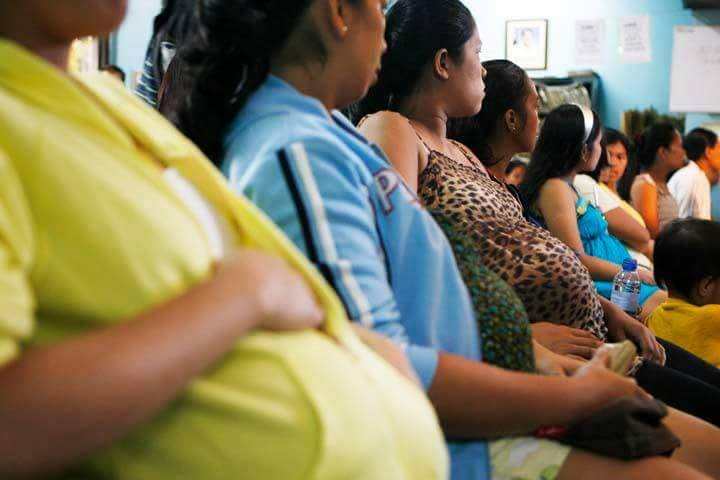
A bill seeking to grant maternity cash benefits to working mothers in the informal sector has been filed in the House of Representatives.
Under House Bill (HB) No.10070 penned by Bicol Saro Party-list Rep. Brian Raymund Yamsuan, women workers who are not members of the Social Security System (SSS), whether on a regular or voluntary basis, would be tapped as beneficiaries.
“The eligibility for maternity leave and benefits under our laws is limited to those who are SSS members, thus excluding a considerable number of Filipino women workers who are non-members,” Yamsuan said in a statement on Tuesday, March 12.
“This measure aims to address this gap,” he emphasized.
The rookie lawmaker said workers in the informal sector include freelancers, the self-employed, home-based workers, those working under the ‘no-work, no-pay’ arrangement, and other unrecognized or unregulated employment activities.
“Working in the informal sector leaves women without any form of social benefits,“ said Yamsuan.
“They have to continue to work while nurturing themselves back to health and providing for their newborn infant and their family because they are deprived of the most fundamental social protection—maternity benefits,” he added.
HB No.10070 aims to amend certain provisions of Republic Act (RA) No. 11210, or the Expanded Maternity Leave Law.
Under this bill, women workers who are not SSS members shall receive a one-time direct maternity cash benefit equivalent to 22 times the prevailing minimum wage rate in the region where the beneficiary lives.
This means that once the bill becomes law, an informal sector worker in Metro Manila where the prevailing minimum wage rate is P610 will receive P13,420 from the DSWD after giving birth.
Yamsuan estimates that over 6.6 million women workers stand to benefit from the measure.
“More than alleviating the hardships and worries of working mothers-to-be, the provision of maternity protection has been linked to a number of positive outcomes for the mother, for her child, for the economy, and for communities and society at large,” he noted.
“Access to the benefit increases female participation in productivity, promoting workforce equality and ultimately, economic growth,” he underscored.