







Scientists find new species of 'lubeg' in Nueva Ecija


By JUNEP OCAMPO, MB Agriculture Editor
A group of Filipino scientists recently discovered a new kind of flowering tree or “lubeg” (Syzygium) in Carranglan, Nueva Ecija, in Central Luzon, Philippines. Named Syzygium crystalliferum, the tree is a special addition to the plant family called Myrtaceae with unique features that make it different from its relatives.
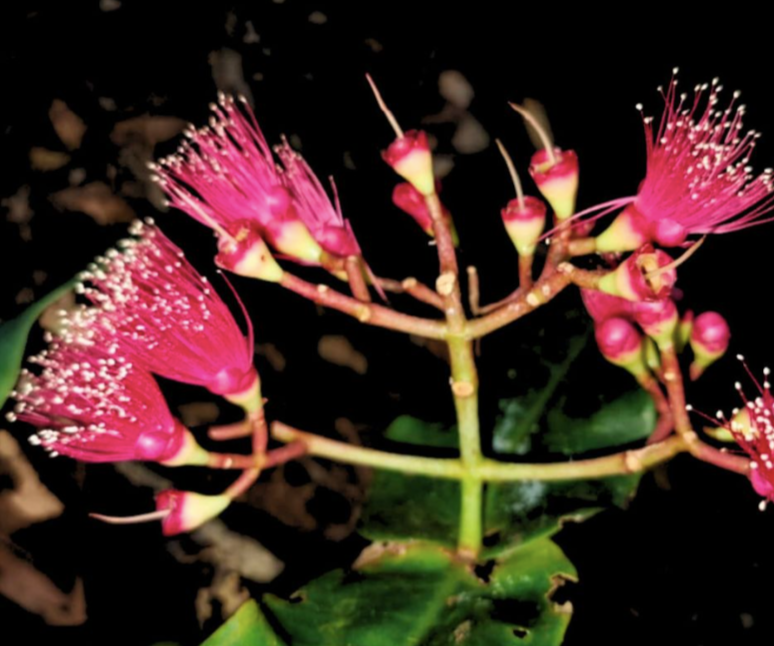
According to the paper published in the Nordic Journal of Botany last week, Syzygium crystalliferum is a type of tree found only in two small areas in Sitio Binbin, within the General Luna and Burgos districts of Carranglan town in Nueva Ecija. This kind of tree is known among the ilocano-speaking locals as “lubeg”.
The tree grows in areas with elevation between 900 and 1,300 meters above sea level and thrives in tropical forests. It grows among other plants along shaded trails, flowering between April and May, and fruiting from July to August.
Even though Syzygium crystallferum shares similarities with another tree called Syzygium purpuriflorum, like the appearance of leaves and flowers, it has its special traits. For example, it has tiny bumps on its dried leaves and flowers, and its fruits turn from red to deep purple when ripe. Its leaves also feel papery to the touch, and its flowers are on little stalks called pedicels.
The scientists have tried the fruits and found them edible. According to them, the tree is a relative of macopa and duhat (Java plum), and its fruits have a sour taste.
According to the scientists, the name "crystalliferum" means "crystal-bearing" in Latin. The scientists said they gave the name to the tree because of the tiny bumps on its leaves and flowers when they dried out. These blisters contain a white powder and tiny crystals. Some of these crystals are big enough to look like salt crystals. The scientists think these blisters form because of calcium oxalate crystals that gather under the plant's surface, a common thing in this type of tree.
This discovery is a big deal because it's been more than 70 years since scientists found a new tree like this in the Philippines. The scientists says this only shows how much they still have to learn about the natural world and why it's so important to protect it.
The scientists identified 30 mature trees of the new species at the original location and 10 more on Mt. Meddengen. Despite further monitoring across the 96,000-hectare Pantabangan Carranglan Watershed and Forest Reserve area, no additional sightings were recorded, suggesting the species may occupy less than 100 square kilometers.
The scientists are worried, however, about the new tree because it is in danger of disappearing. They say it's critically endangered, which means it needs help to survive.
The scientists say that roads passing through the reserve have encouraged migration and forest conversion, while slash-and-burn farming near the lower habitats of Syzygium crystalliferum poses a potential threat. They expressed concern that if these practices extend uphill, they could greatly harm the species.
The Pantabangan-Carranglan Watershed Forest Reserve was created in 1969. It spans 94,865 hectares and plays important roles in hydroelectric power generation, agricultural water supply, and biodiversity conservation. However, there are challenges such as migration that have led to issues like land clearing, slash-and-burn farming, illegal logging, and frequent wildfires.
The discovery of this new species was a result of collaborative effort among six authors, namely, Jayson A. Mansibang, Leonardo C. Udasco Jr., Abigail L. Garrino, Jamie Ann M. Aumentado, Mark Gregory Q. Rule, and John Patykowski who made equal contributions to different aspects of the project.