ADVERTISEMENT

Navy defends construction of US-funded seaport in Batanes

Published Mar 12, 2024 07:41 am
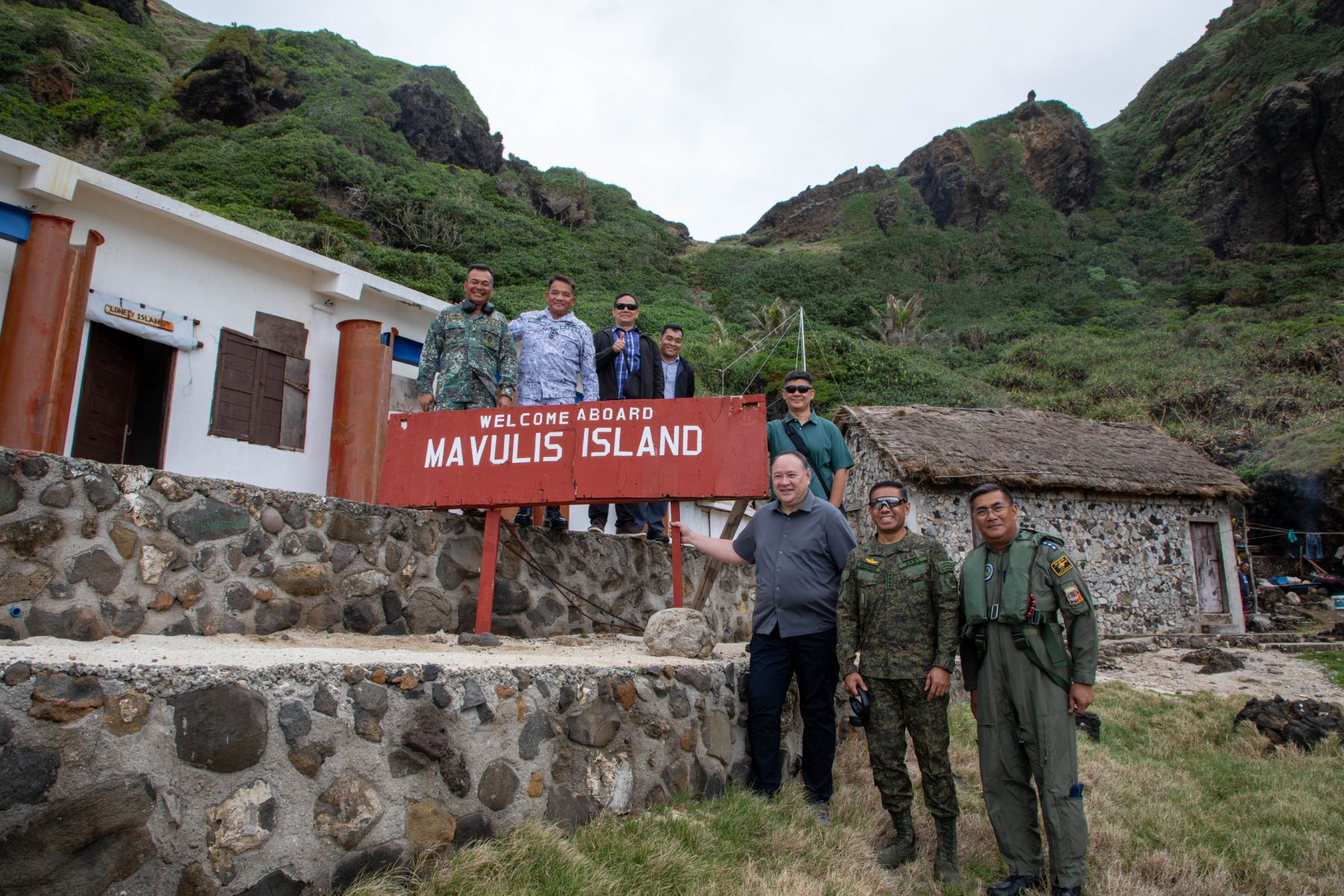
Gilberto Teodoro Jr.jpg
Department of National Defense (DND) Sec. Gilberto Teodoro Jr. (below, third from right) and Armed Forces of the Philippines (AFP) Chief, Gen. Romeo Brawner Jr. (below, second from right) visit the northern frontier's maritime defense outpost in Mavulis Island in Itbayat, Batanes on Feb. 6, 2024. They were accompanied by top military officials. (Photo by Armed Forces of the Philippines)

The Philippine Navy (PN) said that a seaport that will be built in Batanes through funding from the United States Army will be beneficial for the military and local populace.

Commodore Roy Vincent Trinidad, PN spokesperson for West Philippine Sea, brushed off criticisms that the civilian seaport may be used by America to position its troops in Batanes, which is deemed crucial due to its strategic location.

"It's not allowed to have regular foreign troops in the country," Trinidad said in a press conference at Camp Aguinaldo in Quezon City on Tuesday, March 12.

Trinidad explained that the construction of the seaport is part of the preparations of the PN and the AFP "for any eventuality across the spectrum of conflict from peace, to crisis, to wartime." Details as to how much is being allocated for the construction of the seaport are not immediately available.

"Exercises with foreign counterparts are designed to improve our capability and part of this, we have [what] we call exercise-related constructions to be able [to] assist foreign forces and our local forces," he explained.

Batanes is one of the areas being considered by the Armed Forces of the Philippines (AFP) to be the venue of the upcoming Balikatan Exercises next month, which is one of the few exceptions that American forces are allowed to set foot in the Philippines for war games.

Trinidad said that the seaport will capacitate the local community which will host the military exercises as it can be used by the local fisherfolk to support their operation. This will also enable for a faster conduct of humanitarian assistance and disaster response (HADR) operations on the part of the government during times of calamities such as typhoons or earthquakes. 

Once finished, the seaport will be turned over to the local government of Batanes. Trinidad said that such construction of facilities "will happen not only in the northern islands." 

"It has happened even in other areas that we have had exercises with foreign countries," he said.

Over the weekend, Batanes Governor Marilou Cayco said in a Navy event that the US Army would visit the province in April for the planned construction of the seaport.

She said this would help accommodate Filipino workers in Taiwan in case a conflict arises.

Batanes is facing Taiwan, a self-governing island claimed by China. China intends to reunify Taiwan to its mainland but the United States has committed to support the self-governing island.

The PN manages a naval station in Batanes situated in Mavulis Island, which is considered as the first line of defense in the northernmost part of the country. It is located at approximately 140 kilometers from Taiwan's southern tip.

The Luzon Strait, which includes the Balintang and Bashi Channels in the Northern Luzon, is an important factor in maneuvering forces for strategic advantage, and a chokepoint for naval and air traffic.

As part of the new Comprehensive Archipelagic Defense Concept (CADC), the Department of National Defense (DND) is boosting the military's presence in the northern part of the country, particularly in Batanes.

In February, Defense Secretary Gilberto Teodoro Jr. and AFP Chief, General Romeo Brawner Jr. visited Batanes where they directed the Northern Luzon Command (NOLCOM) to fortify the military's presence in the northern frontier's maritime defense outposts. 

A joint aerial patrol between the Philippine Air Force (PAF) and US Pacific Air Force (PACAF) was also held in the same month.

This angered China as it accused the Philippines of stirring up trouble in the South China Sea.

Related Tags

Armed Forces of the Philippines Batanes AFP DND PH-China PH-US seaport development
ADVERTISEMENT
.most-popular .layout-ratio{ padding-bottom: 79.13%; } @media (min-width: 768px) and (max-width: 1024px) { .widget-title { font-size: 15px !important; } }

{{ articles_filter_1561_widget.title }}

.most-popular .layout-ratio{ padding-bottom: 79.13%; } @media (min-width: 768px) and (max-width: 1024px) { .widget-title { font-size: 15px !important; } }

{{ articles_filter_1562_widget.title }}

.most-popular .layout-ratio{ padding-bottom: 79.13%; } @media (min-width: 768px) and (max-width: 1024px) { .widget-title { font-size: 15px !important; } }

{{ articles_filter_1563_widget.title }}

{{ articles_filter_1564_widget.title }}

.mb-article-details { position: relative; } .mb-article-details .article-body-preview, .mb-article-details .article-body-summary{ font-size: 17px; line-height: 30px; font-family: "Libre Caslon Text", serif; color: #000; } .mb-article-details .article-body-preview iframe , .mb-article-details .article-body-summary iframe{ width: 100%; margin: auto; } .read-more-background { background: linear-gradient(180deg, color(display-p3 1.000 1.000 1.000 / 0) 13.75%, color(display-p3 1.000 1.000 1.000 / 0.8) 30.79%, color(display-p3 1.000 1.000 1.000) 72.5%); position: absolute; height: 200px; width: 100%; bottom: 0; display: flex; justify-content: center; align-items: center; padding: 0; } .read-more-background a{ color: #000; } .read-more-btn { padding: 17px 45px; font-family: Inter; font-weight: 700; font-size: 18px; line-height: 16px; text-align: center; vertical-align: middle; border: 1px solid black; background-color: white; } .hidden { display: none; }
function initializeAllSwipers() { // Get all hidden inputs with cms_article_id document.querySelectorAll('[id^="cms_article_id_"]').forEach(function (input) { const cmsArticleId = input.value; const articleSelector = '#article-' + cmsArticleId + ' .body_images'; const swiperElement = document.querySelector(articleSelector); if (swiperElement && !swiperElement.classList.contains('swiper-initialized')) { new Swiper(articleSelector, { loop: true, pagination: false, navigation: { nextEl: '#article-' + cmsArticleId + ' .swiper-button-next', prevEl: '#article-' + cmsArticleId + ' .swiper-button-prev', }, }); } }); } setTimeout(initializeAllSwipers, 3000); const intersectionObserver = new IntersectionObserver( (entries) => { entries.forEach((entry) => { if (entry.isIntersecting) { const newUrl = entry.target.getAttribute("data-url"); if (newUrl) { history.pushState(null, null, newUrl); let article = entry.target; // Extract metadata const author = article.querySelector('.author-section').textContent.replace('By', '').trim(); const section = article.querySelector('.section-info ').textContent.replace(' ', ' '); const title = article.querySelector('.article-title h1').textContent; // Parse URL for Chartbeat path format const parsedUrl = new URL(newUrl, window.location.origin); const cleanUrl = parsedUrl.host + parsedUrl.pathname; // Update Chartbeat configuration if (typeof window._sf_async_config !== 'undefined') { window._sf_async_config.path = cleanUrl; window._sf_async_config.sections = section; window._sf_async_config.authors = author; } // Track virtual page view with Chartbeat if (typeof pSUPERFLY !== 'undefined' && typeof pSUPERFLY.virtualPage === 'function') { try { pSUPERFLY.virtualPage({ path: cleanUrl, title: title, sections: section, authors: author }); } catch (error) { console.error('ping error', error); } } // Optional: Update document title if (title && title !== document.title) { document.title = title; } } } }); }, { threshold: 0.1 } ); function showArticleBody(button) { const article = button.closest("article"); const summary = article.querySelector(".article-body-summary"); const body = article.querySelector(".article-body-preview"); const readMoreSection = article.querySelector(".read-more-background"); // Hide summary and read-more section summary.style.display = "none"; readMoreSection.style.display = "none"; // Show the full article body body.classList.remove("hidden"); } document.addEventListener("DOMContentLoaded", () => { let loadCount = 0; // Track how many times articles are loaded const offset = [1, 2, 3, 4, 5, 6, 7, 8, 9, 10]; // Offset values const currentUrl = window.location.pathname.substring(1); let isLoading = false; // Prevent multiple calls if (!currentUrl) { console.log("Current URL is invalid."); return; } const sentinel = document.getElementById("load-more-sentinel"); if (!sentinel) { console.log("Sentinel element not found."); return; } function isSentinelVisible() { const rect = sentinel.getBoundingClientRect(); return ( rect.top < window.innerHeight && rect.bottom >= 0 ); } function onScroll() { if (isLoading) return; if (isSentinelVisible()) { if (loadCount >= offset.length) { console.log("Maximum load attempts reached."); window.removeEventListener("scroll", onScroll); return; } isLoading = true; const currentOffset = offset[loadCount]; window.loadMoreItems().then(() => { let article = document.querySelector('#widget_1690 > div:nth-last-of-type(2) article'); intersectionObserver.observe(article) loadCount++; }).catch(error => { console.error("Error loading more items:", error); }).finally(() => { isLoading = false; }); } } window.addEventListener("scroll", onScroll); });

Sign up by email to receive news.