







Santiago Villafania, poet and pioneer in language revival


PAGBABAGO
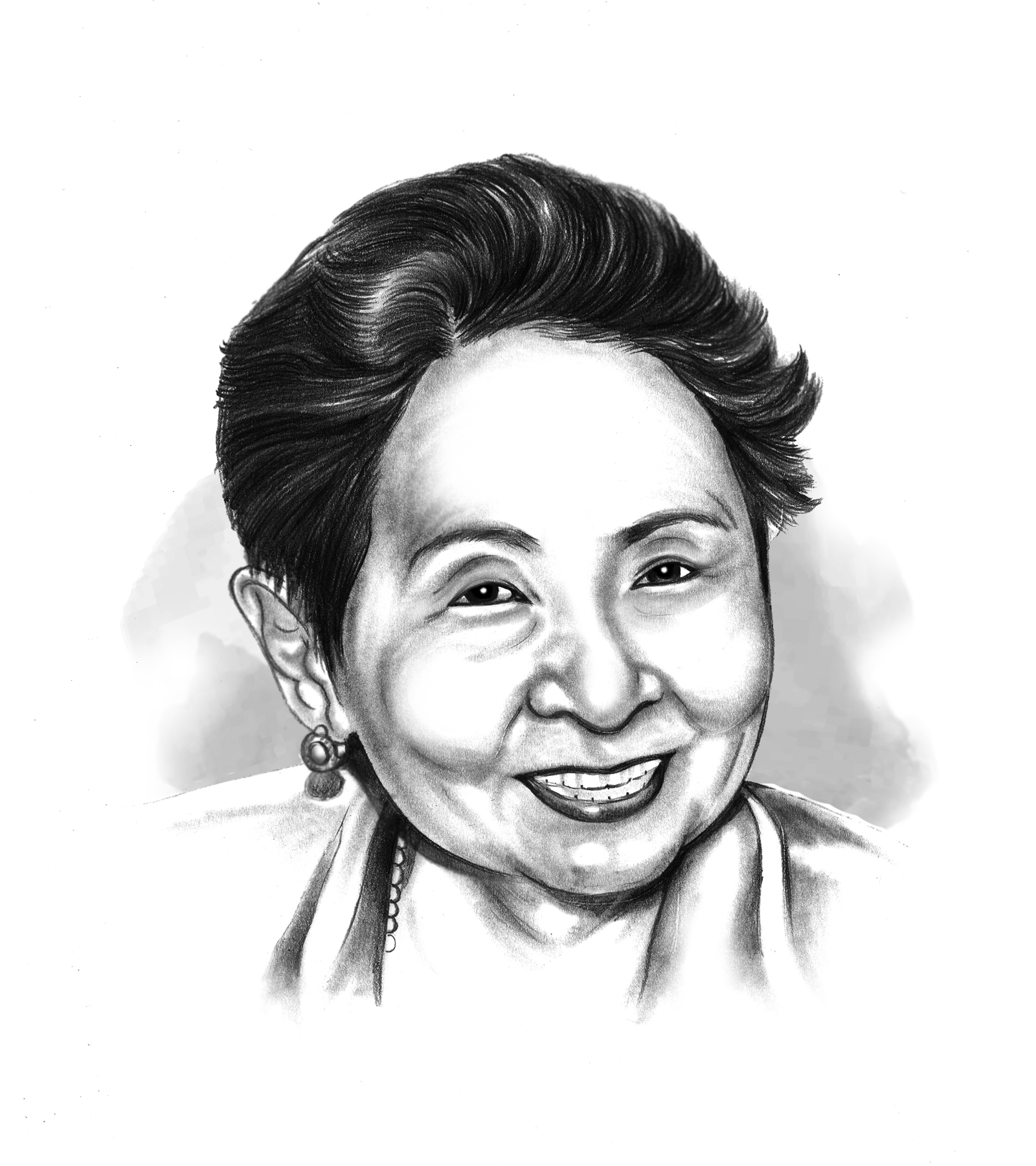
Sonny’s passing a few days ago came as a shock to the literary circle in Pangasinan, his friends and admirers in the country and other parts of the world. He was a leader in the movement to revive Pangasinan as a literary language.
At 53, his rise to become Pangasinan’s most outstanding poet today is phenomenal. He was a bilingual poet, an educator, translator, and author of six poetry collections, an environmentalist, vice-president of PEN International in the country, and commissioner of Pangasinan’s Historical and Cultural Commission. His book, “Malaguillon, a collection of 300 sonnets and villanelles which was described by National Artist Cirilo F. Bautista as “impressive in both form and substance was a finalist in the 2007 National Book Award for Best Poetry in 2007. It also won the Gawad Komisyon or the Tamayo Poetry Prize the same year.
His book, “Pinabli” (Beloved) and Other Poems which was published in 2012 is a collection of 200 anlongs (poems) most of them in the Pangasinan language and a few in English, a few haikus and translations of poems by writers who inspired him such as Jose Garcia Villa and E.E. cummings. Most deal with love, which he described in a language full of imagery and lyricism.
His other writings are “As I Tango,” (2016), “Balikas na Caboloan (Voices from Caboloan, 2005) published by the National Commission for Culture and the Arts under the UBOD New Authors Series.
According to Dr. Ricardo Nolasco, lead advocate of the Mother Tongue-based Multilingual Education, Villafania had provided models for succeeding writers in terms of how he had helped enrich the local languages
Many believe that the Pangasinan language would have died without the dedication of Villafania and his colleagues who worked hard in reviving and revitalizing the language.
Villafania was also a teacher, a web designer, a digital artist. He engaged in social movements which promoted freedom of expression, human rights, peace, and sustainable development.
Recognized for resurrecting the “moribund” Pangasinan literature in the 1980s, he was a recipient of several awards, among them the ASNA Award for Culture and the Arts by the Pangasinan provincial government in 2010 and the Award of Merit from the Association of Writers and Authors for Regional Development in 2005. His writings have been translated in several languages: Spanish, Arabic, Hindi, Italian, and German. Some had appeared in international print and online publications.
When he asked me to do a critique, and later, to write the“ Introduction” to “Pinabli,” I hesitated. Like many Pangasinenses who had left home and lived in various places, I had lost fluency in both spoken and written Panagasinan. But Sonny was a persistent person and he eventually persuaded me. I reluctantly accepted the challenge, encountered difficulty with the initial pages, but as I read on, I found great pleasure as I gradually discovered meaning behind each word and phrase. It finally dawned on me that one never forgets one’s mother tongue. I googled and found that in the temporal lobe of our brain is a pair of regions tucked in called “hippocampus.” It is where memories are formed and indexed for later access.
Right now, I try to engage friends who like me, were born in the province but had moved to Manila, in conversational Pangasinan. I would text Sonny for help in translating a word or a paragraph. The last time I talked to him was when he offered to write a poem about me. The poem in iambic pentameter, is now a part of TAGPO, my autobiography. We met a few times during the past 12 years – for poetry reading or coffee. Now, I understand why he was a young man in a hurry. At his age, he had done what many endowed with the same gifts, are able to accomplish in two lifetimes. Farewell Sonny. Let’s continue our conversation when we meet again somewhere, some time. ([email protected])