ADVERTISEMENT

Preventing love scams: Be mindful, report perpetrators

Published Feb 9, 2024 04:06 pm

10cartoon.jpg

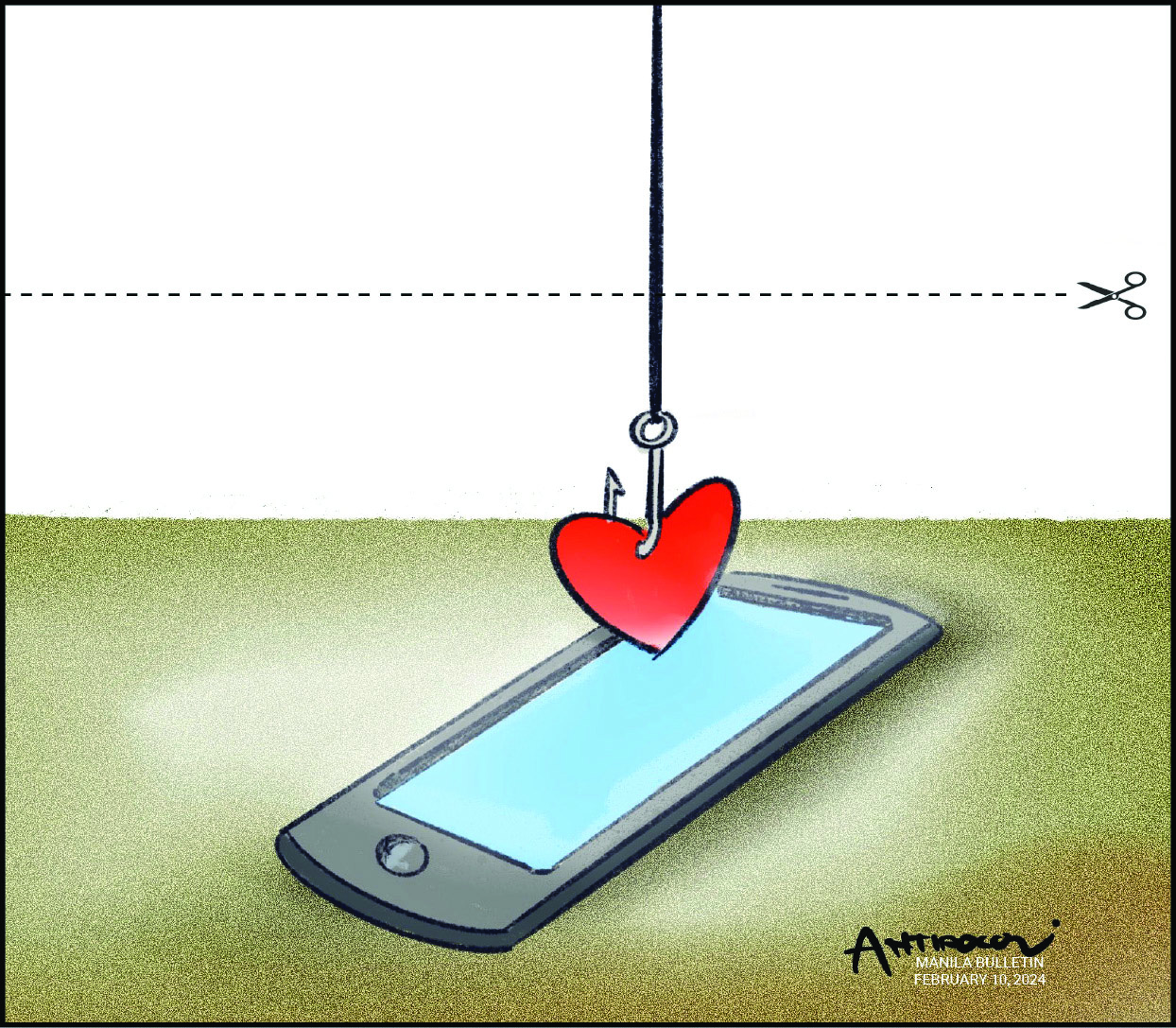
Love scam is a popular topic today because it’s Valentine’s month and because it continues to victimize so many people.  From an innocent message in social media, a love scam progresses to earn the victim’s trust – and love – and the result is not only a broken heart but also the loss of hard earned money which scammers always ask for.


It seems like a simple operation but love scams have become one of the country’s most prevalent and damaging forms of cybercrime, according to Undersecretary Alexander Ramos, executive director of the Cybercrime Investigation and Coordinating Center. He said that in 2023, Filipinos lost millions of pesos to love scammers who use deception to lure and exploit their victims.


According to the latest data of the Philippine National Police, online scam cases topped the list of cybercrimes in 2023, at 14,030.  The other cases of cybercrime were identity theft case, cyberlibel, online threats, data interference, computer-related fraud, love scams, sextortion, and online violence against women and children.


From victimizing innocent individuals with promises of love, to compromising the data of government and private institutions, the online attacks have affected lives, business operations and even personal relationships.


A private initiative to prevent online scams especially love scams has been started by Scam Watch Pilipinas which launched the UnMatch campaign. This program aims to raise awareness by educating netizens on the common signs of love scams. Scam Watch Pilipinas is a program of the Manila Bulletin and Truth360 Inc.


The most popular online scams that work by stoking the love emotion are:


The “random messenger” starts with a message on social media or dating apps, where the scammer lures the victim through flattery and an interest in his or her life.


Then there’s the “slow burn scam” where the scammer invests time to build a “relationship” and create an emotional bond to make the victim feel special and loved. Gifts are even sent to the victim by the scammer.


This “relationship” usually progresses to the “shift in scenery” where the victim is asked to move the conversation to a different platform, such as WhatsApp or Telegram. This will isolate the victim from friends and family and makes it harder to trace the scammer’s identity.


When trust and love have been established, the scammer steps into the next phase, the “bait and switch” where he asks for money for a medical emergency or for an investment, appealing to the victim’s sympathy or trust.  There is always the promise to pay the victim soon, or if it is for an investment, there is the assurance that the investment will give high returns.


Scam Watch Pilipinas strongly advises the person in this situation to “unmatch and block the scammer.” Go to www.scamwatchpilipinas.com or call the government's anti-scam hotline, 1326.


Each of us can help prevent online love scams by talking about it to our friends.  Include in the conversation some tips like, never send money or personal information to someone you haven't met in person.


This is the season of love.  Be aware of the presence of online love scammers out to exploit the beautiful and powerful emotion called love.  Scam Watch further recommends: “Maintain healthy boundaries, and don't let your emotions cloud your judgment. Report any suspicious activity in your social media to the authorities.”
 

Related Tags

Editorial
ADVERTISEMENT
.most-popular .layout-ratio{ padding-bottom: 79.13%; } @media (min-width: 768px) and (max-width: 1024px) { .widget-title { font-size: 15px !important; } }

{{ articles_filter_1561_widget.title }}

.most-popular .layout-ratio{ padding-bottom: 79.13%; } @media (min-width: 768px) and (max-width: 1024px) { .widget-title { font-size: 15px !important; } }

{{ articles_filter_1562_widget.title }}

.most-popular .layout-ratio{ padding-bottom: 79.13%; } @media (min-width: 768px) and (max-width: 1024px) { .widget-title { font-size: 15px !important; } }

{{ articles_filter_1563_widget.title }}

{{ articles_filter_1564_widget.title }}

.mb-article-details { position: relative; } .mb-article-details .article-body-preview, .mb-article-details .article-body-summary{ font-size: 17px; line-height: 30px; font-family: "Libre Caslon Text", serif; color: #000; } .mb-article-details .article-body-preview iframe , .mb-article-details .article-body-summary iframe{ width: 100%; margin: auto; } .read-more-background { background: linear-gradient(180deg, color(display-p3 1.000 1.000 1.000 / 0) 13.75%, color(display-p3 1.000 1.000 1.000 / 0.8) 30.79%, color(display-p3 1.000 1.000 1.000) 72.5%); position: absolute; height: 200px; width: 100%; bottom: 0; display: flex; justify-content: center; align-items: center; padding: 0; } .read-more-background a{ color: #000; } .read-more-btn { padding: 17px 45px; font-family: Inter; font-weight: 700; font-size: 18px; line-height: 16px; text-align: center; vertical-align: middle; border: 1px solid black; background-color: white; } .hidden { display: none; }
function initializeAllSwipers() { // Get all hidden inputs with cms_article_id document.querySelectorAll('[id^="cms_article_id_"]').forEach(function (input) { const cmsArticleId = input.value; const articleSelector = '#article-' + cmsArticleId + ' .body_images'; const swiperElement = document.querySelector(articleSelector); if (swiperElement && !swiperElement.classList.contains('swiper-initialized')) { new Swiper(articleSelector, { loop: true, pagination: false, navigation: { nextEl: '#article-' + cmsArticleId + ' .swiper-button-next', prevEl: '#article-' + cmsArticleId + ' .swiper-button-prev', }, }); } }); } setTimeout(initializeAllSwipers, 3000); const intersectionObserver = new IntersectionObserver( (entries) => { entries.forEach((entry) => { if (entry.isIntersecting) { const newUrl = entry.target.getAttribute("data-url"); if (newUrl) { history.pushState(null, null, newUrl); let article = entry.target; // Extract metadata const author = article.querySelector('.author-section').textContent.replace('By', '').trim(); const section = article.querySelector('.section-info ').textContent.replace(' ', ' '); const title = article.querySelector('.article-title h1').textContent; // Parse URL for Chartbeat path format const parsedUrl = new URL(newUrl, window.location.origin); const cleanUrl = parsedUrl.host + parsedUrl.pathname; // Update Chartbeat configuration if (typeof window._sf_async_config !== 'undefined') { window._sf_async_config.path = cleanUrl; window._sf_async_config.sections = section; window._sf_async_config.authors = author; } // Track virtual page view with Chartbeat if (typeof pSUPERFLY !== 'undefined' && typeof pSUPERFLY.virtualPage === 'function') { try { pSUPERFLY.virtualPage({ path: cleanUrl, title: title, sections: section, authors: author }); } catch (error) { console.error('ping error', error); } } // Optional: Update document title if (title && title !== document.title) { document.title = title; } } } }); }, { threshold: 0.1 } ); function showArticleBody(button) { const article = button.closest("article"); const summary = article.querySelector(".article-body-summary"); const body = article.querySelector(".article-body-preview"); const readMoreSection = article.querySelector(".read-more-background"); // Hide summary and read-more section summary.style.display = "none"; readMoreSection.style.display = "none"; // Show the full article body body.classList.remove("hidden"); } document.addEventListener("DOMContentLoaded", () => { let loadCount = 0; // Track how many times articles are loaded const offset = [1, 2, 3, 4, 5, 6, 7, 8, 9, 10]; // Offset values const currentUrl = window.location.pathname.substring(1); let isLoading = false; // Prevent multiple calls if (!currentUrl) { console.log("Current URL is invalid."); return; } const sentinel = document.getElementById("load-more-sentinel"); if (!sentinel) { console.log("Sentinel element not found."); return; } function isSentinelVisible() { const rect = sentinel.getBoundingClientRect(); return ( rect.top < window.innerHeight && rect.bottom >= 0 ); } function onScroll() { if (isLoading) return; if (isSentinelVisible()) { if (loadCount >= offset.length) { console.log("Maximum load attempts reached."); window.removeEventListener("scroll", onScroll); return; } isLoading = true; const currentOffset = offset[loadCount]; window.loadMoreItems().then(() => { let article = document.querySelector('#widget_1690 > div:nth-last-of-type(2) article'); intersectionObserver.observe(article) loadCount++; }).catch(error => { console.error("Error loading more items:", error); }).finally(() => { isLoading = false; }); } } window.addEventListener("scroll", onScroll); });

Sign up by email to receive news.